
Steve Oualline
Author of Practical C++ Programming
About the Author
Steve Oualline is a software engineer specializing in C++ programming and Linux.
Works by Steve Oualline
How Not to Program in C : 111 Broken Programs and 3 Working Ones, or Why Does 2 2=5986 (2003) 73 copies, 1 review
Tagged
Common Knowledge
- Birthdate
- 1955-07-07
- Gender
- male
- Nationality
- USA
- Associated Place (for map)
- USA
Members
Reviews
How Not to Program in C : 111 Broken Programs and 3 Working Ones, or Why Does 2 2=5986 by Steve Oualline
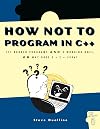
I almost want to consider this essential reading for 'real C programming.'
The exercises aren't about bad programming practice, they instead are about highlighting common misunderstandings about what certain C phrases actually mean, and how C 's hands-off approach to system internals sometimes bites you.
Some of the hints were frustrating, but mostly because they were stressing the system-dependant nature of portability and lower-level issues. Most of the time, by the second or third hint I show more had enough clues to figure out what was going on.
I couldn't find source files online, which was disappointing ... not all of the code fragments would have been best attacked via compiler and debugger, but having the opportunity to do so conveniently would have been nice.
There were chapters on portability and concurrency, which make for good primers on underrated but very imporant subjects in general. It's not the book's job to introduce further resources on the subjects, but some explicit emphasis on the importance of the subjects would have been nice (although I suppose you could say that having ful chapters on the subject would imply this.) show less
The exercises aren't about bad programming practice, they instead are about highlighting common misunderstandings about what certain C phrases actually mean, and how C 's hands-off approach to system internals sometimes bites you.
Some of the hints were frustrating, but mostly because they were stressing the system-dependant nature of portability and lower-level issues. Most of the time, by the second or third hint I show more had enough clues to figure out what was going on.
I couldn't find source files online, which was disappointing ... not all of the code fragments would have been best attacked via compiler and debugger, but having the opportunity to do so conveniently would have been nice.
There were chapters on portability and concurrency, which make for good primers on underrated but very imporant subjects in general. It's not the book's job to introduce further resources on the subjects, but some explicit emphasis on the importance of the subjects would have been nice (although I suppose you could say that having ful chapters on the subject would imply this.) show less

I used this book ALOT when I first started coding in C. Not so much anymore. If I could find it I would probably give it to my brother who is just starting out. It is a good book for what it is. Good, basic nuts and bolts with lots of short examples.
I am a Vim fan. Even when I write code in Eclipse I try to do it the vi(m) way as much as possible. I don’t recommend reading this book in one go. Rather I suggest reading a bit and then trying out what you read.
This is a very readable and well-organized book. The concepts are presented clearly, and the code examples illustrate them well. While I would have appreciated more detail in some areas (the read() function, for example) I found it to be a good introduction to C overall.
You May Also Like


Statistics
- Works
- 24
- Members
- 1,107
- Popularity
- #23,219
- Rating
- 3.5
- Reviews
- 6
- ISBNs
- 34
- Languages
- 6