
Malcolm MacDonald (2) (1948–2014)
Author of Brahms
For other authors named Malcolm MacDonald, see the disambiguation page.
About the Author
Malcolm MacDonald is the editor of Tempo magazine and author of Schoenberg. He lives in London.
Works by Malcolm MacDonald
Associated Works
BBC Proms 2019 : Prom 34 : West–Eastern Divan Orchestra [programme] (2019) — Programme note — 1 copy
Tagged
Common Knowledge
- Canonical name
- MacDonald, Malcolm
- Legal name
- MacDonald, Malcolm Calum
- Other names
- MacDonald, Calum (pseudonym)
- Birthdate
- 1948-02-26
- Date of death
- 2014-05-27
- Gender
- male
- Occupations
- music critic
composer - Nationality
- UK
- Birthplace
- Nairn, Scotland, UK
- Place of death
- Leckhampton, Gloucestershire, England, UK
- Associated Place (for map)
- UK
Members
Reviews
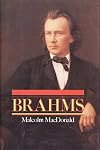
This is certainly the most thorough of the English-language biographies of Johannes Brahms. MacDonald relates all known facts about the composer, his relationship with friends and acquaintances, and his music. Biography and creative output are interwoven throughout the book, as the author rather laboriously discusses each composition in chronological order. It is assumed that the reader has a fair knowledge of Brahms's works and can read music, for MacDonald includes 68 musical examples that show more are important to the discussion. MacDonald's verbose style may put off the casual reader, but for a real Brahms lover, the book is a treat.
Malcolm MacDonald incorporates 25 years of new research to demonstrate convincingly that composer Johannes Brahms combined hs appreciation of the emotions and ideals of German Romantic music with a profound understanding of Classical principles, rejected the earlier view that he was simply an old-fashioned, conservative composer. show less
Malcolm MacDonald incorporates 25 years of new research to demonstrate convincingly that composer Johannes Brahms combined hs appreciation of the emotions and ideals of German Romantic music with a profound understanding of Classical principles, rejected the earlier view that he was simply an old-fashioned, conservative composer. show less

Schoenberg He always drew a crowd of dedicated supporters and an equal number of vehement detractors, and the interaction of the two groups often led to controversy. The most famous example of this interaction was the notorious "Skandalkonzert" of 31 March 1913, when a Viennese audience rioted at a performance of works by Schoenberg and his students. "Hisses, laughter, and applause made a bedlam," wrote a critic in a Boston newspaper, for the story was striking enough that even foreign show more readers found it newsworthy.
"Between numbers little groups of disputants came within an inch of blows; one of the composers shouted remarks and entered into the row; the conductor went on strike; an official boxed the ears of a man who had publicly assaulted him; the police commissioner ordered the hall cleared, and the concert was stopped before the final number".
Schoenberg was repeatedly validated as an important musical figure by the musical establishment of his day. His book Theory of Harmony [Harmonielehre] ( 1911) deflated the arguments of those who saw him as an ignorant eccentric; in 1925, his appointment as teacher of the master class in composition at the Prussian Academy of the Arts in Berlin awarded him one of the most prestigious teaching positions in Europe; up until his departure from Europe in 1933, his works were published soon after their composition and premiered by major ensembles in important venues; and, following his exodus from Europe, he found employment in the American university system. Similarly, his twelve-tone method and its offspring dominated establishment music for many years after his death.
So, what was all the fuss about and why, nearly fifty years after Schoenberg's death, does it still continue? Most of the controversies concerning Schoenberg revolved initially around the sound of his music; eventually it was not only the sound but how he justified and explained it historically, theoretically, and aesthetically that sustained the controversy. (His method of organizing pitch in his later works, the twelve-tone method, was a special point of contention.) The sound of Schoenberg's first mature works was striking in its time because Schoenberg tended to emphasize the most innovative aspects of turn-of-the century musical style: chromaticism, rhythmic freedom, intensity of expression, and motivic unity. Taken together, these elements produce an admittedly complex musical style, but it was this style that Schoenberg preferred and he made no excuse for it. Brahms's progressiveness "should have stimulated composers to write music for adults," wrote Schoenberg in the essay "Brahms the Progressive." show less
"Between numbers little groups of disputants came within an inch of blows; one of the composers shouted remarks and entered into the row; the conductor went on strike; an official boxed the ears of a man who had publicly assaulted him; the police commissioner ordered the hall cleared, and the concert was stopped before the final number".
Schoenberg was repeatedly validated as an important musical figure by the musical establishment of his day. His book Theory of Harmony [Harmonielehre] ( 1911) deflated the arguments of those who saw him as an ignorant eccentric; in 1925, his appointment as teacher of the master class in composition at the Prussian Academy of the Arts in Berlin awarded him one of the most prestigious teaching positions in Europe; up until his departure from Europe in 1933, his works were published soon after their composition and premiered by major ensembles in important venues; and, following his exodus from Europe, he found employment in the American university system. Similarly, his twelve-tone method and its offspring dominated establishment music for many years after his death.
So, what was all the fuss about and why, nearly fifty years after Schoenberg's death, does it still continue? Most of the controversies concerning Schoenberg revolved initially around the sound of his music; eventually it was not only the sound but how he justified and explained it historically, theoretically, and aesthetically that sustained the controversy. (His method of organizing pitch in his later works, the twelve-tone method, was a special point of contention.) The sound of Schoenberg's first mature works was striking in its time because Schoenberg tended to emphasize the most innovative aspects of turn-of-the century musical style: chromaticism, rhythmic freedom, intensity of expression, and motivic unity. Taken together, these elements produce an admittedly complex musical style, but it was this style that Schoenberg preferred and he made no excuse for it. Brahms's progressiveness "should have stimulated composers to write music for adults," wrote Schoenberg in the essay "Brahms the Progressive." show less
You May Also Like
Associated Authors
Statistics
- Works
- 11
- Also by
- 4
- Members
- 153
- Popularity
- #136,479
- Rating
- 4.0
- Reviews
- 2
- ISBNs
- 184
- Languages
- 4