
Richard Jackson (5) (1966–)
Author of Terrorism: A Critical Introduction
For other authors named Richard Jackson, see the disambiguation page.
Works by Richard Jackson
Tagged
Common Knowledge
Members
Reviews
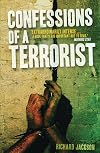
DISCLAIMER: I received an advance reader’s copy of "Confessions of a Terrorist: A Novel" by Richard Jackson through a LibraryThing.com Early Reviewers Program in exchange for an honest review. This does not affect my opinion of the book or the content of my review.
THINGS I LIKED:
1) Unusual format.
The book is written like an official transcript of an interrogation. It even has an official's comments written in cursive and certain parts of the text, which contain information related to the show more national security, are blacked out. These unique features create a feeling that you actually got your hands on some raw material which was not meant for the general public. In addition, a dialogue style makes the reading easy and entertaining, as there are no elaborate descriptions and fancy words used just in written English.
2) Good writing.
It's not an easy job to write an entire book as a dialogue between a terrorist and a British intelligence officer without making it sound artificial, but the author completed this task flawlessly. Each of the characters came alive in this novel through their speeches, their distinctive languages and speaking manners, even pauses or sounds made. The author successfully conveyed each character's message as well as their emotions and personalities.
3) Interesting perspective.
Instead of trying to understand the motives of terrorists, Western societies depict them as "insane, fanatical, psychologically damaged, cruel, immoral, essentially 'evil,' and most importantly, quite inhuman." In this novel, however, a terrorist has a chance to explain his actions and motives. I was actually shocked to realize that I agree with a lot of his points. Obviously, none of them can justify the awful killings of the innocent civilians but I do agree that the Western governments are not innocent either, yet none of them are perceived as insane or inhuman. So who is the real terrorist in this room?
COULD BE BETTER:
1) Repetitiveness.
I read the first half of this book very fast but then my pace slowed down quite a bit... The arguments made by each character and supporting examples started coming back. Although repeating some points might help to emphasize them, it makes the novel less exciting. By the end of the interrogation, both characters felt tired, and so did I.
VERDICT: 3 out of 5
"Confessions of a Terrorist" is an educational, well written novel, presented in a dialogue format. It is a thought provoking read which offers an unusual point of view on terrorism. Although sometimes a little bit repetitive, this book is definitely worth reading. show less
THINGS I LIKED:
1) Unusual format.
The book is written like an official transcript of an interrogation. It even has an official's comments written in cursive and certain parts of the text, which contain information related to the show more national security, are blacked out. These unique features create a feeling that you actually got your hands on some raw material which was not meant for the general public. In addition, a dialogue style makes the reading easy and entertaining, as there are no elaborate descriptions and fancy words used just in written English.
2) Good writing.
It's not an easy job to write an entire book as a dialogue between a terrorist and a British intelligence officer without making it sound artificial, but the author completed this task flawlessly. Each of the characters came alive in this novel through their speeches, their distinctive languages and speaking manners, even pauses or sounds made. The author successfully conveyed each character's message as well as their emotions and personalities.
3) Interesting perspective.
Instead of trying to understand the motives of terrorists, Western societies depict them as "insane, fanatical, psychologically damaged, cruel, immoral, essentially 'evil,' and most importantly, quite inhuman." In this novel, however, a terrorist has a chance to explain his actions and motives. I was actually shocked to realize that I agree with a lot of his points. Obviously, none of them can justify the awful killings of the innocent civilians but I do agree that the Western governments are not innocent either, yet none of them are perceived as insane or inhuman. So who is the real terrorist in this room?
COULD BE BETTER:
1) Repetitiveness.
I read the first half of this book very fast but then my pace slowed down quite a bit... The arguments made by each character and supporting examples started coming back. Although repeating some points might help to emphasize them, it makes the novel less exciting. By the end of the interrogation, both characters felt tired, and so did I.
VERDICT: 3 out of 5
"Confessions of a Terrorist" is an educational, well written novel, presented in a dialogue format. It is a thought provoking read which offers an unusual point of view on terrorism. Although sometimes a little bit repetitive, this book is definitely worth reading. show less
 This review was written for LibraryThing Early Reviewers.
An Advanced Reader Copy Review:
The night I began reading Richard Jackson's Confessions of a Terrorist: A Novel, I didn't stop before finishing a third of it, it was difficult to put it down. Part of this is the style, it is written in the format of a Top Secret transcription of an audio or video recording of an interrogation of a MI5 agent and a terrorist/militant. There are no chapter breaks, so it's easy to just keep right on reading and the content makes it hard to simply close it and show more put it down.
Jackson, with this novel, seeks to shake up his readers' preconceptions and notions concerning those labeled as terrorists by the media. That seems to be one of his few aims: to show that those so quickly tagged as terrorists are human beings, having people they love, who love them; and who want people to hear them. Jackson writes: “I have rarely found artistic or media depictions of terrorists that seemed authentic or which corresponded to the completely normal, often intelligent, complex and committed people I had personally spoken to” (319). He presents the terrorist in this light; i.e. the opposite of the way they are usually presented in films and the media.
The author wants to put the readers in the room during the interrogation, to help them ask tough questions. Jackson lives up to his goal, stated on the jacket copy, to blur the line between the interrogator and the terrorist. There are passages that could catch readers nodding their heads in agreement and then, catch them feeling a twinge of guilt for doing so.
I read that it is in the style of Mohsin Hamid's The Reluctant Fundamentalist. I agree with that in that it is a story that takes place in an intense conversation between two characters: one a Westerner, the other a suspected terrorist. There the similarity breaks down. Jackson's novel is presented as a trascript (as I've already stated), with anotations by those higher up the chain of command; annotations that the fictional authority writes to convince others to expunge parts of the recording and the transcription to cover their collective backsides. Jackson recommends those who are inclined, should try to find as much information as they can, and to talk to militants, if possible.
If you enjoyed The Reluctant Fundamentalist, or are interested in a different perspective view on the issue of terrorists and their behavior, I highly recommend this novel. The author writes, “A novel like this is a small step, but a necessary one, to tearing down the veil of ignorance which currently lies over most of what we currently say and do about terrorism” (322). He also includes a suggested reading list for those interested in knocking down that “veil of ignorance.” I plan to re-read this novel, and to work my way through Jackson's "Recommended Reading" list on terrorism and terrorists. show less
The night I began reading Richard Jackson's Confessions of a Terrorist: A Novel, I didn't stop before finishing a third of it, it was difficult to put it down. Part of this is the style, it is written in the format of a Top Secret transcription of an audio or video recording of an interrogation of a MI5 agent and a terrorist/militant. There are no chapter breaks, so it's easy to just keep right on reading and the content makes it hard to simply close it and show more put it down.
Jackson, with this novel, seeks to shake up his readers' preconceptions and notions concerning those labeled as terrorists by the media. That seems to be one of his few aims: to show that those so quickly tagged as terrorists are human beings, having people they love, who love them; and who want people to hear them. Jackson writes: “I have rarely found artistic or media depictions of terrorists that seemed authentic or which corresponded to the completely normal, often intelligent, complex and committed people I had personally spoken to” (319). He presents the terrorist in this light; i.e. the opposite of the way they are usually presented in films and the media.
The author wants to put the readers in the room during the interrogation, to help them ask tough questions. Jackson lives up to his goal, stated on the jacket copy, to blur the line between the interrogator and the terrorist. There are passages that could catch readers nodding their heads in agreement and then, catch them feeling a twinge of guilt for doing so.
I read that it is in the style of Mohsin Hamid's The Reluctant Fundamentalist. I agree with that in that it is a story that takes place in an intense conversation between two characters: one a Westerner, the other a suspected terrorist. There the similarity breaks down. Jackson's novel is presented as a trascript (as I've already stated), with anotations by those higher up the chain of command; annotations that the fictional authority writes to convince others to expunge parts of the recording and the transcription to cover their collective backsides. Jackson recommends those who are inclined, should try to find as much information as they can, and to talk to militants, if possible.
If you enjoyed The Reluctant Fundamentalist, or are interested in a different perspective view on the issue of terrorists and their behavior, I highly recommend this novel. The author writes, “A novel like this is a small step, but a necessary one, to tearing down the veil of ignorance which currently lies over most of what we currently say and do about terrorism” (322). He also includes a suggested reading list for those interested in knocking down that “veil of ignorance.” I plan to re-read this novel, and to work my way through Jackson's "Recommended Reading" list on terrorism and terrorists. show less
This review was written for LibraryThing Early Reviewers.Confessions of a Terrorist is a uniquely written perspective of what is and isn't a terrorist.
When I first started reading this book I was very interested in the argument given for being a terrorist, although I thought the argument was very one sided, and then I realized about half way through the book, that who I thought was the captured terrorist is actually the person interrogating the prisoner who is supposed to be the good guy. This makes for a very interesting plot.
The idea of who show more and what becomes a terrorist is unique based on where and how you were raised and there is truth in the arguments used. I also think that the arguments that only certain governments were wrong is based on the perspective of where you were raised.
All in all a very well written book, enjoyable, and entertaining. show less
When I first started reading this book I was very interested in the argument given for being a terrorist, although I thought the argument was very one sided, and then I realized about half way through the book, that who I thought was the captured terrorist is actually the person interrogating the prisoner who is supposed to be the good guy. This makes for a very interesting plot.
The idea of who show more and what becomes a terrorist is unique based on where and how you were raised and there is truth in the arguments used. I also think that the arguments that only certain governments were wrong is based on the perspective of where you were raised.
All in all a very well written book, enjoyable, and entertaining. show less
This review was written for LibraryThing Early Reviewers.This book was very interesting! I personally enjoyed the layout of the book. It was written in a dialogue form. This book really makes you question who the real terrorists are... Everyone had their different views on that. The British officer has done bad things and so has the so called terrorist. Both men interrogate one another in a dark room realizing that they aren't that different after all.
This review was written for LibraryThing Early Reviewers.Statistics
- Works
- 7
- Members
- 83
- Popularity
- #218,810
- Rating
- 3.7
- Reviews
- 8
- ISBNs
- 134
- Languages
- 5
