
Oliver Van DeMille
Author of A Thomas Jefferson Education: Teaching a Generation of Leaders for the Twenty-First Century
About the Author
Works by Oliver Van DeMille
A Thomas Jefferson Education: Teaching a Generation of Leaders for the Twenty-First Century (2000) 577 copies, 4 reviews
Thomas Jefferson Education for Teens, and Every Adult Who Wants to Change the world (2009) 122 copies
We Hold These Truths to Be Self Evident: 12 Natural Laws of Freedom, Progress, and Success (2013) 32 copies, 1 review
Scholar Phase 1 copy
The coming Aristocracy 1 copy
Tagged
Common Knowledge
- Gender
- male
- Education
- Brigham Young University (BA|International Relations|1994)
- Organizations
- The Church of Jesus Christ of Latter-day Saints
Members
Reviews
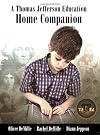
Do you know that thing where, when you're pondering what direction to take, everything around you seems to be centered around a particular direction or message?
I love when that happens.
We're in the middle of this several-months-long period of job transition and cross-country move that's fixing to shift again as we move into our new home (at long last) next week. My thoughts have been circling for months this idea of what I want to take with me, emotionally and materially, and what I want to show more leave behind.
This book is full of this idea. In a series of essays, Oliver and Rachel DeMille and Diann Jeppson write about the importance of applying the principles of Leadership Education and practical ways of doing so. At some points, the book is a little slow-going, and some of Diann Jeppson's essays, rather than helping me see TJEd as more doable made me wonder if I was up to the task (Jeppson offered practical advice, but reading it felt overwhelming at times).
The most powerful essays for me were those that dealt with the leaders of the past and what we can learn from them as we try to improve our own education so that we may give our children the opportunity to be leaders. Rachel DeMille's "'Steel to Gold': Motherhood & Feminism" lit a fire under me and helped me see the importance of my role as a parent (when often the gifts I have to offer as a stay-at-home mother are undervalued in our culture). She helped me begin to place myself in history, which helps ease some of that feeling of loneliness as I take less-traveled paths.
And the last five essays were just incredible. They dealt with the fallacies of education, like that education should be fun ("No nation focused on unearned fun will pay the price to fight a revolutionary war for their freedoms, or cross the plains and build a new nation, or sacrifice to free the slaves or rescue Europe from Hitler, or put a man on the moon. We got where we are because we did a lot of things that weren't fun."). They addressed the principles of "liber" and "Public Virtue" and how they were embodied by the Founders. And they pointed out how those we consider great leaders (Washington, Jefferson, Lincoln, Churchill, etc) spent years reading and studying and discussing before they acted upon what they'd learned and changed the course of history.
Then there's the Epilogue, which most directly relates to the quest I've been on these past months. A mother struggling to apply the principles of Leadership Education while raising six children (with a seventh on the way) uses the metaphor of the handcart, used by many Mormon pioneers as they crossed the plains to Utah, to illustrate the idea that those who follow this path are educational pioneers (debates about mismanagement of the handcart parties aside). She talks about the difficult choice of what to put in your metaphorical handcart and what to leave behind, knowing that everything you carry with you, you'll be pushing with your own power for thousands of miles, and everything you leave behind might be something you needed to take along to ease your journey, or even to make it to your destination.
This is the choice I'm trying to make as we settle into this new phase of our life. What's important to me? What will I need for this journey? What things no longer serve me that I'd like to leave behind?
This book not only helped me to see more clearly the path I'd like to take my children's education (and my own). It helped me see that the path I choose for our family's education is the path I choose for our development as human beings and as citizens of the world. show less
I love when that happens.
We're in the middle of this several-months-long period of job transition and cross-country move that's fixing to shift again as we move into our new home (at long last) next week. My thoughts have been circling for months this idea of what I want to take with me, emotionally and materially, and what I want to show more leave behind.
This book is full of this idea. In a series of essays, Oliver and Rachel DeMille and Diann Jeppson write about the importance of applying the principles of Leadership Education and practical ways of doing so. At some points, the book is a little slow-going, and some of Diann Jeppson's essays, rather than helping me see TJEd as more doable made me wonder if I was up to the task (Jeppson offered practical advice, but reading it felt overwhelming at times).
The most powerful essays for me were those that dealt with the leaders of the past and what we can learn from them as we try to improve our own education so that we may give our children the opportunity to be leaders. Rachel DeMille's "'Steel to Gold': Motherhood & Feminism" lit a fire under me and helped me see the importance of my role as a parent (when often the gifts I have to offer as a stay-at-home mother are undervalued in our culture). She helped me begin to place myself in history, which helps ease some of that feeling of loneliness as I take less-traveled paths.
And the last five essays were just incredible. They dealt with the fallacies of education, like that education should be fun ("No nation focused on unearned fun will pay the price to fight a revolutionary war for their freedoms, or cross the plains and build a new nation, or sacrifice to free the slaves or rescue Europe from Hitler, or put a man on the moon. We got where we are because we did a lot of things that weren't fun."). They addressed the principles of "liber" and "Public Virtue" and how they were embodied by the Founders. And they pointed out how those we consider great leaders (Washington, Jefferson, Lincoln, Churchill, etc) spent years reading and studying and discussing before they acted upon what they'd learned and changed the course of history.
Then there's the Epilogue, which most directly relates to the quest I've been on these past months. A mother struggling to apply the principles of Leadership Education while raising six children (with a seventh on the way) uses the metaphor of the handcart, used by many Mormon pioneers as they crossed the plains to Utah, to illustrate the idea that those who follow this path are educational pioneers (debates about mismanagement of the handcart parties aside). She talks about the difficult choice of what to put in your metaphorical handcart and what to leave behind, knowing that everything you carry with you, you'll be pushing with your own power for thousands of miles, and everything you leave behind might be something you needed to take along to ease your journey, or even to make it to your destination.
This is the choice I'm trying to make as we settle into this new phase of our life. What's important to me? What will I need for this journey? What things no longer serve me that I'd like to leave behind?
This book not only helped me to see more clearly the path I'd like to take my children's education (and my own). It helped me see that the path I choose for our family's education is the path I choose for our development as human beings and as citizens of the world. show less
A Thomas Jefferson Education: Teaching a Generation of Leaders for the Twenty-first Century by Oliver Van DeMille
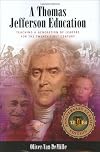
I find it somewhat funny that I lived in Utah for three years and didn't finally read this book until I'd moved to Massachusetts.
The book takes a fairly strong stance about public education, and it's clear that DeMille holds the political view I think of as Utah Libertarian, but looking past those strong convictions, his assertions sound solid, and I plan to implement some of his ideas into my own homeschool curriculum.
This is basically a variation on a Classical Education as outlined by show more Jesse Wise and Susan Wise Bauer in their The Well-Trained Mind. Since I'm already a big fan of Classical Education, TJEd isn't that huge a change. The big difference is that DeMille has distilled it to the point that reading the classics is critical for the teacher, and that learning from the classics is critical for the student. Everything, according to DeMille, should be learned by reading the classics, including math, science, and foreign language.
The idea is that the Founders of the United States were all better educated than anyone taught during the second half of the 20th century on (during which time the US education system has increasingly relied on a conveyor-belt method of educating youth, according to DeMille and others), and that by going back to the way the Founders were taught, we can groom more effective, more eloquent, and more moral leaders.
I think I can agree with his basic premises, particularly that a teacher's job is to inspire a student to do her/his own learning. A teacher can't force a child to acquire knowledge, and she certainly can't force a child to learn to think critically and logically address issues. The best a teacher can do is to encourage a student to want to learn things on her/his own.
I like his suggestion that time should be structured, but that what the child does during that time should not. We need, says DeMille, to enforce daily study times and routines, but that within those times, there should be a fair amount of freedom for children to study where their interests lead. In this model, the teacher's role is to help a child see the connections between different academic disciplines within her/his particular area of interest.
So, if the child wants to learn about castles, the teacher can help him find information about the medieval period (politics, religion, scientific advances), principles of math and physics that go into castle building, the music popular during the time, the lifestyle of those living within the castle walls compared to that of the people outside the castle walls, etc. This helps children learn that facts in the real world aren't actually compartmentalized into disciplines and that the separations we've made are a fairly recent innovation.
This last part isn't a new idea, but the idea of the structured time during which the child leads the activities is a new one for me, and one that I think will work very well with the way my daughter learns.
In addition, I definitely want to read more classics on my own. I'd already determined that this is a sizable gap in my own education. Because I want to include classics in my children's education, I need to read them myself so I can properly mentor my children and help them to determine where to start and then where to go next as they begin to tackle the classics.
I don't plan on scrapping all other curricula and relying solely on classics. I still plan to use a math curriculum and I don't plan on strictly adhering to DeMille's Phases of Learning. But I think it makes perfect sense, along with other ways of exploring a subject, to go to the source and experience the way the great thinkers think and read the way great writers write. This is similar to the Suzuki Method in music: you expose children to great music early and often, and this helps them emulate the best musicians. I think the same would go for great thinkers and great writers.
If I want my children to be well-educated and great thinkers, it makes sense for them to learn from the best. show less
The book takes a fairly strong stance about public education, and it's clear that DeMille holds the political view I think of as Utah Libertarian, but looking past those strong convictions, his assertions sound solid, and I plan to implement some of his ideas into my own homeschool curriculum.
This is basically a variation on a Classical Education as outlined by show more Jesse Wise and Susan Wise Bauer in their The Well-Trained Mind. Since I'm already a big fan of Classical Education, TJEd isn't that huge a change. The big difference is that DeMille has distilled it to the point that reading the classics is critical for the teacher, and that learning from the classics is critical for the student. Everything, according to DeMille, should be learned by reading the classics, including math, science, and foreign language.
The idea is that the Founders of the United States were all better educated than anyone taught during the second half of the 20th century on (during which time the US education system has increasingly relied on a conveyor-belt method of educating youth, according to DeMille and others), and that by going back to the way the Founders were taught, we can groom more effective, more eloquent, and more moral leaders.
I think I can agree with his basic premises, particularly that a teacher's job is to inspire a student to do her/his own learning. A teacher can't force a child to acquire knowledge, and she certainly can't force a child to learn to think critically and logically address issues. The best a teacher can do is to encourage a student to want to learn things on her/his own.
I like his suggestion that time should be structured, but that what the child does during that time should not. We need, says DeMille, to enforce daily study times and routines, but that within those times, there should be a fair amount of freedom for children to study where their interests lead. In this model, the teacher's role is to help a child see the connections between different academic disciplines within her/his particular area of interest.
So, if the child wants to learn about castles, the teacher can help him find information about the medieval period (politics, religion, scientific advances), principles of math and physics that go into castle building, the music popular during the time, the lifestyle of those living within the castle walls compared to that of the people outside the castle walls, etc. This helps children learn that facts in the real world aren't actually compartmentalized into disciplines and that the separations we've made are a fairly recent innovation.
This last part isn't a new idea, but the idea of the structured time during which the child leads the activities is a new one for me, and one that I think will work very well with the way my daughter learns.
In addition, I definitely want to read more classics on my own. I'd already determined that this is a sizable gap in my own education. Because I want to include classics in my children's education, I need to read them myself so I can properly mentor my children and help them to determine where to start and then where to go next as they begin to tackle the classics.
I don't plan on scrapping all other curricula and relying solely on classics. I still plan to use a math curriculum and I don't plan on strictly adhering to DeMille's Phases of Learning. But I think it makes perfect sense, along with other ways of exploring a subject, to go to the source and experience the way the great thinkers think and read the way great writers write. This is similar to the Suzuki Method in music: you expose children to great music early and often, and this helps them emulate the best musicians. I think the same would go for great thinkers and great writers.
If I want my children to be well-educated and great thinkers, it makes sense for them to learn from the best. show less
An interesting book, FreedomShift (2010) focuses on three shifts which, according to DeMille's thesis, - if taken - will lead to an environment that promotes Freedom. These three areas are: Entrepreneurship, Independents (as an alternative to the older two party division into Democrats and Republicans), and the building of New Tribes; especially virtual social networks that are built in the age of the Internet, and forming communities which learn from that which has worked in past and show more current tribal cultures.
Entrepreneurship is pretty self-explanatory, Independents are continuing to grow as people become more fed up with the current iteration of politics, the last area of focus, or choice as Mr. DeMille, puts it I find interesting.
The age of the Net and global reach has allowed groups of like-minded individuals to transcend national boundaries in a way that would have been unthinkable 20 to 30 years go; it makes me think of the related observation in a PLA publication (1999) of the rising importance of non-state actors; NGOs, social activist groups and so forth.
One slight, possible anachronism, I think though is the overly positive view of the freedom of individuals to band together on the Internet; this is in light of the current wave of censorship and cancel culture which has especially plagued previously free and open social platforms these past couple of years that simply did not exist a decade ago.
A worthwhile read, if possibly a bit dated, in the third section; I would very interested in an update to the third section in light of recent societal events and cultural shifts. show less
Entrepreneurship is pretty self-explanatory, Independents are continuing to grow as people become more fed up with the current iteration of politics, the last area of focus, or choice as Mr. DeMille, puts it I find interesting.
The age of the Net and global reach has allowed groups of like-minded individuals to transcend national boundaries in a way that would have been unthinkable 20 to 30 years go; it makes me think of the related observation in a PLA publication (1999) of the rising importance of non-state actors; NGOs, social activist groups and so forth.
One slight, possible anachronism, I think though is the overly positive view of the freedom of individuals to band together on the Internet; this is in light of the current wave of censorship and cancel culture which has especially plagued previously free and open social platforms these past couple of years that simply did not exist a decade ago.
A worthwhile read, if possibly a bit dated, in the third section; I would very interested in an update to the third section in light of recent societal events and cultural shifts. show less
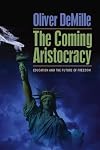
Not to give the plot away, but the main point of the book is be a force for freedom and self-reliant as possible; to focus on being a "mini-factory" that is self-sustaining and productive. It is, in many ways, the antithesis of the top-down approach advocated by Klaus Schwab and the World Economic Forum.
Mr. DeMille posits the mindset of the Aristocracy v. We the Free People; one is elitist and requires masses of trained individuals subservient to the State, and the other is open to all, but show more requires an educated - not to be confused with mere job training - self-disciplined and virtuous citizenry.
My only critique of this book would have been a request for more concrete examples, especially in Chapter 12: Aristotrends; the general principle is often stated well, but sometimes specifics, or exempli gratia, can be lacking in my opinion.
Nonetheless, I found the book an informative read, and would recommend it to those that are interested in a much needed counterpoint to the views of the World Economic Forum and other like minded entities. show less
Mr. DeMille posits the mindset of the Aristocracy v. We the Free People; one is elitist and requires masses of trained individuals subservient to the State, and the other is open to all, but show more requires an educated - not to be confused with mere job training - self-disciplined and virtuous citizenry.
My only critique of this book would have been a request for more concrete examples, especially in Chapter 12: Aristotrends; the general principle is often stated well, but sometimes specifics, or exempli gratia, can be lacking in my opinion.
Nonetheless, I found the book an informative read, and would recommend it to those that are interested in a much needed counterpoint to the views of the World Economic Forum and other like minded entities. show less
You May Also Like


Associated Authors
Statistics
- Works
- 17
- Members
- 1,246
- Popularity
- #20,594
- Rating
- 4.4
- Reviews
- 11
- ISBNs
- 20