
Fred Kaplan (2) (1954–)
Author of Dark Territory: The Secret History of Cyber War
For other authors named Fred Kaplan, see the disambiguation page.
Fred Kaplan (2) has been aliased into Fred M. Kaplan.
About the Author
Image credit: www.fredkaplan.info/
Works by Fred Kaplan
Works have been aliased into Fred M. Kaplan.
The Insurgents: David Petraeus and the Plot to Change the American Way of War (2013) 186 copies, 3 reviews
Território Sombrio 2 copies
Tagged
Common Knowledge
- Legal name
- Kaplan, Fred M.
- Awards and honors
- John Simon Guggenheim Memorial Foundation Fellowship
- Relationships
- Gladstone, Brooke (Epouse)
Members
Reviews
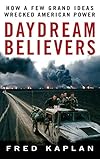
How American foreign policy got so off-track in the 21st Century has been well covered in other books. Why it got so off-track is the subject of this book.
It stems from two huge misconceptions made by the Bush White House and the neo-cons. The first is that, on 9/11, the world did not change. It certainly changed in that America suddenly found itself more vulnerable than ever before. But the nature of power, politics and warfare did not change. The second is that, after the Cold War, America show more found itself as the world’s only superpower. With its superior military technology, America thought that it was now free to topple unfriendly regimes, ignore treaties and generally do whatever it wanted around the world. Now that the Soviet Union was gone as an enemy, Cold War allies no longer felt compelled to see things America’s way. An American president could deal with this new landscape in one of two ways: emphasize the military, and don’t hesitate to use American power around the world, or, emphasize diplomacy, and restructure old alliances (and create new ones) around the world.
The invasion of Iraq was supposed to be the example of Bush’s belief that, with Saddam Hussein out of the way, Iraq will suddenly turn into a democratic country, and that democracy will spread throughout the Mideast. The Pentagon cared more about the military part than about the aftermath. Turmoil in Iraq was practically guaranteed by the first two decrees issued by Paul Bremer in the early days of the occupation: disbanding the Iraqi army, and removing all Baathists from the government.
The author also looks at the Administration’s decision to abrogate the ABM Treaty with Russia, and resume deployment of Ronald Reagan’s missile defense shield, despite the fact that its operational capabilities are somewhere between questionable and non-existent.
This is a really good book, and I learned something from it. There is more than just facts and figures here; the author profiles people in the military world, some of whom do not get their names in the media. It’s worth reading. show less
It stems from two huge misconceptions made by the Bush White House and the neo-cons. The first is that, on 9/11, the world did not change. It certainly changed in that America suddenly found itself more vulnerable than ever before. But the nature of power, politics and warfare did not change. The second is that, after the Cold War, America show more found itself as the world’s only superpower. With its superior military technology, America thought that it was now free to topple unfriendly regimes, ignore treaties and generally do whatever it wanted around the world. Now that the Soviet Union was gone as an enemy, Cold War allies no longer felt compelled to see things America’s way. An American president could deal with this new landscape in one of two ways: emphasize the military, and don’t hesitate to use American power around the world, or, emphasize diplomacy, and restructure old alliances (and create new ones) around the world.
The invasion of Iraq was supposed to be the example of Bush’s belief that, with Saddam Hussein out of the way, Iraq will suddenly turn into a democratic country, and that democracy will spread throughout the Mideast. The Pentagon cared more about the military part than about the aftermath. Turmoil in Iraq was practically guaranteed by the first two decrees issued by Paul Bremer in the early days of the occupation: disbanding the Iraqi army, and removing all Baathists from the government.
The author also looks at the Administration’s decision to abrogate the ABM Treaty with Russia, and resume deployment of Ronald Reagan’s missile defense shield, despite the fact that its operational capabilities are somewhere between questionable and non-existent.
This is a really good book, and I learned something from it. There is more than just facts and figures here; the author profiles people in the military world, some of whom do not get their names in the media. It’s worth reading. show less
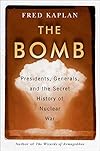
275 million dead. That was the estimate of the cost in human life of a nuclear war in SIOP 62, one of the United States' first strategic plans for such an event. This plan created by the era's great military minds, and then signed in approval by Presidents Eisenhower and Kennedy is blood-curdling. Over the decades the technology has made the job of destroying all life as we know it a much more precise and efficient proposition. But subsequent plans don't reduce the insanity involved in show more placing all humanity in such peril. Kaplan does an excellent job of respectfully keeping politics at a proper distance as he looks at each president's views of these most dangerous weapons. He carefully, and I believe accurately, assess the strengths and weakness of each Commander-In-Chief as he comes to terms with the enormity of the destruction that lies ready at his fingertips. They each have faced two constants. No one knows what will happen, regardless of the nation, once a mushroom cloud casts its shadow over their lands. The second, 275 million dead. show less
I read Kaplan's Dark Territory: The Secret History of Cyber War and discovered it to be a very lucid explanation of the technological challenges faced by the security departments around the world. So naturally, I was anxious to check out his most recent book, courtesy Net Galley, for which I am grateful.
It's an immensely enjoyable, if a bit scary, book about the political infighting and territoriality of the armed services and policy development of nuclear weapons. There was a lot of show more jockeying between the Navy, Army, and Air Force as to who would control "the bomb". and unfortunately much of that in-fighting controlled policy. Curtis LeMay, a brilliant leader in the organization and implementation of the bombing campaigns (read fire-bombing) in Europe and then Japan, as head of the Strategic Air Command was all in favor of a virtual first strike with everything as the SAC bombers were quite vulnerable. (His philosophy was simply to bomb everything.)
The Navy, meanwhile, was eager to get funds for the development of large numbers of ballistic missile equipped Polaris submarines, arguing that if the Russians never knew where you were the deterrent effect was far greater and more valuable. The Army, on the other hand, promoted the use of smaller tactical nukes on the battlefield suggesting that a nuclear counterattack to defend Europe against Russian aggression would lead to a Russian withdrawal and peace discussions. The casual manner in which civilian casualties (not to mention military) were discussed was a bit disheartening.
The man who replaced LeMay at SAC was Thomas Power. Even LeMay thought he was excessive: "There was a cruelty to Power’s zest for bombing cities. Even LeMay privately referred to his protégé as a “sadist.” When Bill Kaufmann briefed him on the Counterforce strategy at SAC headquarters, Power reacted with fury. “Why do you want us to restrain ourselves?” he screamed. “Why are you so concerned with saving their lives? The whole idea is to kill the bastards!” After a bit more of this tirade, Power said, “Look. At the end of the war, if there are two Americans and one Russian, we win!” Kaufmann snapped back, “You’d better make sure that they’re a man and a woman.” Power stormed out of the room. "
One surprising and note-worthy section was on how Cheney, of all people, was instrumental in reducing the huge number of weapons by half. All of the president's since have failed to reject the no-first-strike policy. Trump, himself, in his on-again, off-again relationship with North Korea didn't hesitate to wave the arsenal and threaten its use.
Kaplan describes the abyss that policy makers then and since have become trapped in. The mere idea of how many times cities (people) need to be nuked in order to assure our victory, even as we ourselves are annihilated, inevitably leads to comparisons with Alice in Wonderland.
That about sums up the insanity faced by all the presidents since Hiroshima. The importance of policy discussions and analysis worries me when I read that our current president disdains not just the briefing books, but the idea of analysis, preferring to rely on his "gut feeling" no doubt the most attuned gut in the history of the world. But then he's such a self-described "stable genius."
A good companion book to McNamara's memoir, "In Retrospect" and Ellsberg's "Secrets." Each is ostensibly more about Vietnam but each reveals much a bout how decisions are made in government. Other titles I will have to read are Kaplan's "Wizards of Armaggedon", Ellsberg's "The Doomsday Machine," and Bruce Kuklick's "Kennan to Kissinger" and I'm sure many others, but we only live so long. show less
It's an immensely enjoyable, if a bit scary, book about the political infighting and territoriality of the armed services and policy development of nuclear weapons. There was a lot of show more jockeying between the Navy, Army, and Air Force as to who would control "the bomb". and unfortunately much of that in-fighting controlled policy. Curtis LeMay, a brilliant leader in the organization and implementation of the bombing campaigns (read fire-bombing) in Europe and then Japan, as head of the Strategic Air Command was all in favor of a virtual first strike with everything as the SAC bombers were quite vulnerable. (His philosophy was simply to bomb everything.)
The Navy, meanwhile, was eager to get funds for the development of large numbers of ballistic missile equipped Polaris submarines, arguing that if the Russians never knew where you were the deterrent effect was far greater and more valuable. The Army, on the other hand, promoted the use of smaller tactical nukes on the battlefield suggesting that a nuclear counterattack to defend Europe against Russian aggression would lead to a Russian withdrawal and peace discussions. The casual manner in which civilian casualties (not to mention military) were discussed was a bit disheartening.
The man who replaced LeMay at SAC was Thomas Power. Even LeMay thought he was excessive: "There was a cruelty to Power’s zest for bombing cities. Even LeMay privately referred to his protégé as a “sadist.” When Bill Kaufmann briefed him on the Counterforce strategy at SAC headquarters, Power reacted with fury. “Why do you want us to restrain ourselves?” he screamed. “Why are you so concerned with saving their lives? The whole idea is to kill the bastards!” After a bit more of this tirade, Power said, “Look. At the end of the war, if there are two Americans and one Russian, we win!” Kaufmann snapped back, “You’d better make sure that they’re a man and a woman.” Power stormed out of the room. "
One surprising and note-worthy section was on how Cheney, of all people, was instrumental in reducing the huge number of weapons by half. All of the president's since have failed to reject the no-first-strike policy. Trump, himself, in his on-again, off-again relationship with North Korea didn't hesitate to wave the arsenal and threaten its use.
Kaplan describes the abyss that policy makers then and since have become trapped in. The mere idea of how many times cities (people) need to be nuked in order to assure our victory, even as we ourselves are annihilated, inevitably leads to comparisons with Alice in Wonderland.
That about sums up the insanity faced by all the presidents since Hiroshima. The importance of policy discussions and analysis worries me when I read that our current president disdains not just the briefing books, but the idea of analysis, preferring to rely on his "gut feeling" no doubt the most attuned gut in the history of the world. But then he's such a self-described "stable genius."
A good companion book to McNamara's memoir, "In Retrospect" and Ellsberg's "Secrets." Each is ostensibly more about Vietnam but each reveals much a bout how decisions are made in government. Other titles I will have to read are Kaplan's "Wizards of Armaggedon", Ellsberg's "The Doomsday Machine," and Bruce Kuklick's "Kennan to Kissinger" and I'm sure many others, but we only live so long. show less
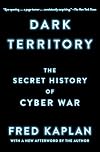
This is an excellent book, a very readable, veritable page-turner that details in clear, understandable terms, the technology, bureaucratic in-fighting, and events that have led us to where we are today, on the cusp of a revolution in surveillance, intelligence, and warfare.
It's almost a truism that generals fight the last war instead of the present one. That is certainly obvious from reading Kaplan's very disturbing history of cyber vulnerabilities in the United States. In spite of the show more efforts of numerous people in the CIA and NSA to alert the Defense establishment to their vulnerabilities, top ranking officers, for whatever reason, ignored the warnings or even misused the information they were given by the intelligence people or failed to take advantage of that information.
For example, during the first Iraq war, General Shwarzkopf was provided with the locations of the fiber optic switching locations that carried all the traffic between Saddam's headquarters and his army in Kuwait. Schwarzkopf was happy to bomb those installations, but when the transmission were replaced with microwave towers he bombed those, too, against the advice of the intelligence types who knew that microwave transmission were easily monitored via satellite and available for information harvesting.
Generally, the military establishment was very skeptical of charges their networks were insecure. Ironically, it was a movie, War Games, that motivated not just hundreds of hackers but also Ronald Reagan, who, after bringing in experts who assured him all that was possible, began a campaign to analyze networks. Repeatedly, the military had to be shown just how insecure the networks were. There was the inevitable overreaction by the NSA who wanted to install a chip (the Clipper chip) in every computer in the country that would monitor transmissions and provide a backdoor for the intelligence community to monitor everything. That failed, but thanks to Snowden, we know that it wasn't needed and the NSA is basically collecting every phone and message transmission in the U.S. close to 2 billion per day.
There was always tension between the NSA and technologists side and civilians. The NSA wanted "zero days" (holes open for exploitation in software) left open so they could exploit them, while those holes could be used by foreign governments and malicious hackers to wreck havoc on the civilian population: good for national security, bad for individuals. When Bush was elected in 2000, all the work of Richard Clarke and George Tenet was thrown out the window. Bush wanted nothing to do with Clinton initiatives or people so their warnings about Al Qaida were dismissed. Cheney and Bush were more interested in threats from Russia and Iran so they could build their missile defense system.
In the panic following 9/11, bureaucratic in-fighting for control of the money that was being thrown at terrorism went into overdrive. Verisign (the company that controls domain and registration web names) had analyzed web traffic and discovered that 80% of all the internet traffic in the world flowed through one of two major distribution points in the United States. The NSA realized that was a goldmine for information gathering and with the help of Mitch McConnell pushed through features of the Patriot Act that eventually permitted the NSA to "store" (collecting information on U.S. citizens without a warrant was illegal) virtually all the internet traffic in the world. The ramifications were enormous. If for example, an American citizen were to have phoned a number anywhere in the world that "might" have had terrorist connections, the NSA could go to a FISA court (all in secret) to get a warrant to track other calls plus calls made by others this person might have called and calls those people made, looking for "connections". Before you know it, that one call, which might even have been accidental, would result in collecting relationships of millions of Americans, thus completely subverting the prohibition against surveilling Americans.
One can only wonder at the immense power granted numerous federal agencies by the Patriot Act, which permits so much to be done in secret. When I was director of a college library, we were very concerned by one feature that pertained to libraries. The FBI could walk into the library, demand to see the patron records of anyone, and it was a federal crime not just to refuse, but also even to mention to anyone that they had asked for it. Fortunately, the library community designed its software to delete any trace of books that had been checked out. Having read Kaplan's book, I suspect now they wouldn't bother to ask as they have the capability to examine all the metadata of all the internet and phone traffic anywhere in the world.
One can only wonder how Trump, were he smart enough, might use such incredible power. Then again, if I were he, I would be very afraid of what those same agencies might have on him. J. Edgar Hoover is salivating in his grave show less
It's almost a truism that generals fight the last war instead of the present one. That is certainly obvious from reading Kaplan's very disturbing history of cyber vulnerabilities in the United States. In spite of the show more efforts of numerous people in the CIA and NSA to alert the Defense establishment to their vulnerabilities, top ranking officers, for whatever reason, ignored the warnings or even misused the information they were given by the intelligence people or failed to take advantage of that information.
For example, during the first Iraq war, General Shwarzkopf was provided with the locations of the fiber optic switching locations that carried all the traffic between Saddam's headquarters and his army in Kuwait. Schwarzkopf was happy to bomb those installations, but when the transmission were replaced with microwave towers he bombed those, too, against the advice of the intelligence types who knew that microwave transmission were easily monitored via satellite and available for information harvesting.
Generally, the military establishment was very skeptical of charges their networks were insecure. Ironically, it was a movie, War Games, that motivated not just hundreds of hackers but also Ronald Reagan, who, after bringing in experts who assured him all that was possible, began a campaign to analyze networks. Repeatedly, the military had to be shown just how insecure the networks were. There was the inevitable overreaction by the NSA who wanted to install a chip (the Clipper chip) in every computer in the country that would monitor transmissions and provide a backdoor for the intelligence community to monitor everything. That failed, but thanks to Snowden, we know that it wasn't needed and the NSA is basically collecting every phone and message transmission in the U.S. close to 2 billion per day.
There was always tension between the NSA and technologists side and civilians. The NSA wanted "zero days" (holes open for exploitation in software) left open so they could exploit them, while those holes could be used by foreign governments and malicious hackers to wreck havoc on the civilian population: good for national security, bad for individuals. When Bush was elected in 2000, all the work of Richard Clarke and George Tenet was thrown out the window. Bush wanted nothing to do with Clinton initiatives or people so their warnings about Al Qaida were dismissed. Cheney and Bush were more interested in threats from Russia and Iran so they could build their missile defense system.
In the panic following 9/11, bureaucratic in-fighting for control of the money that was being thrown at terrorism went into overdrive. Verisign (the company that controls domain and registration web names) had analyzed web traffic and discovered that 80% of all the internet traffic in the world flowed through one of two major distribution points in the United States. The NSA realized that was a goldmine for information gathering and with the help of Mitch McConnell pushed through features of the Patriot Act that eventually permitted the NSA to "store" (collecting information on U.S. citizens without a warrant was illegal) virtually all the internet traffic in the world. The ramifications were enormous. If for example, an American citizen were to have phoned a number anywhere in the world that "might" have had terrorist connections, the NSA could go to a FISA court (all in secret) to get a warrant to track other calls plus calls made by others this person might have called and calls those people made, looking for "connections". Before you know it, that one call, which might even have been accidental, would result in collecting relationships of millions of Americans, thus completely subverting the prohibition against surveilling Americans.
One can only wonder at the immense power granted numerous federal agencies by the Patriot Act, which permits so much to be done in secret. When I was director of a college library, we were very concerned by one feature that pertained to libraries. The FBI could walk into the library, demand to see the patron records of anyone, and it was a federal crime not just to refuse, but also even to mention to anyone that they had asked for it. Fortunately, the library community designed its software to delete any trace of books that had been checked out. Having read Kaplan's book, I suspect now they wouldn't bother to ask as they have the capability to examine all the metadata of all the internet and phone traffic anywhere in the world.
One can only wonder how Trump, were he smart enough, might use such incredible power. Then again, if I were he, I would be very afraid of what those same agencies might have on him. J. Edgar Hoover is salivating in his grave show less
Awards


You May Also Like
Associated Authors
Statistics
- Works
- 8
- Members
- 1,073
- Popularity
- #23,963
- Rating
- 3.8
- Reviews
- 27
- ISBNs
- 113
- Languages
- 1
- Favorited
- 1