
Colin Thompson (1) (1942–)
Author of How to Live Forever
For other authors named Colin Thompson, see the disambiguation page.
About the Author
Image credit: By Colin Thompson (self portrait with timer) - http://www.colinthompson.com/pr/, CC BY-SA 4.0, https://commons.wikimedia.org/w/index.php?curid=42729703
Series
Works by Colin Thompson
Colin Thompsons Colouring Book 6 copies
Colouring heaven: Busy world special 3 copies
Tagged
Common Knowledge
- Birthdate
- 1942-10-18
- Gender
- male
- Nationality
- Australia
- Birthplace
- Ealing, London, England, UK
Members
Reviews
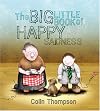
George, a sad little orphan, lives with his sweet-faced grandmother but feels very much alone. When on his Friday afternoon visit to the dog shelter he finds a three-legged dog that seems as unwanted as he feels himself to be, he engages his grandmother's help to adopt the scruffy pup before it is euthanized. This act rescues the boy as well as his grandmother, and a family is born. Thompson never talks down to his readers and the story is simple, clear, and heartfelt enough to be show more universally understood. The illustrations are full of personality and extraordinary detail: the brick wall by the dog compound and the trees crowding into the narrow bit of sky above it look like exquisite photographs. show less

Not recommended for children.
My parents originally purchased this for me around its publication when we were randomly browsing a bookstore one day. I started reading, had a religious question, and my parents took a closer look. They ended up returning the book instead of letting me read it. This was not normal in our household.
With that in mind, I found it and read it as an adult. As much as it pains me, my parents were right. The targeted age level is around ten. This really isn't for show more children, even though it's written at their level and will hold their interest. The religious objection is honestly pretty trivial ("we don't believe that, son" would have dealt with it; my parents would admit that), but the bigger issue is that small, borderline-inappropriate jokes are everywhere. Kids will miss most, but the bit they do catch or research is problematic.
I don't have the book in front of me while at the moment. The one example I do have access to is, "But [the giant spider] had aged, albeit very slowly, and now had terrible arthritis in all her joints, except the one she kept for purely medicinal purposes to ease the pain." The joke does not advance the plot. It's probably harmless. But do you really want to explain the concept of smoking joints to your ten year old? Humanity is almost extinct, in large part because some disaster made them uninterested in having sex. The history of this was covered in some detail. Though not graphic, do you really want your ten year old thinking about how strange it would be for adults to quit enjoying sex? The talking chicken regularly talks or thinks about how utterly stupid humanity is. "clucking" is used regularly as an expletive.
I don't want to be a prude; a small number of these would be fine. The problem is that it's basically the entire book with no redeeming qualities. It moves from joke to insult to fantastical scene back to another joke. The future dystopian setting does not hold up to any critical thinking. There is no plot to speak of. It's very episodic, with one chapter barely connecting to the next. A couple months after reading, I can't even remember the purpose of the giant spider. I kept hoping for at least a resolution. There wasn't one. Buy the next book, which is out of print. I have low hopes and want several hours of my life back. show less
My parents originally purchased this for me around its publication when we were randomly browsing a bookstore one day. I started reading, had a religious question, and my parents took a closer look. They ended up returning the book instead of letting me read it. This was not normal in our household.
With that in mind, I found it and read it as an adult. As much as it pains me, my parents were right. The targeted age level is around ten. This really isn't for show more children, even though it's written at their level and will hold their interest. The religious objection is honestly pretty trivial ("we don't believe that, son" would have dealt with it; my parents would admit that), but the bigger issue is that small, borderline-inappropriate jokes are everywhere. Kids will miss most, but the bit they do catch or research is problematic.
I don't have the book in front of me while at the moment. The one example I do have access to is, "But [the giant spider] had aged, albeit very slowly, and now had terrible arthritis in all her joints, except the one she kept for purely medicinal purposes to ease the pain." The joke does not advance the plot. It's probably harmless. But do you really want to explain the concept of smoking joints to your ten year old? Humanity is almost extinct, in large part because some disaster made them uninterested in having sex. The history of this was covered in some detail. Though not graphic, do you really want your ten year old thinking about how strange it would be for adults to quit enjoying sex? The talking chicken regularly talks or thinks about how utterly stupid humanity is. "clucking" is used regularly as an expletive.
I don't want to be a prude; a small number of these would be fine. The problem is that it's basically the entire book with no redeeming qualities. It moves from joke to insult to fantastical scene back to another joke. The future dystopian setting does not hold up to any critical thinking. There is no plot to speak of. It's very episodic, with one chapter barely connecting to the next. A couple months after reading, I can't even remember the purpose of the giant spider. I kept hoping for at least a resolution. There wasn't one. Buy the next book, which is out of print. I have low hopes and want several hours of my life back. show less
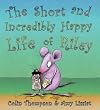
Human beings live for quite a long time and for a lot of that time we are not happy. We want to be taller, shorter, fatter, thinner, older and younger. We want our straight hair to be curly, our curly hair to be straight and our brown eyes to be blue. We hate our parents, children, teachers, students and everybody. We want to be somewhere else with someone else, eating something else and wearing something fantastic no one else can afford, and we want to splash them as we drive by in our big show more red car.
Rats live for quite a short time and for most of that time they are very, very happy... show less
Rats live for quite a short time and for most of that time they are very, very happy... show less
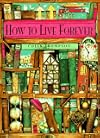
Wow, I love the illustrations in How to Live Forever--very detailed, colorful, and delightfully descriptive of the story. The magic of the illustrations reminds me a bit of David Wiesner's style. Interesting story, too, about a little boy who searches for the hidden treasure of a book promising immortality, only to find out it's not all it's cracked up to be (the book AND living forever!).
Lists
Awards


You May Also Like


Associated Authors
Statistics
- Works
- 72
- Members
- 2,574
- Popularity
- #9,981
- Rating
- 4.2
- Reviews
- 101
- ISBNs
- 303
- Languages
- 10
- Favorited
- 2