
Michael Alpert (1) (1936–)
Author of London 1849: A Victorian Murder Story
For other authors named Michael Alpert, see the disambiguation page.
About the Author
Michael Alpert is Professor Emeritus of Spanish History at the University of Westminster.
Works by Michael Alpert
Associated Works
Lazarillo de Tormes and The Swindler: Two Spanish Picaresque Novels (1969) — Translator, some editions — 515 copies, 8 reviews
The Three-Cornered Hat and Other Stories (Penguin Classics) (1975) — Editor and translator — 26 copies
Tagged
Common Knowledge
- Birthdate
- 1936
- Gender
- male
- Occupations
- university lecturer
historian - Nationality
- UK
- Birthplace
- London, England, UK
- Associated Place (for map)
- England, UK
Members
Reviews
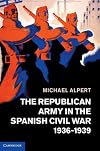
A very nuts-and-bolts examination of the People's Army of the Spanish Republic, with the basic conclusion being that this was the flawed instrument of a very damaged country (neither point being news), but still worthy of a certain level of respect as compared to the self-serving mafia that was the officer corps of the insurgent army that came to be dominated by Franco. About the best outcome the author can suggest is if with somewhat better organization the Republic could have prolonged the show more war further into 1939, though that probably only means a Spain that gets swept up in the Axis victory of 1940; sometimes there are no happy endings. show less
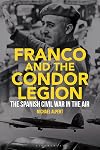
Very interesting book about the role of the air force in Spanish Civil War.
In a very readable and interesting way author shows how air force played a very important role in this bloody civil war - from the initial air bridge from North Africa to Spain organized by Luftwaffe to actual air combat, ground attacks and fighter operations and various planes that were experimented with in this conflict on all sides.
Although title mentions solely Condor Legion, this German outfit was just one of show more the two fighting on Franco's side. Second one being Italian volunteer air corps that might have even played a more significant contributor than Germans.
On the other hand, Soviets played a role on the Republican side, but due to internal strife within Republican government, Soviet's support started to dwindle although they did support the Republic to the very end. Issues in Republic government (and thus military command structure) prevented the Republic from acting decisively on many a front, thus enabling Franco's regime to gain upper hand. This was especially visible in ways of using the airplanes in combat - Franco's officers weren't limited when it comes to experimenting and trying out new things in a more consistent and uniform way. Republican's on the other hand were just a mixture of various approaches that just did not work out in a more disciplined and uniform way.
In the end only benefactors of air war (and in general civil war) were Franco and Germans - former because he established full control over Spain and [in a way] used the Italy and Germany because of bilateral agreements with UK and France about not getting involved in any future major conflict in Europe; latter because they got the chance to practically test both tactics, long range deployment procedures and logistics, together planes themselves in a very serious war, as close to total war with new weapons as was possible to have before the actual WW2.
Very interesting book, highly recommended, especially because we witness that history repeats. show less
In a very readable and interesting way author shows how air force played a very important role in this bloody civil war - from the initial air bridge from North Africa to Spain organized by Luftwaffe to actual air combat, ground attacks and fighter operations and various planes that were experimented with in this conflict on all sides.
Although title mentions solely Condor Legion, this German outfit was just one of show more the two fighting on Franco's side. Second one being Italian volunteer air corps that might have even played a more significant contributor than Germans.
On the other hand, Soviets played a role on the Republican side, but due to internal strife within Republican government, Soviet's support started to dwindle although they did support the Republic to the very end. Issues in Republic government (and thus military command structure) prevented the Republic from acting decisively on many a front, thus enabling Franco's regime to gain upper hand. This was especially visible in ways of using the airplanes in combat - Franco's officers weren't limited when it comes to experimenting and trying out new things in a more consistent and uniform way. Republican's on the other hand were just a mixture of various approaches that just did not work out in a more disciplined and uniform way.
In the end only benefactors of air war (and in general civil war) were Franco and Germans - former because he established full control over Spain and [in a way] used the Italy and Germany because of bilateral agreements with UK and France about not getting involved in any future major conflict in Europe; latter because they got the chance to practically test both tactics, long range deployment procedures and logistics, together planes themselves in a very serious war, as close to total war with new weapons as was possible to have before the actual WW2.
Very interesting book, highly recommended, especially because we witness that history repeats. show less
Lists
You May Also Like
Associated Authors
Statistics
- Works
- 9
- Also by
- 4
- Members
- 168
- Popularity
- #126,678
- Rating
- 3.6
- Reviews
- 3
- ISBNs
- 44
- Languages
- 1
- Favorited
- 1