
Prince (1) (1958–2016)
Author of The Beautiful Ones
For other authors named Prince, see the disambiguation page.
About the Author
Prince Rogers Nelson was born in Minneapolis, Minnesota on June 7, 1958. He was a singer and songwriter. He produced, arranged, composed, and played all 27 instruments on his 1978 debut album For You. He released approximately 40 albums during his lifetime. Purple Rain, Around the World in a Day, show more Batman, and 3121 were all number one albums in the U.S. He won seven Grammy awards and an Academy Award for best original song score for the 1984 film Purple Rain. He was inducted into the Rock and Roll Hall of Fame in 2004. He died on April 21, 2016 at the age of 57. (Bowker Author Biography) show less
Image credit: Scott Penner
Works by Prince
Gold Experience 3 copies
Rolling Stone Special Collector's Edition: Prince The Ultimate Guide To His Music And Legend (2016) 3 copies
Take Me With U 2 copies
U Got the Look 2 copies
Little red Corvette [45 rpm] 2 copies
GREATEST HITS VOL 01 2 copies
Sexy MF 2 copies
N·E·W·S 2 copies
7 [single] 1 copy
Fury [single] 1 copy
The Truth [VINYL] 1 copy
Gold [single] 1 copy
Sign O' The Times 1 copy
At The Club 1 copy
Live in Japan 1 copy
Neo Manifesto 1 copy
The Hits 3 1 copy
3121 [VINYL] 1 copy
Original Album Series 1 copy
Sign "o" the Times (LP Version) / La, La, La, He, He, Hee (Full Length Version) [12" VINYL] (1987) 1 copy
The Hits1 1 copy
1999 (Remastered) (1CD) 1 copy
Ultimate (2CD) 1 copy
Greatest Hits, Vol. I 1 copy
Hits Collection 1 copy
If I Was Your Girlfriend 1 copy
I Would Die 4 U 1 copy
Prince - Ultimate Songbook 1 copy
Glam Slam 1 copy
The Homecoming 1 copy
Little Red Corvette 1 copy
Let's Go Crazy 1 copy
1983 03 08 [sound recording] 1 copy
Alphabet St. 1 copy
Blast from the Past 6.0 1 copy
Transcendence 1 copy
Small Club 1 copy
Montreux Like Jazz 1 copy
4AM Jam 1 copy
Extraordinary 1 copy
Do U Wanna Go Home (2 CD) 1 copy
Tokyo 90 1 copy
Pink Cashmere 1 copy
PRINCE - TESTI 1 copy
The Only Ones Who Care 1 copy
Prince / The Arms Of Orion — Vocalist — 1 copy
Ultimate 1 copy
Prince - Mix Off - Mix 1 copy
Let's Work 1 copy
8/25/07 1 copy
Associated Works
The clear advantage — Contributor — 1 copy
Hitline : 22 original hits — Contributor — 1 copy
Tagged
Common Knowledge
- Canonical name
- Prince
- Legal name
- Nelson, Prince Rogers
- Birthdate
- 1958-07-07
- Date of death
- 2016-04-21
- Gender
- male
- Occupations
- musician
singer
guitarist - Nationality
- USA
- Birthplace
- Minneapolis, Minnesota, USA
- Places of residence
- Minneapolis, Minnesota, USA
- Place of death
- Chanhassen, Minnesota, USA
- Associated Place (for map)
- Minnesota, USA
Members
Reviews

Prince, elusive, mysterious, and to a lot of western journalists, sexual, which partly is the problem with this collection of interviews; don’t let the title and subtitle fool you: this is a collection of interviews and an introduction by Hanif Abdurraqib.
From the introduction, by Abdurraqib:
Prince was old-school. I love this recollection:
I also must add this, which is something:
Regardless of the above, after the introduction, the interviews flow in chronological order. It’s sweet to see a magazine from Minneapolis draw this out:
This one’s quite sweet as well:
What strikes me as one of Prince’s most lovely aspects in handling stupid, non-researched, and tabloidish questions, is how he turned them into gold. This quote is inspirational:
The man went from “don’t you think you look a little silly?” to completely leaving the interviewer, as it were, in a state of undress, by stating that he doesn’t stand clothes? Again, I must state that Prince was an interview alchemist.
This, from a live TV interview, is also brilliant:
I also dig this quote:
As Abdurraqib writes in his introduction, it’s easy to spot the points where Prince reacts to insipid, vapid, and stupid interviewers:
His words on vegetarianism are laudable; I dig the last part of the first paragraph in this quote:
Here’s another part, from the same interview as the above, that fascinates me:
The man was early on Internet, describing the inevitable death of record companies. Here, he speaks with some Yahoo! Internet interviewer, in 1997:
Towards the later part of his life, he had an all-female band (bar himself, of course).
I dig some of his weird conspiracy theories thrown in:
Regardless of how I loathe Chris Brown for his sexism, abuse of women, and homophobia, it’s still quite easy to get why Prince says the following:
During his last published interview:
Brilliant.
There’s a lot of weirdness left after the book is read, but this is—I feel—from the dregs of interviews that weren’t conducted properly. The naïvité of the first interview is just sweet, but the most sensationalistic stuff…I gather that Prince graciously put up with that to get through the day.
I’ll leave you with a part from the very last interview, that wraps things up fairly lovely:
From the introduction, by Abdurraqib:
Reading these interviews now is to see just how much Prince adhered to this type of negotiation. Not included here are several interviews where Prince barely offered up more than one-sentence answers,show more
and even in the more substantial interviews this collection gathers, interviewers clearly had to work to get Prince into an actual dialogue, sometimes with wince-inducing results. In an interview for Q Magazine in 1994, when pushed on a question about why sex was such a dominant theme in his work (the interviewer insisted that “Come,” the title track of his then newest album, had to be about orgasm), Prince responds: “Is it? That’s your interpretation? Come where? Come to whom? Come for what? [laughs] That’s just the way you see it. It’s your mind.”
Prince was old-school. I love this recollection:
For a lascivious figure, he followed for much of his life (and up to a point) the strict orthodoxy of the Jehovah’s Witnesses. No alcohol or drugs; he didn’t even swear. On Twitter, Talib Kweli recounted the story about DJing gangsta rap at a party that Prince had attended. He approached Kweli to tell him: “I ain’t get dressed up to come out and hear curses.”
I also must add this, which is something:
Also mysterious was how, in one performance of “My Guitar Gently Weeps” with Tom Petty for the Rock & Roll Hall of Fame, he finished an astounding solo by throwing his guitar up into the rafters. It never came back down.
Regardless of the above, after the introduction, the interviews flow in chronological order. It’s sweet to see a magazine from Minneapolis draw this out:
Prince plays by ear. “I’ve had about two lessons, but they didn’t help much. I think you’ll always be able to do what your ear tells you, so just think how great you’d be with lessons also,” he said. “I advise anyone who wants to learn guitar to get a teacher unless they are very musically inclined. One should learn all their scales too. That is very important,” he continued.
This one’s quite sweet as well:
SCHWARTZ: Are there any records of the last few months or year that struck you as particularly exciting or special?
PRINCE: I wish there was, but I guess if there were we wouldn’t be in the slump we are in the music business.
What strikes me as one of Prince’s most lovely aspects in handling stupid, non-researched, and tabloidish questions, is how he turned them into gold. This quote is inspirational:
SCHWARTZ: How about your stage show? Like don’t you think you look a little silly to some people when you’re up there in a jockstrap?
PRINCE: Maybe to people who only read about it, but I think the people who come to see it already expect it and wanna get into that [i.e., his underpants]. I’ve gotten a lot of criticism from outsiders, but once they see the show they understand why I wear what I wear. The show’s real athletic and we run around a lot. and I have to be real comfortable. The decision was left up to me, and when I thought about what I was most comfortable in, it’s what I sleep in . . . I just can’t stand clothes.
The man went from “don’t you think you look a little silly?” to completely leaving the interviewer, as it were, in a state of undress, by stating that he doesn’t stand clothes? Again, I must state that Prince was an interview alchemist.
This, from a live TV interview, is also brilliant:
FARGNOLI: Speaking of movies, when and how did you first get the idea for Purple Rain? Did you really spend a year or so taking notes in a purple notebook, like some people have said?
PRINCE: Yes.
I also dig this quote:
PRINCE: James Brown played a big influence in my style. When I was about ten years old, my stepdad put me on stage with him, and I danced a little bit until the bodyguard took me off. The reason I liked James Brown so much is that, on my way out, I saw some of the finest dancing girls I ever seen in my life. And I think, in that respect, he influenced me by his control over his group. Another big influence was Joni Mitchell. She taught me a lot about color and sound, and to her, I’m very grateful.
As Abdurraqib writes in his introduction, it’s easy to spot the points where Prince reacts to insipid, vapid, and stupid interviewers:
DEEVOY: What happens in your life when you’re not doing music?
THE ARTIST: [Hikes, eyebrows, looks incredulous] When I’m not doing music?
DEEVOY: Do you have a life outside of your work?
THE ARTIST: Yes.
DEEVOY: And what does that involve?
THE ARTIST: [Pinteresque pause] Have you never read about me? I’m a very private person.
DEEVOY: I’m not prying, I’m just interested.
THE ARTIST: I know. I understand.
His words on vegetarianism are laudable; I dig the last part of the first paragraph in this quote:
Mayte cooks for us. She’s always trying new things. The wonderful thing about vegetarianism is there is no favorite dish because there is no addiction. Non-vegetarians always speak about their favorite because it usually involves something artificial or something that doesn’t belong in them. Ah, the universe keeps expanding!
Compassion is an action word with no boundaries. It is never wasted. To eat a tomato and then replant it for your nutrition as opposed to killing a cow or a pig for your meal is reducing the amount of suffering in the world. Besides, pigs are too cute to die.
Here’s another part, from the same interview as the above, that fascinates me:
CENSOR: Do you worry that fans of your music might be put off by the message of songs like “Animal Kingdom” or by the public declaration of your vegetarianism?
THE ARTIST: Fan is short for “fanatic.” I call my supporters “friends.” My friends are very forward-thinking individuals. I’m not sure how many are meat eaters but soon all will know the consequences of a barbarian lifestyle. It’s called karma! My music is dictated by the spirit. Not worrying about people’s reaction is what has sustained me. I believe.
The man was early on Internet, describing the inevitable death of record companies. Here, he speaks with some Yahoo! Internet interviewer, in 1997:
GREENMAN: Are there any sites that you think are especially good?
THE ARTIST: Love 4 One Another. I also like the news section on AOL.
GREENMAN: Are there any sites that you think are especially bad?
THE ARTIST: Bad is not a word I use unless I am describing a fine girl.
GREENMAN: Since you broke with Warner Bros., you’ve explored alternatives to traditional distribution. Do you have any plans to sell your music directly to consumers via the Net?
THE ARTIST: Yes. NPG Records will sell as well as give away a lot of new and old music over the internet in the not-toodistant future.
GREENMAN: Will record labels eventually disappear?
THE ARTIST: The writing is on the wall. Other souls were successful in their divide-and-conquer approach 4 a while. But now that we communicate with each other on a worldwide basis, the need 4 an “in4mation censor” is no longer a reality. The process of manufacturing and delivering music 2 a “friend” is not brain surgery.
Towards the later part of his life, he had an all-female band (bar himself, of course).
Prince specifically wanted a female band, seeking out members via YouTube—back in 2010, he had discovered Nielsen on MySpace. “We’re in the feminine aspect now,” he says. “That’s where society is. You’re gonna get a woman president soon. Men have gone as far as they can, right? . . . I learn from women a lot quicker than I do from men . . . At a certain point, you’re supposed to know what it means to be a man, but now what do you know about what it means to be a woman? Do you know how to listen? Most men don’t know how to listen.”
I dig some of his weird conspiracy theories thrown in:
He has thoughts on the JFK assassination (“The car slows down—why doesn’t it speed up?”); AIDS (“It’s rising in some communities, and it’s not rising in others—any primate could figure out why”); and the airplane trails known in some circles as chemtrails (“Think about where they appear, why they appear, how often and what particular times of the year”).
Regardless of how I loathe Chris Brown for his sexism, abuse of women, and homophobia, it’s still quite easy to get why Prince says the following:
He mentions a desire to mentor Chris Brown, says he invited him to Paisley Park. I note that some people think what Brown did to Rihanna was unforgivable. He’s shocked. “Unforgivable?” he says. “Goodness. That’s when we go check the master, Christ . . . Have you ever instantly forgiven somebody?” I shake my head. “It’s the best feeling in the world, and it totally dismantles that person’s whole stance.”
He talks more about mentoring and helping peers, so I wonder aloud if he thinks he could’ve forestalled Michael Jackson’s fate. “I don’t want to talk about it,” Prince says at first. “I’m too close to it.” He goes on: “He is just one of many who have gone through that door—Amy Winehouse and folks. We’re all connected, right, we’re all brothers and sisters, and the minute we lock that in, we wouldn’t let anybody in our family fall. That’s why I called Chris Brown. All of us need to be able to reach out and just fix stuff. There’s nothing that’s unforgivable.”
During his last published interview:
Nevertheless, it’s turning out to be harder to ask questions than you might think. Prince is seated at a microphone behind a keyboard, which he keeps playing. This is quite disconcerting: if he doesn’t like a question, he strikes up with the theme from The Twilight Zone and shakes his head.
Brilliant.
There’s a lot of weirdness left after the book is read, but this is—I feel—from the dregs of interviews that weren’t conducted properly. The naïvité of the first interview is just sweet, but the most sensationalistic stuff…I gather that Prince graciously put up with that to get through the day.
I’ll leave you with a part from the very last interview, that wraps things up fairly lovely:
Last night, he says, he sat here alone, after everyone else had gone home, and played and sang for three hours straight. “I just couldn’t stop,” he says. He’d got “in the zone . . . like an out-of-body experience”: it felt like he was sitting in the audience watching himself. “That’s what you want. Transcendence. When that happens”—he shakes his head—“Oh, boy.”show less
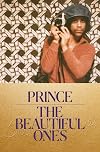
The Beautiful Ones is an essential deep read for Prince fans (for the disinterested, a quick look at the pictures will do), a monologue from a unique artist who was always determined to shock and pleasure the world. Here, finally, Prince Rogers Nelson surrenders his vaunted privacy and gives away some secrets. Dan Piepinbring (who should be given a bigger credit here) began editing the manuscript only a few months before Prince’s tragic, premature death, and in the aftermath was given free show more rein in Paisley Park to search out additional material to fulfill the publishing contract. He also adds a critical introduction explaining how their collaboration came about, and muses on how Prince’s compulsion to create new art had faded as he revisited his earlier works, purifying and stripping them bare, generating the posthumous album and his final solo tour, Piano & A Microphone.
This is an amusing and revealing story, brimming with childhood memories, photos, drawings, handwritten song lyrics to "1999" and "Little Red Corvette", scrapbooks from the early '70s, and his initial 1982 outline for what would become the film Purple Rain. If Prince had lived, this might have been the first of many volumes - or maybe he would have gotten bored and left only this as his singular non-musical legacy (think Dylan and his Chronicles Volume One). If he had been having fun pulling aside the curtain on his remarkable career, we might have learned how he learned how to play so many instruments so magnificently; how Minneapolis kept him anchored and sane; how he felt about collaborations with Misty Copeland, Morris Day, Sheila E, Chaka Khan, his bands – and so much more. show less
This is an amusing and revealing story, brimming with childhood memories, photos, drawings, handwritten song lyrics to "1999" and "Little Red Corvette", scrapbooks from the early '70s, and his initial 1982 outline for what would become the film Purple Rain. If Prince had lived, this might have been the first of many volumes - or maybe he would have gotten bored and left only this as his singular non-musical legacy (think Dylan and his Chronicles Volume One). If he had been having fun pulling aside the curtain on his remarkable career, we might have learned how he learned how to play so many instruments so magnificently; how Minneapolis kept him anchored and sane; how he felt about collaborations with Misty Copeland, Morris Day, Sheila E, Chaka Khan, his bands – and so much more. show less
I am by no means a Prince "fan". I do adore the one album I have on disc, which is the one with the symbol. And I've always thought him to be an interesting person. And phenomenally creative and talented. His appearance at the Rock & Roll Hall of Fame is a MUST see.
I saw the book used and cheap and picked it up. It's written by a fanboy shortly after Prince's death in 2016. The two of them were supposed to collaborate on his memoir. Instead, Piepenbring put together all the material he show more collected and published this. Most of it is still in Prince's voice.
Disappointed it only covered the early part of his career. Nothing about the New Power Generation, the symbol, the album with the symbol, etc. Maybe that would have been covered had Prince lived to continue the collaboration. show less
I saw the book used and cheap and picked it up. It's written by a fanboy shortly after Prince's death in 2016. The two of them were supposed to collaborate on his memoir. Instead, Piepenbring put together all the material he show more collected and published this. Most of it is still in Prince's voice.
Disappointed it only covered the early part of his career. Nothing about the New Power Generation, the symbol, the album with the symbol, etc. Maybe that would have been covered had Prince lived to continue the collaboration. show less

Product Details
* Audio CD (October 25, 1990)
* Original Release Date: 2000
* Number of Discs: 1
* Label: Warner Bros / Wea
* Catalog Number: 23720
* ASIN: B000002KY8
* Other Editions: Audio Cassette
* Average Customer Review: based on 95 reviews. (Write a review.)
* Amazon.com Sales Rank: #4,569 in Music (See Top Sellers in Music)
Yesterday: #4,696 in Music
Listen to Samples
To hear a song sample, click on "Listen" by that sample. Visit our audio help page for more information.
1. 1999 Listen show more Listen
2. Little Red Corvette Listen Listen
3. Delirious Listen Listen
4. Let's Pretend We're Married Listen Listen
5. D.M.S.R. Listen Listen
6. Automatic Listen
7. Something In The Water (Does Not Compute) Listen
8. Free Listen
9. Lady Cab Driver Listen
10. All The Critics Love U In New York Listen
11. International Lover Listen
Editorial Reviews
Amazon.com essential recording
Prince's fifth album came right before the lascivious multi-instrumentalist became a huge star with his 1984 film and soundtrack, Purple Rain. But Prince had already proved himself to be the most audacious talent to emerge in the 1980s, and 1999, the bulk of which features Prince on all the instruments, reflects the dance-rock styles that he also brought to the acts he produced, particularly the Time. Prince knows how to run a one-man-band individual instruments don't blend together as much as they compete in a funky showdown which allows tracks like "Automatic," "D.M.S.R.," and "Delirious" to sustain their long playing times. But the album's two enduring hits, "1999" and "Little Red Corvette," outshine the rest, and define the essential roles that rock and funk play in Prince's music. "Little Red Corvette" is a sexy song about a car, which would have been enough to make it a terrific rock song even if it didn't also boast an infectious chorus and a great guitar part. As for "1999," count on it being the dance song of the millennial year. --John Milward
Tag this product (What's this?)
Your tags: Add your first tag
Customers tagged this item with
First tag: The Wonders Of 1982 (Andre S. Grindle "Andre' Grindle" on Dec 11, 2005)
Last tag: The Wonders Of 1982
The Wonders Of 1982 (1)
Customers who tagged this item
* Andre S. Grindle "Andre' Grindle"
Spotlight Reviews
Write an online review and share your thoughts with other customers.
Search Customer Reviews
15 of 16 people found the following review helpful:
2000 zero-zero party's over oops out of time, April 21, 2002
Reviewer: Daniel J. Hamlow (Farmington, NM USA) - See all my reviews
(TOP 100 REVIEWER) (REAL NAME)
Looking back, I don't know if we were ever that close to nuclear war, but Prince put out a double-LP worth of songs (due to the plethora of long songs) back in 1982 and declared that he was gonna "party like it's 1999." That album made 17 years before the title year is one of Prince's most vital, danceable, and best albums.
"1999" is one of Prince's masterpieces, punctuated by punchy synthesizers and an infectious percussive beat, with Cold War nuclear angst lyrics: "Everybody's got a bomb/we could all die anyway. Jill Jones, keyboardist Lisa Coleman, and guitarist Dez Dickerson all have guest vocal duties. The song closes with a poignant child-like question "Mommy, why does everybody have a bomb?" Why indeed?
That classic number is followed by "Little Red Corvette," the highest charting single from this album, and rivalling "1999" in importance, career-wise. Using a hot red car as a metaphor to a red hot, love'em and leave'em lover before AIDS was a concern works. Lisa and Dez have more co-lead vocal contributions here.
"Delirious" follows with an infectious backbeat and squeaky keyboards. Hey, I don't know how else to describe it, okay?
Things get a little bit hotter with "Let's Pretend We're Married," hotter meaning explicit content. I've no doubt that it was the single edit that was played on the radio and not the unexpurgated version here. As this is an unabashed paean to free love, the line "all the hippies sing together" is apposite. It also paraphrases the 60's slogan, "if it feels good, do it." Key lyric: "My baby's gone and she don't care at all/And if she did, so what, come on baby, let's ----."
"D.M.S.R." continues the party but with a funkier tone, handclaps, synthesizers, and in a more fun, Bacchanalian vein.
For a song to clock in over nine minutes, it had better be good. Well, "Automatic," though not as rowdy as "D.M.S.R.", is compelling even at its great length.
"Free" starts out as a ballad before exploding into a gospelish-style number. If John Stuart Mill ever needed a song to associate to, this would be it. Prince is ever the populist, civil libertarian, and this is his best political song. The song tells us to be glad that we are free compared to other countries in the world. What about Holland or Denmark? For those worried about the denting of our personal liberties in the wake of 9-11, these lyrics seem apropos: "Soldiers are a marching they're writing brand new laws/We will all fight together for the most important cause/Will we all fight for the right to be free?" And I'm NOT referring to the terrorists! A wonderful song, with backing vocals courtesy of Jill Jones, Lisa, Vanity, and Wendy Melvoin.
Prince then asks a "Lady Cab Driver" (Jill Jones) to take him away from his "trouble winds [that] are blowin hard" and back to her place, where some heavy action takes place. It would be more appropriate to call Jill's lines, "sounds." Yes, THOSE kinds of sounds. Come on, this is a Prince album!
"International Lover" is done in the same vein as Controversy's "Do Me Baby." He uses the analogy of a pilot inviting a passenger aboard, flying to one's destination, and preparing to land an airplane to a date and sex. After the climactic falsetto screams, he gasps, exhausted but satisfied, "Thank you for flying Prince International." Sheer genius of the man!
Trivia: on the album cover, notice the football-shaped bulge in the "I" of "Prince." Spelt backwards are the words "and the Revolution." The unisex symbol that would be on Prince's Purple Rain motorcycle can be seen in the first "9."...
Was this review helpful to you? YesNo (Report this) show less
* Audio CD (October 25, 1990)
* Original Release Date: 2000
* Number of Discs: 1
* Label: Warner Bros / Wea
* Catalog Number: 23720
* ASIN: B000002KY8
* Other Editions: Audio Cassette
* Average Customer Review: based on 95 reviews. (Write a review.)
* Amazon.com Sales Rank: #4,569 in Music (See Top Sellers in Music)
Yesterday: #4,696 in Music
Listen to Samples
To hear a song sample, click on "Listen" by that sample. Visit our audio help page for more information.
1. 1999 Listen show more Listen
2. Little Red Corvette Listen Listen
3. Delirious Listen Listen
4. Let's Pretend We're Married Listen Listen
5. D.M.S.R. Listen Listen
6. Automatic Listen
7. Something In The Water (Does Not Compute) Listen
8. Free Listen
9. Lady Cab Driver Listen
10. All The Critics Love U In New York Listen
11. International Lover Listen
Editorial Reviews
Amazon.com essential recording
Prince's fifth album came right before the lascivious multi-instrumentalist became a huge star with his 1984 film and soundtrack, Purple Rain. But Prince had already proved himself to be the most audacious talent to emerge in the 1980s, and 1999, the bulk of which features Prince on all the instruments, reflects the dance-rock styles that he also brought to the acts he produced, particularly the Time. Prince knows how to run a one-man-band individual instruments don't blend together as much as they compete in a funky showdown which allows tracks like "Automatic," "D.M.S.R.," and "Delirious" to sustain their long playing times. But the album's two enduring hits, "1999" and "Little Red Corvette," outshine the rest, and define the essential roles that rock and funk play in Prince's music. "Little Red Corvette" is a sexy song about a car, which would have been enough to make it a terrific rock song even if it didn't also boast an infectious chorus and a great guitar part. As for "1999," count on it being the dance song of the millennial year. --John Milward
Tag this product (What's this?)
Your tags: Add your first tag
Customers tagged this item with
First tag: The Wonders Of 1982 (Andre S. Grindle "Andre' Grindle" on Dec 11, 2005)
Last tag: The Wonders Of 1982
The Wonders Of 1982 (1)
Customers who tagged this item
* Andre S. Grindle "Andre' Grindle"
Spotlight Reviews
Write an online review and share your thoughts with other customers.
Search Customer Reviews
15 of 16 people found the following review helpful:
2000 zero-zero party's over oops out of time, April 21, 2002
Reviewer: Daniel J. Hamlow (Farmington, NM USA) - See all my reviews
(TOP 100 REVIEWER) (REAL NAME)
Looking back, I don't know if we were ever that close to nuclear war, but Prince put out a double-LP worth of songs (due to the plethora of long songs) back in 1982 and declared that he was gonna "party like it's 1999." That album made 17 years before the title year is one of Prince's most vital, danceable, and best albums.
"1999" is one of Prince's masterpieces, punctuated by punchy synthesizers and an infectious percussive beat, with Cold War nuclear angst lyrics: "Everybody's got a bomb/we could all die anyway. Jill Jones, keyboardist Lisa Coleman, and guitarist Dez Dickerson all have guest vocal duties. The song closes with a poignant child-like question "Mommy, why does everybody have a bomb?" Why indeed?
That classic number is followed by "Little Red Corvette," the highest charting single from this album, and rivalling "1999" in importance, career-wise. Using a hot red car as a metaphor to a red hot, love'em and leave'em lover before AIDS was a concern works. Lisa and Dez have more co-lead vocal contributions here.
"Delirious" follows with an infectious backbeat and squeaky keyboards. Hey, I don't know how else to describe it, okay?
Things get a little bit hotter with "Let's Pretend We're Married," hotter meaning explicit content. I've no doubt that it was the single edit that was played on the radio and not the unexpurgated version here. As this is an unabashed paean to free love, the line "all the hippies sing together" is apposite. It also paraphrases the 60's slogan, "if it feels good, do it." Key lyric: "My baby's gone and she don't care at all/And if she did, so what, come on baby, let's ----."
"D.M.S.R." continues the party but with a funkier tone, handclaps, synthesizers, and in a more fun, Bacchanalian vein.
For a song to clock in over nine minutes, it had better be good. Well, "Automatic," though not as rowdy as "D.M.S.R.", is compelling even at its great length.
"Free" starts out as a ballad before exploding into a gospelish-style number. If John Stuart Mill ever needed a song to associate to, this would be it. Prince is ever the populist, civil libertarian, and this is his best political song. The song tells us to be glad that we are free compared to other countries in the world. What about Holland or Denmark? For those worried about the denting of our personal liberties in the wake of 9-11, these lyrics seem apropos: "Soldiers are a marching they're writing brand new laws/We will all fight together for the most important cause/Will we all fight for the right to be free?" And I'm NOT referring to the terrorists! A wonderful song, with backing vocals courtesy of Jill Jones, Lisa, Vanity, and Wendy Melvoin.
Prince then asks a "Lady Cab Driver" (Jill Jones) to take him away from his "trouble winds [that] are blowin hard" and back to her place, where some heavy action takes place. It would be more appropriate to call Jill's lines, "sounds." Yes, THOSE kinds of sounds. Come on, this is a Prince album!
"International Lover" is done in the same vein as Controversy's "Do Me Baby." He uses the analogy of a pilot inviting a passenger aboard, flying to one's destination, and preparing to land an airplane to a date and sex. After the climactic falsetto screams, he gasps, exhausted but satisfied, "Thank you for flying Prince International." Sheer genius of the man!
Trivia: on the album cover, notice the football-shaped bulge in the "I" of "Prince." Spelt backwards are the words "and the Revolution." The unisex symbol that would be on Prince's Purple Rain motorcycle can be seen in the first "9."...
Was this review helpful to you? YesNo (Report this) show less
Lists
Awards


You May Also Like


Associated Authors
Statistics
- Works
- 175
- Also by
- 11
- Members
- 1,954
- Popularity
- #13,155
- Rating
- 4.0
- Reviews
- 29
- ISBNs
- 102
- Languages
- 8