
Margaret Wilson (1) (1882–1973)
Author of The Able McLaughlins
For other authors named Margaret Wilson, see the disambiguation page.
Works by Margaret Wilson
Tagged
Common Knowledge
- Birthdate
- 1882-01-16
- Date of death
- 1973-10-06
- Gender
- female
- Nationality
- USA
- Associated Place (for map)
- USA
Members
Reviews

Cayman 2026 - #3 - 1924 Pulitzer Prize winner that few people have heard of, let alone read. My favorite way to read.... just open to page one & begin with only the cover art & my subconscious assumption as to what it might be about. Of course it is almost always wrong. A slow starter, as many good books can be, I assumed it probably would not be good to the lack of attention it seems to get. But I liked it! A tale of an enormous Scottish family emigrating to the U. S. & settling west of the show more railroad in the Iowa Prairie. Unbelievable numbers of households, all related, scab together a hard, but eventually productive life bring the empty prairie to life with hay, corn & wheat. Wully, the oldest of 13(!) in the McLaughlin household returns fromm the Civil war on sick leave, then returns until the end. On leave he discovers a cousin who has blossomed & is determined she shall be his bride. Sadly, events transpire leading to a less than ideal marriage in these hard times, with much anguish to share throughout the countryside. Secrets, pride, disappearance of another cousin, a new baby, anger, revenge..... It's all there! I envisioned several endings coming down the home stretch, most if which I was dreading...... I'll just leave it at that..... A pleasant surprise of a read! show less
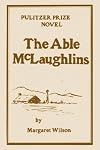
How do some of these books win the Pulitzer? Among the earlier ones, some just don’t wear well because the subject matter becomes outdated, but this isn’t one of those. This is a seriously underwhelming and ordinary book. It is not a bad read, there are parts of it, particularly those that describe the difficulties of this rural life and the environment, that are beautifully done.
Tears were running down Isobel McLaughlin’s face as she finished. Though she never doubted that God was show more infinitely kind, she wondered at times why that something else, called life, or nature, should be so cruel.
It isn’t that you cannot understand what Margaret Wilson hopes to achieve with this novel. She would like us to think about the nature of revenge and forgiveness. She intends, I think, to highlight the responsibility of the strong to the weak, the nature of self-sacrifice. She means to promote Christian values.
She is not particularly effective in her efforts, because she is strangely inconsistent. Her main character is a young man by the name of Wully McLaughlin. Wully returns from the Civil War to find things at home are not as he left them. Wully is, by turns, very strong, determined and angry, and very weak, wavering and sentimental. I had a hard time reconciling the early image of the young soldier with the later images Wilson paints. At the end of the book, I had little sense of who Wully really was.
There are chapters of little or no forward movement, in which, I assume, we are expected to build some affinity with the characters. Sadly, for me, this did not happen. There is an almost side narrative that seems to never fit within the main storyline. Reactions are overblown to the point of hyperbole, and often do not seem to fit with the situation. I found some of the feelings of the characters simply impossible to understand, not the least of these being those of the young girl who is at the heart of the plot.
In my final complaint, I wonder what world-shaking activity Margaret Wilson felt she had to run off to when she wrote the ending to this novel. After building to what should have been a climactic end, she simply folds her tent and exits with a whimper. I’m sure Wilson intended to show Wully struggling with himself and his feelings, but what was left to me was a confused sequence of antithetical emotions that seemed unrealistic, if not impossible. I felt faintly dissatisfied.
Had this book not won the Pulitzer prize I would have simply counted it as a mediocre read. One cannot help expecting more from a Pulitzer. Not every winner is a winner. show less
Tears were running down Isobel McLaughlin’s face as she finished. Though she never doubted that God was show more infinitely kind, she wondered at times why that something else, called life, or nature, should be so cruel.
It isn’t that you cannot understand what Margaret Wilson hopes to achieve with this novel. She would like us to think about the nature of revenge and forgiveness. She intends, I think, to highlight the responsibility of the strong to the weak, the nature of self-sacrifice. She means to promote Christian values.
She is not particularly effective in her efforts, because she is strangely inconsistent. Her main character is a young man by the name of Wully McLaughlin. Wully returns from the Civil War to find things at home are not as he left them. Wully is, by turns, very strong, determined and angry, and very weak, wavering and sentimental. I had a hard time reconciling the early image of the young soldier with the later images Wilson paints. At the end of the book, I had little sense of who Wully really was.
There are chapters of little or no forward movement, in which, I assume, we are expected to build some affinity with the characters. Sadly, for me, this did not happen. There is an almost side narrative that seems to never fit within the main storyline. Reactions are overblown to the point of hyperbole, and often do not seem to fit with the situation. I found some of the feelings of the characters simply impossible to understand, not the least of these being those of the young girl who is at the heart of the plot.
In my final complaint, I wonder what world-shaking activity Margaret Wilson felt she had to run off to when she wrote the ending to this novel. After building to what should have been a climactic end, she simply folds her tent and exits with a whimper. I’m sure Wilson intended to show Wully struggling with himself and his feelings, but what was left to me was a confused sequence of antithetical emotions that seemed unrealistic, if not impossible. I felt faintly dissatisfied.
Had this book not won the Pulitzer prize I would have simply counted it as a mediocre read. One cannot help expecting more from a Pulitzer. Not every winner is a winner. show less

American children win a trip to England and end up solving ancient puzzles to find a treasure -- it's a classic formula I am totally unable to resist. A family legacy, a mysterious rhyme, a ruined castle, a stone circle -- it's all there. To the modern eye, this one opens with hints of a darker subplot, but no, it's 1939, and everything is as it seems. Not for the coincidence intolerant.
Great pen and ink drawings and a fabulous endpaper map.
Great pen and ink drawings and a fabulous endpaper map.
Every now and then I need to read a book about good people going about their ordinary lives -- The Able McLaughlins filled the bill perfectly. This early (1924) Pulitzer Prize winner is a delightful read.
Lists
Awards

You May Also Like


Statistics
- Works
- 8
- Members
- 228
- Popularity
- #98,696
- Rating
- 3.5
- Reviews
- 8
- ISBNs
- 49
- Languages
- 1
- Favorited
- 1