
Neil Davies (1) (1959–)
Author of Hard Winter [novella]
For other authors named Neil Davies, see the disambiguation page.
Series
Works by Neil Davies
The Lightship 1 copy
Associated Works
Tagged
Common Knowledge
- Legal name
- Davies, Neil William
- Birthdate
- 1959-03-29
- Gender
- male
- Education
- St Anselm's College Birkenhead,Chester College
- Occupations
- IT consultant
- Short biography
- Born in 1959 and getting older by the hour, Neil Davies writes Horror and Science Fiction. His favourite authors are Richard Laymon, Steve Gerlach, Arthur C Clarke, Frank Herbert, H Rider Haggard, Brian Keene, Guy N Smith, H G Wells, Bram Stoker, Dennis Wheatley, Connie Willis, Edgar Rice Burroughs, Graham Masterton, Capt W E Johns, Sax Rohmer, John Wyndham... with more being added all the time. He's still writing and refuses to stop however much people ask him to. Expect more published works soon.
- Nationality
- England
UK - Birthplace
- Clatterbridge Hospital, Wirral, UK
- Places of residence
- Irby, Wirral, UK
- Associated Place (for map)
- Wirral, UK
Members
Reviews
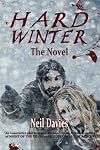
Hard Winter: The Novel by Neil Davies is a dystopian horror/thriller.
First Paragraph:
"My name is Norman Leonard and at one time I lived in Liverpool, North West England, with my wife Chrissy. We were among the stubborn few that stayed. The speed of the advancing ice had taken everyone by surprise and the edge of the glacier had already reached the ruins of the Forth Road Bridge, the old one, not the narrow one-lane nightmare they threw up some years back when a heavy ice storm finally show more snapped the suspension cables. Before long, the glacier would rumble its ponderous path down into England and pretty soon Cumbria would become as uninhabitable as Scotland had been for the last five years."
PLOT
The year is 2118. The world is rapidly falling prey to mother nature, as she brutally crushes it with inescapable, unstoppable ice. It is unclear how the world got into this state, but we'll put it down to global warming mixed with the nuclear winter of 2062.
Norman and his wife Chrissy live in Liverpool. When "the freeze" happened two years ago, all the 'VIP's' were evacuated from the city. Many others left, and Liverpool is as lifeless and bleak as the grey skies that bare down on it. Norman and Chrissy are forever on the move. Little by little the glacier advances, pushing them out of whatever abandoned building they called home. And everyday they have the same conversation, stay or leave? Chrissy believes the government will eventually step-up and come back for those who remain. Norman retains his life-long cynicism of mankind. Travelling is undeniably dangerous, but the approaching glacier is inevitable- eventually they will have to move. What's holding them back is fear. They have no destination, no shelter, no food. With no law and order, other people are a threat, as hungry eyes hunt for easy prey. Large groups could provide safety, but trust is hard to come by in these harsh times, especially with rumours of cannibalism spreading through the figurative grapevine.
But when the River Mersey floods, destroying everything Norman holds dear, the choice is taken. There is no more time. It's leave or die. South or bust. So begins his harrowing journey through pain, exhaustion, grief, frostbite, infection and fear.
Along the way, various people will flash through his life, but his deep mistrust for others keeps them at a distance. And the terrifying Norseman and inexplicable giants that follow close behind keep him moving, while all the time one question haunts him- is there anywhere left to go?
REVIEW
As with most post-apocalyptic stories, the focus is more about the people. How they adapt and change when their existence depends on it. When law and order is wiped and responsibility is meaningless. The cruelty and ruthlessness of those who will do anything to survive. However, this story also places a lot of emphasis on community. On the kindness of strangers. For the setting, Norman meets a surprising amount of people on his journey. Yes, I suppose it's not like there's dangerous, human-seeking zombies out and about, forcing people to hide. Other than the ice and humanity itself, there isn't much threat, so unlike zombiepocalypses- where most of humanity is instantly zombiefied or dead, we still have a lot of people about. However there are still dangerous people about. Cannibalistic raiders for one. Who have trained wolves. If there's anything I've learnt from this genre, it's that the end of the world tends to bring out the worst in people, and I would be inclined to have a little more self-preservation that most of the people Norman meets seem to have. There were looters, addicts and murderers long before the apocalypse hit, and it's only going to get worse. There are plenty of people willing to sell out their humanity in order to keep it a little longer.
I know the author was focusing on the good in people (as well as the bad- since there is no such thing as purely good or bad people), but I'm not sure how realistic that is. Yes, there are kind people who would help, but would you trust a random stranger knowing that it was quite literally a life or death decision? The only reason the untrusting Norman is even involved with them is because he would be dead anyway without them, so there was no harm giving it a shot. But that's what the story focuses on. The people who will trust without anything to gain.
The plot itself is pretty non-existent to be honest. Not necessarily a bad thing. The whole concept is running. Trying to outrun something that can never be escaped, for the sake of it. Because why wouldn't you? Even if you know you're just delaying the inevitable, why wouldn't you run to the very last step?
The future setting is more of warning factor, I think. As far as I can make out, absolutely nothing is different a hundred years in the future- other than the fact that ice rules the world. And impossible, gigantic creatures run ahead of it, killing everything in their path. But judging by the characters' responses, I doubt that's the norm.
Speaking of, the Icelandic Trolls (or whatever they are) were certainly chilling in their immenseness, but ultimately irrelevant and unnecessary, what with the encroaching glaciers from all sides that will eventually encase the entire world in ice- killing everything in the process. Though they do provide a more immediate threat, and create some tension that running from a slow block of ice (albeit a very fast slow-moving block of ice) wouldn't quite convey.
Not the most hopeful of endings, but what can you expect? There's an inevitability that can't simply be deus ex machina-d away- well I suppose it could, but not very convincingly, and would've left me with a little bit of not-a-happy-bunny-syndrome, so I'm glad there was no easy answer- not that fantasy horror/thrillers are known for easy endings.
My main criticism is the main character himself- Norman. He's a hard character to hate, but also to like. To be honest, I had no strong feelings either way- which is a shame since we see everything through his eyes, and therefore spend a lot of time in his mind. He has a tendency towards extreme self-pity- which is arguably very human, but also very annoying when a lot of the book is him thinking about how little he thinks of himself, how selfish he is, how much he hates himself. It can become a little grating as page after page after page, Norman feels sorry for himself. Wishing he was braver, cursing his cowardice. It's relatable, but I got tired of it very quickly, and wanted to smack some sense into him. For goodness sake man, I know the situation is bad, I know you've lost a lot, and you've made some mistakes, but get on with your life, instead of curling up in a ball of self-hatred. If you feel so bad about being untrusting or being a burden, if you feel guilty above past sins, then man-up and take action. Make the change, because it's not going to happen with you moping in the corner, drowning your sorrows with bitterness. He is aware of this, but it only makes him hate himself that much more. Every time he takes a step in the right direction, he falls and retreats even further back, with more and more guilt and fear holding him there. To his credit, he does try, but always despises himself for not doing more.
He does develop a few exceptions as the story progresses- through necessity more than anything (fair enough)- but they make him more vulnerable because of it. It is very human, but in this adapt-or-die world, I struggle to understand how he survived so long through anything but sheer dumb luck, since he seems so incapable of doing anything. I can understand that most people would not instantly be survivalist experts, but it's been two years. How can you survive two years without learning anything?
I think a lot of people may disagree with me on this front- citing him as realistic and well-rounded, but when you have someone as self-depracating as Norman as your main character, and have to listen to his self-hatred for two hundred and fifty pages, it can wear a little thin. He does eventually snap out of it, but it's so late in the game that it's pretty inconsequential. I think if the book had been based around ending Norman it would've been so much better. A Norman who still thinks little of himself, but manages not to let that get in the way of actually doing something. Who can put that to one side when push comes to shove and people are in danger. Yes it is realistic, and yes it may be human, but how much do you want to listen to someone whine about how useless they are?
Overall, a dark, brutal read, with cannibalism, mass-murder, rape, buckets of gore and a lot of violence. It is certainly not for the faint of heart. An interesting premise and a story that focuses a lot on the connections between people. The bonds, the cruelty and the kindness. As to the genre, I suppose it could be considered a horror/thriller/adventure with a little fantasy thrown in, but it comes across as more of an exploration of the human psyche, set against a backdrop that tears down all the social walls people normally hide behind .
Even with my gripe with Norman, I still enjoyed this book. It had tension, it had fear. If you don't like gore, this may be a little too intense for you, but if you're a fan of more adult-themed dystopian stories, this may be right up your street. If you're put off by my views of Norman, think as I did. Norman is like that one person you find yourself stuck with during the apocalypse. He's whiny and annoying (though you can see where he's coming from), but he's still a person, and that alone is enough of a reason to stick by him.
Disclaimer: I received this book from the publisher. This is not a sponsored review. All opinions are 100% my own. show less
First Paragraph:
"My name is Norman Leonard and at one time I lived in Liverpool, North West England, with my wife Chrissy. We were among the stubborn few that stayed. The speed of the advancing ice had taken everyone by surprise and the edge of the glacier had already reached the ruins of the Forth Road Bridge, the old one, not the narrow one-lane nightmare they threw up some years back when a heavy ice storm finally show more snapped the suspension cables. Before long, the glacier would rumble its ponderous path down into England and pretty soon Cumbria would become as uninhabitable as Scotland had been for the last five years."
PLOT
The year is 2118. The world is rapidly falling prey to mother nature, as she brutally crushes it with inescapable, unstoppable ice. It is unclear how the world got into this state, but we'll put it down to global warming mixed with the nuclear winter of 2062.
Norman and his wife Chrissy live in Liverpool. When "the freeze" happened two years ago, all the 'VIP's' were evacuated from the city. Many others left, and Liverpool is as lifeless and bleak as the grey skies that bare down on it. Norman and Chrissy are forever on the move. Little by little the glacier advances, pushing them out of whatever abandoned building they called home. And everyday they have the same conversation, stay or leave? Chrissy believes the government will eventually step-up and come back for those who remain. Norman retains his life-long cynicism of mankind. Travelling is undeniably dangerous, but the approaching glacier is inevitable- eventually they will have to move. What's holding them back is fear. They have no destination, no shelter, no food. With no law and order, other people are a threat, as hungry eyes hunt for easy prey. Large groups could provide safety, but trust is hard to come by in these harsh times, especially with rumours of cannibalism spreading through the figurative grapevine.
But when the River Mersey floods, destroying everything Norman holds dear, the choice is taken. There is no more time. It's leave or die. South or bust. So begins his harrowing journey through pain, exhaustion, grief, frostbite, infection and fear.
Along the way, various people will flash through his life, but his deep mistrust for others keeps them at a distance. And the terrifying Norseman and inexplicable giants that follow close behind keep him moving, while all the time one question haunts him- is there anywhere left to go?
REVIEW
As with most post-apocalyptic stories, the focus is more about the people. How they adapt and change when their existence depends on it. When law and order is wiped and responsibility is meaningless. The cruelty and ruthlessness of those who will do anything to survive. However, this story also places a lot of emphasis on community. On the kindness of strangers. For the setting, Norman meets a surprising amount of people on his journey. Yes, I suppose it's not like there's dangerous, human-seeking zombies out and about, forcing people to hide. Other than the ice and humanity itself, there isn't much threat, so unlike zombiepocalypses- where most of humanity is instantly zombiefied or dead, we still have a lot of people about. However there are still dangerous people about. Cannibalistic raiders for one. Who have trained wolves. If there's anything I've learnt from this genre, it's that the end of the world tends to bring out the worst in people, and I would be inclined to have a little more self-preservation that most of the people Norman meets seem to have. There were looters, addicts and murderers long before the apocalypse hit, and it's only going to get worse. There are plenty of people willing to sell out their humanity in order to keep it a little longer.
I know the author was focusing on the good in people (as well as the bad- since there is no such thing as purely good or bad people), but I'm not sure how realistic that is. Yes, there are kind people who would help, but would you trust a random stranger knowing that it was quite literally a life or death decision? The only reason the untrusting Norman is even involved with them is because he would be dead anyway without them, so there was no harm giving it a shot. But that's what the story focuses on. The people who will trust without anything to gain.
The plot itself is pretty non-existent to be honest. Not necessarily a bad thing. The whole concept is running. Trying to outrun something that can never be escaped, for the sake of it. Because why wouldn't you? Even if you know you're just delaying the inevitable, why wouldn't you run to the very last step?
The future setting is more of warning factor, I think. As far as I can make out, absolutely nothing is different a hundred years in the future- other than the fact that ice rules the world. And impossible, gigantic creatures run ahead of it, killing everything in their path. But judging by the characters' responses, I doubt that's the norm.
Speaking of, the Icelandic Trolls (or whatever they are) were certainly chilling in their immenseness, but ultimately irrelevant and unnecessary, what with the encroaching glaciers from all sides that will eventually encase the entire world in ice- killing everything in the process. Though they do provide a more immediate threat, and create some tension that running from a slow block of ice (albeit a very fast slow-moving block of ice) wouldn't quite convey.
Not the most hopeful of endings, but what can you expect? There's an inevitability that can't simply be deus ex machina-d away- well I suppose it could, but not very convincingly, and would've left me with a little bit of not-a-happy-bunny-syndrome, so I'm glad there was no easy answer- not that fantasy horror/thrillers are known for easy endings.
My main criticism is the main character himself- Norman. He's a hard character to hate, but also to like. To be honest, I had no strong feelings either way- which is a shame since we see everything through his eyes, and therefore spend a lot of time in his mind. He has a tendency towards extreme self-pity- which is arguably very human, but also very annoying when a lot of the book is him thinking about how little he thinks of himself, how selfish he is, how much he hates himself. It can become a little grating as page after page after page, Norman feels sorry for himself. Wishing he was braver, cursing his cowardice. It's relatable, but I got tired of it very quickly, and wanted to smack some sense into him. For goodness sake man, I know the situation is bad, I know you've lost a lot, and you've made some mistakes, but get on with your life, instead of curling up in a ball of self-hatred. If you feel so bad about being untrusting or being a burden, if you feel guilty above past sins, then man-up and take action. Make the change, because it's not going to happen with you moping in the corner, drowning your sorrows with bitterness. He is aware of this, but it only makes him hate himself that much more. Every time he takes a step in the right direction, he falls and retreats even further back, with more and more guilt and fear holding him there. To his credit, he does try, but always despises himself for not doing more.
He does develop a few exceptions as the story progresses- through necessity more than anything (fair enough)- but they make him more vulnerable because of it. It is very human, but in this adapt-or-die world, I struggle to understand how he survived so long through anything but sheer dumb luck, since he seems so incapable of doing anything. I can understand that most people would not instantly be survivalist experts, but it's been two years. How can you survive two years without learning anything?
I think a lot of people may disagree with me on this front- citing him as realistic and well-rounded, but when you have someone as self-depracating as Norman as your main character, and have to listen to his self-hatred for two hundred and fifty pages, it can wear a little thin. He does eventually snap out of it, but it's so late in the game that it's pretty inconsequential. I think if the book had been based around ending Norman it would've been so much better. A Norman who still thinks little of himself, but manages not to let that get in the way of actually doing something. Who can put that to one side when push comes to shove and people are in danger. Yes it is realistic, and yes it may be human, but how much do you want to listen to someone whine about how useless they are?
Overall, a dark, brutal read, with cannibalism, mass-murder, rape, buckets of gore and a lot of violence. It is certainly not for the faint of heart. An interesting premise and a story that focuses a lot on the connections between people. The bonds, the cruelty and the kindness. As to the genre, I suppose it could be considered a horror/thriller/adventure with a little fantasy thrown in, but it comes across as more of an exploration of the human psyche, set against a backdrop that tears down all the social walls people normally hide behind .
Even with my gripe with Norman, I still enjoyed this book. It had tension, it had fear. If you don't like gore, this may be a little too intense for you, but if you're a fan of more adult-themed dystopian stories, this may be right up your street. If you're put off by my views of Norman, think as I did. Norman is like that one person you find yourself stuck with during the apocalypse. He's whiny and annoying (though you can see where he's coming from), but he's still a person, and that alone is enough of a reason to stick by him.
Disclaimer: I received this book from the publisher. This is not a sponsored review. All opinions are 100% my own. show less
This review was written for LibraryThing Member Giveaways.
The world is a cold and bleak skeleton of what it once was – an unforgiving land nearly devoid of people and resources. Harsh, daily blizzards provide no respite from this frozen land, which covers all of England and possibly the entire world. The main character, Norman Leonard, is on the run, staying barely ahead of feral and vicious “Norsemen,” gigantic “trolls,” an unrelenting glacier and his own personal demons.
Although the story is reminiscent of other dystopian, apocalyptic show more novels such as The Road and Earth Abides, Hard Winter differs as it is very much a story of redemption. Norman struggles with the elements, but much more difficult for him is to accept his fears, his need for survival at any cost, and his guilt at not being able to do more to save those around him. Norman needs to find hope when the world is clearly a hopeless place.
I enjoyed reading this book despite the improbability of some of the situations. The author has told a good story, with enough description to make me want to turn up the heat and wear a warm sweater. The story moves along at an even pace, with enough foreboding and action to keep the reader engaged. Hope intermingles with terror, and the author is skilled enough to make the reader feel a part of the story. I thought that the ending was a bit rushed and even a little anti-climatic, but this is really the only fault that I found aside from a few minor editorial errors. I give this book 4.5 stars.
I had the honor of being given a free copy of this book in exchange for agreeing to provide a fair and unbiased review. I have never met the author, nor do I know him/her personally. show less
Although the story is reminiscent of other dystopian, apocalyptic show more novels such as The Road and Earth Abides, Hard Winter differs as it is very much a story of redemption. Norman struggles with the elements, but much more difficult for him is to accept his fears, his need for survival at any cost, and his guilt at not being able to do more to save those around him. Norman needs to find hope when the world is clearly a hopeless place.
I enjoyed reading this book despite the improbability of some of the situations. The author has told a good story, with enough description to make me want to turn up the heat and wear a warm sweater. The story moves along at an even pace, with enough foreboding and action to keep the reader engaged. Hope intermingles with terror, and the author is skilled enough to make the reader feel a part of the story. I thought that the ending was a bit rushed and even a little anti-climatic, but this is really the only fault that I found aside from a few minor editorial errors. I give this book 4.5 stars.
I had the honor of being given a free copy of this book in exchange for agreeing to provide a fair and unbiased review. I have never met the author, nor do I know him/her personally. show less
This review was written for LibraryThing Member Giveaways.

"Hard Winter" is a mix of sci-fi and horror, and author Neil Davies does an excellent job of keeping the tension and suspense at high levels, resulting in a fast-paced, thoroughly entertaining novel. But it's not all about the plot. The characters are well-drawn, believable and easy to care about, especially Norman, who struggles hard to change and adapt to his new reality. If you like post-apocalyptic fiction, this book is a must read.
I've come to believe that mystery is the greatest show more driving force of fiction...and it's clear that Neil Davies gets it. Definitely intriguing and a very great ending! This story was extremely gripping and totally unpredictable. Loved it! Keep it coming Davies! show less
I've come to believe that mystery is the greatest show more driving force of fiction...and it's clear that Neil Davies gets it. Definitely intriguing and a very great ending! This story was extremely gripping and totally unpredictable. Loved it! Keep it coming Davies! show less
This review was written for LibraryThing Member Giveaways.

A serial-killer thriller with a wonderful twist and a bit of the supernatural.
Victoria is trying to figure out who she is, though she can not remember her past. After waking up in the hospital with an array of nasty injuries, the only thing she can remember is the name Victoria. Now married and trying to build a normal life for herself, Victoria and her husband Simon have settled down in the quaint town of Taupington and are fixing up a Victorian style house, that Victoria is inexplicably show more drawn to. Meanwhile, a sadistic serial killer has also come to town and has decided to stay in order to make Victoria's new neighbor his latest victim.
This thriller grabbed me from the start and I had to finish it the same day. Switching point of view from Victoria and the serial killer made a great build to the unexpected relationship that they have. While the scenes with the serial killer were very graphic, they were not overdone and seemed as true to life as I could imagine. The added element of the supernatural was very interesting and I wish it was explored just a bit more.
This book was received for free in return for an honest review. show less
Victoria is trying to figure out who she is, though she can not remember her past. After waking up in the hospital with an array of nasty injuries, the only thing she can remember is the name Victoria. Now married and trying to build a normal life for herself, Victoria and her husband Simon have settled down in the quaint town of Taupington and are fixing up a Victorian style house, that Victoria is inexplicably show more drawn to. Meanwhile, a sadistic serial killer has also come to town and has decided to stay in order to make Victoria's new neighbor his latest victim.
This thriller grabbed me from the start and I had to finish it the same day. Switching point of view from Victoria and the serial killer made a great build to the unexpected relationship that they have. While the scenes with the serial killer were very graphic, they were not overdone and seemed as true to life as I could imagine. The added element of the supernatural was very interesting and I wish it was explored just a bit more.
This book was received for free in return for an honest review. show less
This review was written for LibraryThing Member Giveaways.
You May Also Like
Associated Authors
Statistics
- Works
- 15
- Also by
- 1
- Members
- 66
- Popularity
- #259,058
- Rating
- 4.3
- Reviews
- 11
- ISBNs
- 26


