
Susan Goodman (1) (1951–)
Author of Republic of Words: The Atlantic Monthly and Its Writers, 1857-1925
For other authors named Susan Goodman, see the disambiguation page.
About the Author
Susan Goodman is Professor of English and H. Fletcher Brown Chair of Humanities at the University of Delaware.
Image credit: University of Delaware
Works by Susan Goodman
Tagged
Common Knowledge
- Legal name
- Goodman, Susan Linda
- Birthdate
- 1951-03-20
- Gender
- female
- Occupations
- professor
historian
writer - Nationality
- USA
- Associated Place (for map)
- USA
Members
Reviews
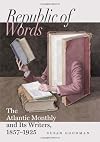
Brightly written and cleverly organized, this history of the early years of The Atlantic Monthly is a delightful read and a wonderful representation of the development of American letters and politics from 1857-1925. In my experience, academic books seldom present themselves in such a readable format sans jargon and filled to the brim with nuanced details of a already well-represented period in American literary history. The story of Mark Twain addressing the gathered Brahman of Boston on show more several scandalous and notable occasions is priceless and very amusingly told here Overall, this is a book that I would recommend as both an introduction to nineteenth century American Literature as well as a very specialized examination of how a periodical can develop and spread culture while all the while being formed by the culture from which it springs. I will read it again. show less
 This review was written for LibraryThing Early Reviewers.
Susan Goodman's Republic of Words: The Atlantic Monthly and Its Writers, 1857-1925 (University Press of New England, 2011) is an unconventional history of a magazine. "From the beginning," Goodman writes, "The Atlantic's authority rested on its contributors: the poets, novelists, essayists, political figures, scientists, geologists, explorers, social scientists, and their fellow writers in multiple fields, new and old" (xi). Most chapters focus on a particular episode of an Atlantic writer's show more career which was connected in some way to the magazine's story and "speaks in its way about the magazine's self-made responsibilities and the writer's sense of an underlying national consciousness" (xi).
Goodman focuses on the period from 1857 through 1925, from the beginning through the post-WWI era when the magazine found itself facing new rivals and a changing audience. A short final chapter looks beyond the 1920s to the big changes faced by the magazine since then, including the move from its original Boston home to Washington, D.C. in 2005.
The book's chapters may focus on seemingly small episodes in the life of the Atlantic, but Goodman also manages to create an overarching narrative of a publication changing over time, not just with the shifting preferences and tastes of successive editors, but also in response to the political, literary, scientific, and social climate of the day (even if in some cases it did take a while to catch up). It certainly helps to have such an intriguing stable of writers to choose from: among those profiled here are Thomas Wentworth Higginson, Henry James, Mark Twain, Bret Harte, Robert Frost, W.E.B DuBois, and Amy Lowell (just to scratch the surface).
Among the most interesting chapters are those on the contretemps stirred up by Harriet Beecher Stowe in 1869 when she insinuated that Lord Byron had slept with his half-sister, the debates between Louis Agassiz and Asa Gray over scientific theory, and on Mark Twain's unintentional (and poorly-received) "roast" of the magazine's founders at a dinner celebrating John Greenleaf Whittier's 70th birthday.
A few small errors have crept into the text (the author of Wild Animals I Have Known was Ernest Thompson Seton, not Thomas Seton, for example), but they do little to undermine this fascinating look at a publication which has survived through thick and thin, trying as ever to "be the exponent of what its conductors believe to be the American idea" (6).
http://philobiblos.blogspot.com/2011/12/book-review-republic-of-words.html show less
Goodman focuses on the period from 1857 through 1925, from the beginning through the post-WWI era when the magazine found itself facing new rivals and a changing audience. A short final chapter looks beyond the 1920s to the big changes faced by the magazine since then, including the move from its original Boston home to Washington, D.C. in 2005.
The book's chapters may focus on seemingly small episodes in the life of the Atlantic, but Goodman also manages to create an overarching narrative of a publication changing over time, not just with the shifting preferences and tastes of successive editors, but also in response to the political, literary, scientific, and social climate of the day (even if in some cases it did take a while to catch up). It certainly helps to have such an intriguing stable of writers to choose from: among those profiled here are Thomas Wentworth Higginson, Henry James, Mark Twain, Bret Harte, Robert Frost, W.E.B DuBois, and Amy Lowell (just to scratch the surface).
Among the most interesting chapters are those on the contretemps stirred up by Harriet Beecher Stowe in 1869 when she insinuated that Lord Byron had slept with his half-sister, the debates between Louis Agassiz and Asa Gray over scientific theory, and on Mark Twain's unintentional (and poorly-received) "roast" of the magazine's founders at a dinner celebrating John Greenleaf Whittier's 70th birthday.
A few small errors have crept into the text (the author of Wild Animals I Have Known was Ernest Thompson Seton, not Thomas Seton, for example), but they do little to undermine this fascinating look at a publication which has survived through thick and thin, trying as ever to "be the exponent of what its conductors believe to be the American idea" (6).
http://philobiblos.blogspot.com/2011/12/book-review-republic-of-words.html show less
Republic of Words is a masterfully written account of the birth of the Atlantic Monthly. Susan Goodman has divided her book into short chapters that focus on the brilliant editors and writers that the Atlantic fostered between 1857 and 1925.
The first issue appeared in November of 1857, bringing together a Who's Who of American arts and science. Hawthorne, Emerson, Longfellow, Stowe, Twain, Alcott and Agassiz...the list goes on and on.
The Atlantic never had the largest audience, Harpers and show more The Century were both more popular, but they may have been the most contentious — taking a stand on slavery, rights for women and evolution, often reflecting the differing preferences of successive editors. The quality of the magazine was often the result of the abilities of its editors, the tone being set early by men like James Russell Lowell and James T. Fields. These were heady times when a magazine could host true discourse and actually hope to effect change.
With the arrival of Thomas Aldrich in 1880, whose editorship “..left little room for laughter or experimentation”, The Atlantic could not find a place for Walt Whitman or Emily Dickinson. Later chapters feature Lafcadio Hearn writing on Japanese spirit and culture; the eclectic Percival Lowell who documented the “canals” of Mars; and Booker T. Washington and W.E.B. Du Bois spar over leadership of the African-American community. At the turn of the century editor Walter Hines Page moved the magazine "farther left of center than it had been in decades" with stories on inner city poverty by Jacob Riis and the publication of Peter Kropotkin's "The Autobiography of a Revolutionist".
In 1877, at an extravagant dinner celebrating The Atlantic’s twentieth birthday, publisher Henry Houghton (now remembered as the publisher Houghton-Mifflin) said The Atlantic Monthly had represented “the highest American culture in literature, the most impartial and independent criticism in science and art, and the freest discussion of politics, not from a partisan standpoint, but, as heretofore, in the cause of righteousness, truth, and common progress.” Republic of Words readily documents this sentiment. show less
The first issue appeared in November of 1857, bringing together a Who's Who of American arts and science. Hawthorne, Emerson, Longfellow, Stowe, Twain, Alcott and Agassiz...the list goes on and on.
The Atlantic never had the largest audience, Harpers and show more The Century were both more popular, but they may have been the most contentious — taking a stand on slavery, rights for women and evolution, often reflecting the differing preferences of successive editors. The quality of the magazine was often the result of the abilities of its editors, the tone being set early by men like James Russell Lowell and James T. Fields. These were heady times when a magazine could host true discourse and actually hope to effect change.
With the arrival of Thomas Aldrich in 1880, whose editorship “..left little room for laughter or experimentation”, The Atlantic could not find a place for Walt Whitman or Emily Dickinson. Later chapters feature Lafcadio Hearn writing on Japanese spirit and culture; the eclectic Percival Lowell who documented the “canals” of Mars; and Booker T. Washington and W.E.B. Du Bois spar over leadership of the African-American community. At the turn of the century editor Walter Hines Page moved the magazine "farther left of center than it had been in decades" with stories on inner city poverty by Jacob Riis and the publication of Peter Kropotkin's "The Autobiography of a Revolutionist".
In 1877, at an extravagant dinner celebrating The Atlantic’s twentieth birthday, publisher Henry Houghton (now remembered as the publisher Houghton-Mifflin) said The Atlantic Monthly had represented “the highest American culture in literature, the most impartial and independent criticism in science and art, and the freest discussion of politics, not from a partisan standpoint, but, as heretofore, in the cause of righteousness, truth, and common progress.” Republic of Words readily documents this sentiment. show less
This review was written for LibraryThing Early Reviewers.Republic of Words greatly exceeded my expectations. Goodman has a clear sense of her reader's interests, never talking down but always providing contextual and background details. Each chapter explores not only the contributions to The Atlantic of a particular writer (Harriet Beecher Stowe, H. D. Thoreau, Louis Agassiz, Edith Wharton, and more), it also explores the ways in which the magazine and the writer reveal and embody American ideas, issues, concerns, and controversies of the time. show more The book appealed to me partly because I thought it would be readable a chapter at a time. It is in fact readable thus, but it also kept drawing me on to the next chapter and the next. Thoughtful, orderly, clear, engaging, a good book entirely. show less
This review was written for LibraryThing Early Reviewers.Lists
To Read (1)
You May Also Like
Associated Authors
Statistics
- Works
- 8
- Members
- 128
- Popularity
- #157,244
- Rating
- 3.7
- Reviews
- 12
- ISBNs
- 43
- Languages
- 1
