
Ron Roberts (2)
Author of Psychology and Capitalism: The Manipulation of Mind
For other authors named Ron Roberts, see the disambiguation page.
About the Author
Ron Roberts has over 30 years of experience in higher education. He is a Chartered Psychologist and Associate Fellow of the British Psychological Society.
Works by Ron Roberts
Tagged
Common Knowledge
There is no Common Knowledge data for this author yet. You can help.
Members
Reviews
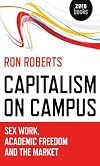
People used to go to university in order to avoid a life of sex work. Now they take on a life of sex work in order to go to university. Meanwhile, UK universities have gone from academic excellence and intellectual enquiry to full retail. The student is a customer. The customer pays what the market will bear and nothing else matters: not community, not society, not collaboration, not achievement, not argument, not growth. The customer pays for and receives the product sought, with little show more demand for work in addition to exorbitant money up front. As Margaret Thatcher intended – there is no society, there are only individuals doing their best for themselves individually. This is the university ecosystem Ron Roberts faces down in Capitalism on Campus.
It begins with a scathing indictment of the institutes of higher learning in the UK. They treat their students as customers rather than minds to be challenged, while putting them deep into debt and all but automatically issuing them degrees they will find devalued. They treat staff as mere inputs to help boost the public rating of the school, with no need for mentoring or achieving academic excellence – even their own. Risky (to the school’s reputation) research is plainly discouraged.
It’s all and only about the money. Universities are now all about raking in cash, while students accumulate debt and faculty go nowhere. He calls the university a “corporate pimp”.
From Roberts’ standpoint, the argument is Academic Freedom vs Corporate Image. From the university’s standpoint, it’s how you relate to the brand. From the student standpoint, it’s life as they know it. These three circles may intersect, but they never touch, the way Roberts sees it.
The middle of the book examines numerous studies conducted by Roberts and others on the depredations lived by these students in the sex industry. They go into it for all the usual reasons – living expenses, staying out of debt or at least not worsening it. The mere fact that medical, legal and psychology students must work in sex to get their degrees should send shivers down the spines of British politicians, but it seems spines are lacking in Westminster. Meanwhile the universities actively “obstruct, impede, hinder and discourage researchers” from examining the issue. They are all over anything that might “damage the brand”. They actively seek to suppress media attention to this issue, and of course will not attempt to deal with it in any way.
Roberts is clearly and overtly sickened by the attitude of the universities in stifling research and commentary, by government turning away from the situation and the students’ union for no effort at all on behalf of its constituents.
He clearly comes at it all from the left. He is reminiscent of Zizek with numerous references to pop culture and obscure epigraphs from obscure writers. But an angry Zizek. The totally expected references to Foucault add nothing, as usual, because Foucault is, as ever, vague enough to fit anyone’s argument. The book moves well, but suffers from a lack of confirmation. Roberts went nowhere and interviewed no one to put it together.
UK schools have descended to the bottom of European ranks, and UK students rank highest in debt, including against American students, whose universities have far exceeded the banality and venality of neoliberal greed, and whose students are renowned for the debt with which they begin life. For Americans, the fact some students must work in the sex industry would not raise an eyebrow any more. Such is the anesthetic power of neoliberalism. This is the path UK universities have chosen.
David Wineberg show less
It begins with a scathing indictment of the institutes of higher learning in the UK. They treat their students as customers rather than minds to be challenged, while putting them deep into debt and all but automatically issuing them degrees they will find devalued. They treat staff as mere inputs to help boost the public rating of the school, with no need for mentoring or achieving academic excellence – even their own. Risky (to the school’s reputation) research is plainly discouraged.
It’s all and only about the money. Universities are now all about raking in cash, while students accumulate debt and faculty go nowhere. He calls the university a “corporate pimp”.
From Roberts’ standpoint, the argument is Academic Freedom vs Corporate Image. From the university’s standpoint, it’s how you relate to the brand. From the student standpoint, it’s life as they know it. These three circles may intersect, but they never touch, the way Roberts sees it.
The middle of the book examines numerous studies conducted by Roberts and others on the depredations lived by these students in the sex industry. They go into it for all the usual reasons – living expenses, staying out of debt or at least not worsening it. The mere fact that medical, legal and psychology students must work in sex to get their degrees should send shivers down the spines of British politicians, but it seems spines are lacking in Westminster. Meanwhile the universities actively “obstruct, impede, hinder and discourage researchers” from examining the issue. They are all over anything that might “damage the brand”. They actively seek to suppress media attention to this issue, and of course will not attempt to deal with it in any way.
Roberts is clearly and overtly sickened by the attitude of the universities in stifling research and commentary, by government turning away from the situation and the students’ union for no effort at all on behalf of its constituents.
He clearly comes at it all from the left. He is reminiscent of Zizek with numerous references to pop culture and obscure epigraphs from obscure writers. But an angry Zizek. The totally expected references to Foucault add nothing, as usual, because Foucault is, as ever, vague enough to fit anyone’s argument. The book moves well, but suffers from a lack of confirmation. Roberts went nowhere and interviewed no one to put it together.
UK schools have descended to the bottom of European ranks, and UK students rank highest in debt, including against American students, whose universities have far exceeded the banality and venality of neoliberal greed, and whose students are renowned for the debt with which they begin life. For Americans, the fact some students must work in the sex industry would not raise an eyebrow any more. Such is the anesthetic power of neoliberalism. This is the path UK universities have chosen.
David Wineberg show less
In my day, people went to university in order to avoid this kind of life, but now they lead this kind of life in order to go to university
Female Massage Parlour Owner in Leeds
Capitalism on Campus: Sex Work, Academic Freedom, and the Market by Ron Roberts is an examination of the recent changes in British universities. Roberts is Chartered Psychologist with over thirty years experience in higher education. He has previously worked at King's College, University College London, St Bartholomew's show more Medical College, The Tavistock Institute, QMW, the University of Westminster, and Kingston University.
Higher education is making the news in the US and Britain seems to mirror the US example. In the US there is almost $1.5 Trillion in student debt the number is lower for Britain but the debt per student is higher, in fact, the highest in the world. In 1997 the average debt was under 5,000 Pounds today it is over 50,000 Pounds. The education process has become warped. No longer are universities places to encourage thinking and discovery but have become places where ratings override learning. It is seen in American public schools with standardized testing where teachers are pressed to teach students how to pass exams rather than learn. Colleges have a ranking system that is somewhat similar. The better your school the better your chances of landing a good job. The problems occur when students are coached into making the school appear better than encouraging learning. Schools are being administered by bureaucrats that care more for image than substance.
Although sex work takes the first position in the subtitle it is not the main concentration of the book. In 1970s movies occasionally a detective would be searching for the bad guy and end up in a strip club. He would talk to one of the girls and find out she was a university student, usually sociology, she would pass on the information and hint that tuition, job outlook, or some other reason forced her to work as a dancer, but she would conclude it is going to make a great thesis. Today that rarity has become much more common with an alarming amount of students who know someone involved in sex work. The internet makes it even easier today. Sex work offers a temporary, high paying job that takes less time than a traditional campus job. Also, students involved in sex work spend more time studying according to the research. Universities fight against sex work as immoral but really it has more to do with the school's image than a students reputation.
Education has evolved from learning institutions to marketable products that care more about image and standing rather than the quality of the output. America boomed after WWII when returning GIs went to college. A higher education was the ticket out of the factory job. Today in the US education is costly and seen by many as a waste. To complicate that the factory jobs are also gone. What was once a large middle class is now an endangered species. The good paying jobs are gone and education is too expensive. Roberts' look at the British example is scholarly. It is not light reading but more akin to a research paper. Documentation runs through the text which primary purpose is to present facts rather than deliver a smooth narrative. show less
Female Massage Parlour Owner in Leeds
Capitalism on Campus: Sex Work, Academic Freedom, and the Market by Ron Roberts is an examination of the recent changes in British universities. Roberts is Chartered Psychologist with over thirty years experience in higher education. He has previously worked at King's College, University College London, St Bartholomew's show more Medical College, The Tavistock Institute, QMW, the University of Westminster, and Kingston University.
Higher education is making the news in the US and Britain seems to mirror the US example. In the US there is almost $1.5 Trillion in student debt the number is lower for Britain but the debt per student is higher, in fact, the highest in the world. In 1997 the average debt was under 5,000 Pounds today it is over 50,000 Pounds. The education process has become warped. No longer are universities places to encourage thinking and discovery but have become places where ratings override learning. It is seen in American public schools with standardized testing where teachers are pressed to teach students how to pass exams rather than learn. Colleges have a ranking system that is somewhat similar. The better your school the better your chances of landing a good job. The problems occur when students are coached into making the school appear better than encouraging learning. Schools are being administered by bureaucrats that care more for image than substance.
Although sex work takes the first position in the subtitle it is not the main concentration of the book. In 1970s movies occasionally a detective would be searching for the bad guy and end up in a strip club. He would talk to one of the girls and find out she was a university student, usually sociology, she would pass on the information and hint that tuition, job outlook, or some other reason forced her to work as a dancer, but she would conclude it is going to make a great thesis. Today that rarity has become much more common with an alarming amount of students who know someone involved in sex work. The internet makes it even easier today. Sex work offers a temporary, high paying job that takes less time than a traditional campus job. Also, students involved in sex work spend more time studying according to the research. Universities fight against sex work as immoral but really it has more to do with the school's image than a students reputation.
Education has evolved from learning institutions to marketable products that care more about image and standing rather than the quality of the output. America boomed after WWII when returning GIs went to college. A higher education was the ticket out of the factory job. Today in the US education is costly and seen by many as a waste. To complicate that the factory jobs are also gone. What was once a large middle class is now an endangered species. The good paying jobs are gone and education is too expensive. Roberts' look at the British example is scholarly. It is not light reading but more akin to a research paper. Documentation runs through the text which primary purpose is to present facts rather than deliver a smooth narrative. show less

Statistics
- Works
- 5
- Members
- 39
- Popularity
- #376,656
- Rating
- 3.5
- Reviews
- 3
- ISBNs
- 18