
Thomas Harrison (2) (1969–)
Author of The Great Empires of the Ancient World
For other authors named Thomas Harrison, see the disambiguation page.
Works by Thomas Harrison
Associated Works
Responses to Oliver Stone's Alexander: Film, History, and Cultural Studies (2010) — Contributor — 21 copies, 2 reviews
The Late Roman World and Its Historian: Interpreting Ammianus Marcellinus (1999) — Contributor — 14 copies
Envy, Spite and Jealousy: The Rivalrous Emotions in Ancient Greece (Edinburgh Leventis Studies) (2003) — Contributor — 6 copies
Sicily from Aeneas to Augustus : new approaches in archaeology and history (2000) — Contributor — 4 copies
Travel, geography and culture in ancient Greece, Egypt and the Near East (2007) — Contributor — 2 copies
Tagged
Common Knowledge
Members
Reviews
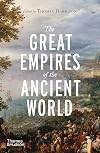
Some chapters are pretty good, for instance the one on the Maurya, Kushan and Gupta empires in India (and it is great to see that these are included!). Others however are flimsy and seem hastily written. The chapter about the Parthian and Sasanian empires is written entirely from a western, that is, Roman perspective. All authors are men and only few of them actually work in the field of empire studies. There are no recurring questions to give the volume cohesion.
Several authors say that show more their respective empires are probably not empires by any "modern definition of empire" because they are not unified and centralized. But no definition of "empire" is ever given, not even in the introduction. They probably mean "a definition of modern empire"; they seem unware of the fact that virtually all definitions of premodern, non-western empires would emphasize their diversity, forms of indirect rule, and lack of unity and centralization. And most empires in world history ARE premodern and non-western.
The authors who were given the chapter on the Hellenistic period are so in awe of Alexander "the Great" that they forget to give sufficient attention to the three long-lasting successor polities, the Seleucid, Ptolemaic, and Antigonid empires. The Caliphate/Umayyad Empire is conspicuously absent even from the chapter that deals with the Sasanians. show less
Several authors say that show more their respective empires are probably not empires by any "modern definition of empire" because they are not unified and centralized. But no definition of "empire" is ever given, not even in the introduction. They probably mean "a definition of modern empire"; they seem unware of the fact that virtually all definitions of premodern, non-western empires would emphasize their diversity, forms of indirect rule, and lack of unity and centralization. And most empires in world history ARE premodern and non-western.
The authors who were given the chapter on the Hellenistic period are so in awe of Alexander "the Great" that they forget to give sufficient attention to the three long-lasting successor polities, the Seleucid, Ptolemaic, and Antigonid empires. The Caliphate/Umayyad Empire is conspicuously absent even from the chapter that deals with the Sasanians. show less
Lists
You May Also Like
Associated Authors
Statistics
- Works
- 11
- Also by
- 17
- Members
- 157
- Popularity
- #133,742
- Rating
- 3.4
- Reviews
- 1
- ISBNs
- 54
- Languages
- 1