

Thomas P. Kasulis
Author of Zen Action/Zen Person
About the Author
Works by Thomas P. Kasulis
Engaging Japanese Philosophy: A Short History (Nanzan Library of Asian Religion and Culture, 4) (2017) 15 copies
The Recovery of Philosophy in America: Essays in Honor of John Edwin Smith (1997) — Editor — 5 copies
Associated Works
Tagged
Common Knowledge
- Birthdate
- 1948-03-05
- Gender
- male
- Occupations
- professor emeritus
- Organizations
- Ohio State University
- Nationality
- USA
- Associated Place (for map)
- USA
Members
Reviews
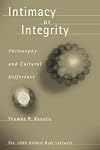
Intimacy and Integrity by Thomas P. Kasulis is an insightful exploration of Eastern and Western Weltanschauung. Kadulis delves into the rich fabric of cultural identity, epistemology, and aesthetics, and offers a broad canvas to sketch how these diverse orientations shape our interactions with the world and how we conceive knowledge and art in our particular milieu.
There is an opening scene that compares and contrasts child-rearing practices in Japan and the United States. Kasulis argues show more that there are indeed foundational differences in how the respective world views are ingrained in respective psyches. Japanese children, for instance, being closely attached to their mothers physically, are naturally inclined to observe the world through an intimate perspective from an early age. On the contrary, American children are raised up as independent explorers, consequently inclined to be somewhat individualistic. Kasulis uses this interesting characterization to set the stage for a deep exploration of how different cultures develop distinct modes of making sense of the world.
If human understanding, by definition, is so deeply modulated by cultural milieus, what are the possibilities of cross-cultural understanding? Moreover, is it even possible to compare two cultures when any such comparison would also be from a particular observer's perspective, who in turn will bring along a necessary observer bias? There will indeed be an oversimplification or distortion. The solution is a concept called cultural recursivity, whereby a target culture can be understood through repetitive patterns or orientations, and these orientations are 'intimacy' and 'integrity'. Kasulis presents it as an elaborate framework which on one hand, facilitates a deeper understanding of underlying cultural psyches, and on the other hand, offers a lens to view the social integrations objectively.
The characterization of epistemological and aesthetic domains is particularly illuminating. The psychic orientations of integrity are layered with objectivity, public verifiability, and a correspondence theory of truth. Orientations of intimacy on the other hand go well with personal experience, subjective truth, and the pragmatic theory of knowledge.
This also extends to the realm of art. Cultures and individuals with integrity orientations tend to achieve objective evaluative criteria, often separating the world of value from the world of being. Objects of art, as per this worldview, maintain their material existence but struggle for an artistic foothold without clear, objective standards. The intimacy orientation views art as an extension of the artist's inner being and cultural context. From this perspective, art is not just an object of aesthetic appreciation but a manifestation of the artist's individual and cultural identity. This view hesitates to separate objects of art from their creators, and appreciation and evaluation of art become a question of cultural and personal inquiry rather than the mere application of some universal beauty standards.
Ultimately, Intimacy and Integrity invite us to reconsider our own cultural predispositions. Kasulis tries to further a balanced analysis with obvious personal leanings toward integrity orientation. However, overall the monograph encourages a dialogue between East and West to enrich our collective understanding of the world. show less
There is an opening scene that compares and contrasts child-rearing practices in Japan and the United States. Kasulis argues show more that there are indeed foundational differences in how the respective world views are ingrained in respective psyches. Japanese children, for instance, being closely attached to their mothers physically, are naturally inclined to observe the world through an intimate perspective from an early age. On the contrary, American children are raised up as independent explorers, consequently inclined to be somewhat individualistic. Kasulis uses this interesting characterization to set the stage for a deep exploration of how different cultures develop distinct modes of making sense of the world.
If human understanding, by definition, is so deeply modulated by cultural milieus, what are the possibilities of cross-cultural understanding? Moreover, is it even possible to compare two cultures when any such comparison would also be from a particular observer's perspective, who in turn will bring along a necessary observer bias? There will indeed be an oversimplification or distortion. The solution is a concept called cultural recursivity, whereby a target culture can be understood through repetitive patterns or orientations, and these orientations are 'intimacy' and 'integrity'. Kasulis presents it as an elaborate framework which on one hand, facilitates a deeper understanding of underlying cultural psyches, and on the other hand, offers a lens to view the social integrations objectively.
The characterization of epistemological and aesthetic domains is particularly illuminating. The psychic orientations of integrity are layered with objectivity, public verifiability, and a correspondence theory of truth. Orientations of intimacy on the other hand go well with personal experience, subjective truth, and the pragmatic theory of knowledge.
This also extends to the realm of art. Cultures and individuals with integrity orientations tend to achieve objective evaluative criteria, often separating the world of value from the world of being. Objects of art, as per this worldview, maintain their material existence but struggle for an artistic foothold without clear, objective standards. The intimacy orientation views art as an extension of the artist's inner being and cultural context. From this perspective, art is not just an object of aesthetic appreciation but a manifestation of the artist's individual and cultural identity. This view hesitates to separate objects of art from their creators, and appreciation and evaluation of art become a question of cultural and personal inquiry rather than the mere application of some universal beauty standards.
Ultimately, Intimacy and Integrity invite us to reconsider our own cultural predispositions. Kasulis tries to further a balanced analysis with obvious personal leanings toward integrity orientation. However, overall the monograph encourages a dialogue between East and West to enrich our collective understanding of the world. show less
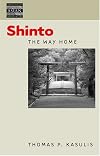
Kasulis's Shinto: The Way Home avoids the two most common pitfalls of writing about Shinto: treating it as a "book religion" or taking everything offered by Japanese proponents of "national learning" at face value. Instead Kasulis first introduces the history of Shinto and his views on what Shinto means for "common people", and proceeds to analyze its relation to the above pitfalls: why does Shinto get often the book religion treatment and what led to the apperance of national learning show more proponents and the pre-war State Shinto.
The downside is that particularly the first few chapters about the "meaning" of Shinto are in a somewhat popular style and attempt to summarize large swathes of Japanese thought and history in a very small space. This leads to "no true Scotsman" arguments which refer to the idea of an essential, lasting Japaneseness ("nihonjinron"). But to be fair, wading into the row on Japanese identity would require an entire book, so using this shortcut is understandable, and some questions of related to Japaneseness are discussed in later chapters.
Despite a few problems, this is still the best introduction to Shinto I've read in English. However, I'd recommend some prior reading on Japanese history before taking on this book. show less
The downside is that particularly the first few chapters about the "meaning" of Shinto are in a somewhat popular style and attempt to summarize large swathes of Japanese thought and history in a very small space. This leads to "no true Scotsman" arguments which refer to the idea of an essential, lasting Japaneseness ("nihonjinron"). But to be fair, wading into the row on Japanese identity would require an entire book, so using this shortcut is understandable, and some questions of related to Japaneseness are discussed in later chapters.
Despite a few problems, this is still the best introduction to Shinto I've read in English. However, I'd recommend some prior reading on Japanese history before taking on this book. show less
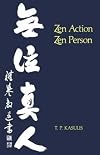
'You have asked permission to practice zen meditation in this temple, but tell me: What is zen?' After some hesitation and embarrassed smiling, I said something about Zen's being a way of life rather than a set of dogmas. Laughter filled the tatami-matted reception room. 'Everyone comes here to study Zen, but none of them knows what Zen is. Zen is-knowing thyself. You are a Western philosopher and you know of Socrates' quest. Did you assume Zen would be something different?'
Of the many books show more on Zen Buddhism, Zen Action/ZenPerson is the first by a professional American philosopher with training in East Asian languages. Zen practice, and the full range of Asian philosophies preceding the develoment of Japanese Zen Buddhism. This book is also the first thorough investigation of the intimate relationship between Zen doctrine and Zen practice. For many readers, Kasulis' work will clarify some of the key terms left obscure in the pioneering works of such writers as D.T. Suzuki and Alan Watts.
'For the thoughtul Westerner this must be one of the most clear and perceptive accounts of Zen available.'-Times Literary Supplement
'Kasulis' expositions may be considered to be a corner-stone in our understanding of Zen Buddhism. A well-presented, immensely rewarding book.'-The Middle Way
'A must for any reading list dealing seriously with Buddhism or Japanese culure.'-Choice
Contents
Preface
Acknowledgments
Part I The context of nothingness
Chapter 1 The cultural setting: Context and personal meaning
Three Japanese words for 'Person'
Contextual meaning in interpersonal communication
The Zen context of the person
Two strands of nothingness
Chapter 2 Nagarjuna: The logic of emptiness
Nagarjuna: A response to Abhidharma Analysis
Two Nagarjuna critiques
The implications of Nagarjuna's theory of emptiness
Nagarjuna's emptiness and Zen's nothingness
Part II Personal meaning in Zen practice
Chapter 5 Zen and reality
Zen's rejectionof conceptual categories
The retrospective reconstruction of reality
Experience and the analytic mode: Two criticisms
Chapter 6 Dogen's phenomenology of Zazen
Dogen's philosophical project
Dogen's account of Zazen
Thinking, not-thinking, without-thinking
Cultivation-authentication
Genjokuan: A central concept
Part III The person as act
Chapter 9 Zen action/Zen person
Nothingness and without-Thinking
Without-thinking and language
Zen action/Zen person
Chapter 10 Philosophical postscript: Toward a Zen humanism
Zen in the West
Morita therapy: Zen humanism in modern Japan
Zen humanism for the West
Chapter 3 Chinese Taoism: The pre-ontolgy of nonbeing
The absolute and the relative Taoa: Being and nonbeing in Taoism
The allegory of the bell
Taoist nonbeing and zen nothingness
Chapter 4 No-mind: The Zen response to nothingness
Mu as context of the Zen person
No-mind: The response to Mu
Heidegger's Gelassenheit: A Western parallel to No-mind?
The true person of no status
Cahpter 7 Dogen: Person as presence
Dogen on the self
Dogen on good and evil
The philosophical significance of Dogen's ethics
The person as presence
Chapter 8 Hakuin: the psycho-dynamics of Zen training
Hakuin's road to realization
The great doubt and the great death
Zen tactics
Dogen Zen and Hakuin Zen
Notes
Glossary
Works cited
Index show less
Of the many books show more on Zen Buddhism, Zen Action/ZenPerson is the first by a professional American philosopher with training in East Asian languages. Zen practice, and the full range of Asian philosophies preceding the develoment of Japanese Zen Buddhism. This book is also the first thorough investigation of the intimate relationship between Zen doctrine and Zen practice. For many readers, Kasulis' work will clarify some of the key terms left obscure in the pioneering works of such writers as D.T. Suzuki and Alan Watts.
'For the thoughtul Westerner this must be one of the most clear and perceptive accounts of Zen available.'-Times Literary Supplement
'Kasulis' expositions may be considered to be a corner-stone in our understanding of Zen Buddhism. A well-presented, immensely rewarding book.'-The Middle Way
'A must for any reading list dealing seriously with Buddhism or Japanese culure.'-Choice
Contents
Preface
Acknowledgments
Part I The context of nothingness
Chapter 1 The cultural setting: Context and personal meaning
Three Japanese words for 'Person'
Contextual meaning in interpersonal communication
The Zen context of the person
Two strands of nothingness
Chapter 2 Nagarjuna: The logic of emptiness
Nagarjuna: A response to Abhidharma Analysis
Two Nagarjuna critiques
The implications of Nagarjuna's theory of emptiness
Nagarjuna's emptiness and Zen's nothingness
Part II Personal meaning in Zen practice
Chapter 5 Zen and reality
Zen's rejectionof conceptual categories
The retrospective reconstruction of reality
Experience and the analytic mode: Two criticisms
Chapter 6 Dogen's phenomenology of Zazen
Dogen's philosophical project
Dogen's account of Zazen
Thinking, not-thinking, without-thinking
Cultivation-authentication
Genjokuan: A central concept
Part III The person as act
Chapter 9 Zen action/Zen person
Nothingness and without-Thinking
Without-thinking and language
Zen action/Zen person
Chapter 10 Philosophical postscript: Toward a Zen humanism
Zen in the West
Morita therapy: Zen humanism in modern Japan
Zen humanism for the West
Chapter 3 Chinese Taoism: The pre-ontolgy of nonbeing
The absolute and the relative Taoa: Being and nonbeing in Taoism
The allegory of the bell
Taoist nonbeing and zen nothingness
Chapter 4 No-mind: The Zen response to nothingness
Mu as context of the Zen person
No-mind: The response to Mu
Heidegger's Gelassenheit: A Western parallel to No-mind?
The true person of no status
Cahpter 7 Dogen: Person as presence
Dogen on the self
Dogen on good and evil
The philosophical significance of Dogen's ethics
The person as presence
Chapter 8 Hakuin: the psycho-dynamics of Zen training
Hakuin's road to realization
The great doubt and the great death
Zen tactics
Dogen Zen and Hakuin Zen
Notes
Glossary
Works cited
Index show less
Avoid like the plague authors who try to rationalize religion with scientific analogies.
You May Also Like


Associated Authors
Statistics
- Works
- 7
- Also by
- 5
- Members
- 331
- Popularity
- #71,752
- Rating
- 3.9
- Reviews
- 5
- ISBNs
- 21
- Languages
- 1