

Judith Walzer Leavitt
Author of Typhoid Mary: captive to the public's health
About the Author
Judith Walzer Leavitt is the Rupple Bascom and Ruth Bleier Professor Emerita at the University of Wisconsin-Madison. She is the author of The Healthiest City: Milwaukee and the Politics of Health Reform, Typhoid Mary: Captive to the Public's Health, and Make Room for Daddy: The journey from the show more Waiting Room to the Delivery Room. show less
Works by Judith Walzer Leavitt
Sickness and Health in America: Readings in the History of Medicine and Public Health (1978) 62 copies, 1 review
Associated Works
NOVA: Typhoid Mary: The Most Dangerous Woman in America {2004 TV episode} (2005) — Narrator — 6 copies
Tagged
Common Knowledge
- Other names
- Leavitt, Judy
Leavitt, Judith W. - Birthdate
- 1940-06-22
- Gender
- female
- Education
- University of Chicago (PhD)
- Occupations
- professor emerita (History of Medicine - Gender and Women's Studies)
medical historian - Organizations
- University of Wisconsin-Madison
- Relationships
- Leavitt, Lewis A. (husband)
Walzer, Michael (brother) - Nationality
- USA
- Birthplace
- New York, New York, USA
- Places of residence
- Madison, Wisconsin, USA
- Associated Place (for map)
- USA
Members
Reviews
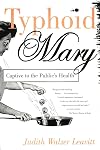
Mary Mallon, an Irish immigrant in early 1900's New York, was the first identified healthy carrier of the bacteria that causes typhoid fever in the United States. The concept of a healthy carrier was new to medical science and quite foreign to the general public. What followed was much difficulty for the New York board of health and Mallon herself. Leavitt explores Mallon's story from medical, public health, legal, and social perspectives. We see that no other healthy carriers, even those show more that infected more people than Mallon, were as harshly treated by society and boards of health. After exploring Mallon's life, Leavitt explores the legacy Mallon and the idea of Typhoid Mary left behind in society and culture and the lessons that can be applied to society's actions towards those with AIDS and HIV. As the publication date is nearly 20 years past, this last section is a little dated. However, Leavitt brings up important questions about the balance between individual liberty and public health. Some readers will find this book too academic for leisure reading as Leavitt divided the book by theme and does not focus on creating an exciting narrative. Interested readers will find information from multiple perspectives well presented and solidly analyzed while letting the reader make their own decisions. Recommended for public libraries where there is a strong interest in health science and academic libraries. show less
This is another example of good popular scientific history, as good as Simon Winchester at his best. Typhoid Mary was a poor Irish immigrant cook in New York who unknowingly carried the typhoid virus which infected and killed a number of people she worked for. The real story inside this story is the means by which the authorities then attempted to restrain her from infecting more people, given that they had no means to 'cure' her. Ultimately, after breaching agreements not to take up work show more again as a cook, she was forcibly detained. The parallels with the authorities action (and restraint) in relation to the AIDS crisis in the 1980's and 1990's are very telling. Although the story of one woman, it is a story about society and a commentary on how we react to infections (of all sorts) within society. It would make an interesting read alongside Camus' Plague, but stands alone very well indeed. show less
This books gets repetative simply because the task of viewing the story of Mary Mallon from so many different perspective is impossible without repeating facts. I liked the way this book examines how the public felt, how health officials felt, and how the press portrayed her. It is far from a cut and dry case, and I walked away from the book realizing that 'Typhoid Mary' was not a cold blooded killer like her nickname has come to imply.

I read this in college as a gender studies major. Worth it. This is an academic survey of the many ideas that have governed women's health - from the early midwives and questionable home remedies, to the birth control wars to the valium for 1950s housewives. If you are a student of women's history, this is a must read. This version is from the 90s. I don't know if they have released an updated edition.
Lists
Boundaries (1)
You May Also Like


Associated Authors
Statistics
- Works
- 7
- Also by
- 3
- Members
- 454
- Popularity
- #54,063
- Rating
- 3.8
- Reviews
- 7
- ISBNs
- 32