
About the Author
Barbara A. Lewis is a national award-winning author and educator who teaches kids how to think for themselves and solve real problems. She is the author of What Do You Stand For? For Kids, What Do You Stand For? For Teens, The Kid's Guide to Service Projects, The Teen Guide to Global Action, and show more Social Emotional Stories. Barbara has been featured by many national newspapers, magazines, and news programs, including Newsweek, the Wall Street Journal, Family Circle, CBS This Morning. CBS World News, and CNN. show less
Image credit: via Amazon.com
Works by Barbara A. Lewis
The Kid's Guide to Service Projects: Over 500 Service Ideas for Young People Who Want to Make a Difference (1995) 256 copies, 2 reviews
The Kid's Guide to Social Action: How to Solve the Social Problems You Choose-And Turn Creative Thinking into Positive Action (1991) 211 copies, 5 reviews
The Teen Guide to Global Action: How to Connect with Others (Near & Far) to Create Social Change (2007) 100 copies, 2 reviews
Tagged
Common Knowledge
- Birthdate
- 1943-04-16
- Gender
- female
- Occupations
- teacher
writer
speaker - Organizations
- The Church of Jesus Christ of Latter-day Saints
- Places of residence
- Park City, Utah, USA
- Associated Place (for map)
- Utah, USA
Members
Reviews
The kid's guide to social action, how to solve the social problems you choose--and turn creative thinking into positive by Barbara A. Lewis
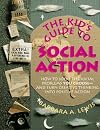
I spent forty-five years of my life as an educator. Still, in retirement, I think of myself everyday as a teacher. But I have kept very few titles from my professional library: I gave them all away, or have them boxed in the garage, waiting for some young professional who might make good use of them. What I have done, however, is to designate a special shelf in my library for works I have identified as pace-setters, accounts of teachers who came up with imaginative, effective ways to engage show more young minds. These are tagged as my edu.ex books (education.excellence). They also include visions of education as it ought to be.
Barbara Lewis was teaching sixth graders in Salt Lake City about hazardous waste sites. One, they discovered, was located just three blocks down the street from their school. "Kids climb all over those barrels!" one eleven-year-old exclaimed. It turned out that there were 50,000 of these rusted barrels, and they had once contained everything from molasses and flour to dangerous chemicals. Lewis's book, The Kid's Guide to Social Action, tells the story of how these youngsters decided to deal with this situation. It's an exciting story. At one high point these youngsters were invited to sit in plush seats in the legislature and witness the unanimous passage of a bill creating a Utah State Superfund. They had mounted a campaign to clean up their neighborhood, eventually even lobbying the legislature and testifying before a house committee. But the story doesn't end there: even more excitement was in store for them, even more dramatic achievements.
A book simply telling this story would be fascinating. But Lewis's book is exactly what it claims to be: a handbook to help other kids in other places accomplish the same kind of feats (most US adults would also find it informative). There are detailed and practical instructions for power telephoning, letter writing, interviewing, speeches, surveys, petitions, proposals, fundraising, media coverage and advertising, proclamations and voter registration, among other activities--even "parading, picketing, and protesting: when all else fails." There is a full chapter on initiating or changing local, state, and national laws. Two other chapters list multiple resources (including government and civic agencies) and provide forms helpful in using such tools as petitions, news releases, public service announcements, proclamations, and the like. Scattered through the books are photographs of Lewis's kids in action. fascimiles of documents they produced, and cartoons to illustrate and enliven the text. And accounts of effective projects are not limited to Jackson Elementary School in Salt Lake City. I think I counted some twenty sidebars about other effective social actions involving youngsters, all the way from Miami, Florida, to Levitown, Pennsylvania, to El Segundo, California: individuals, classes, scout troops, elementary schools and junior high schools.
Developing civic literacy is, in my opinion, the most important responsibility of public education in the US. The best way to teach youngsters to write, speak, and present effectively is to give them practice in actual situations that engage them. What they learn about reading, writing, and research (the three R's of effective social action) will stand them well not only as adult citizens but also as working professionals, as parents, and as self-fulfilled individuals.
Here are a few quotes from some of Lewis's students' letter to the President regarding their "Leaf it to US" campaign (copied in the book in their own handwriting): "We would like money for kids to plant trees on public grounds across the nation. We heard you want to put up $60,000,000 for planting trees. That's exactly what we would like to do. Could some of it be used for a Children's Fund for kids across the nation?" "Kids could match 10 to 20% of the money they took out." "One tree [underlined for emphasis] in its average 50 yr. lifetime contributes $62,000 worth of air pollution control. They also recycle water, and prevent soil erosion." On the next page is a copy of the President's response (penned by his staff, of course, but nevertheless a public recognition of their efforts). More important, with the support of Senator Orrin Hatch, the "American the Beautiful Act" of that year did, indeed, included funding for kids to plant trees. Ten-year-old Audrey had flown to DC to lobby Congress in person. show less
Barbara Lewis was teaching sixth graders in Salt Lake City about hazardous waste sites. One, they discovered, was located just three blocks down the street from their school. "Kids climb all over those barrels!" one eleven-year-old exclaimed. It turned out that there were 50,000 of these rusted barrels, and they had once contained everything from molasses and flour to dangerous chemicals. Lewis's book, The Kid's Guide to Social Action, tells the story of how these youngsters decided to deal with this situation. It's an exciting story. At one high point these youngsters were invited to sit in plush seats in the legislature and witness the unanimous passage of a bill creating a Utah State Superfund. They had mounted a campaign to clean up their neighborhood, eventually even lobbying the legislature and testifying before a house committee. But the story doesn't end there: even more excitement was in store for them, even more dramatic achievements.
A book simply telling this story would be fascinating. But Lewis's book is exactly what it claims to be: a handbook to help other kids in other places accomplish the same kind of feats (most US adults would also find it informative). There are detailed and practical instructions for power telephoning, letter writing, interviewing, speeches, surveys, petitions, proposals, fundraising, media coverage and advertising, proclamations and voter registration, among other activities--even "parading, picketing, and protesting: when all else fails." There is a full chapter on initiating or changing local, state, and national laws. Two other chapters list multiple resources (including government and civic agencies) and provide forms helpful in using such tools as petitions, news releases, public service announcements, proclamations, and the like. Scattered through the books are photographs of Lewis's kids in action. fascimiles of documents they produced, and cartoons to illustrate and enliven the text. And accounts of effective projects are not limited to Jackson Elementary School in Salt Lake City. I think I counted some twenty sidebars about other effective social actions involving youngsters, all the way from Miami, Florida, to Levitown, Pennsylvania, to El Segundo, California: individuals, classes, scout troops, elementary schools and junior high schools.
Developing civic literacy is, in my opinion, the most important responsibility of public education in the US. The best way to teach youngsters to write, speak, and present effectively is to give them practice in actual situations that engage them. What they learn about reading, writing, and research (the three R's of effective social action) will stand them well not only as adult citizens but also as working professionals, as parents, and as self-fulfilled individuals.
Here are a few quotes from some of Lewis's students' letter to the President regarding their "Leaf it to US" campaign (copied in the book in their own handwriting): "We would like money for kids to plant trees on public grounds across the nation. We heard you want to put up $60,000,000 for planting trees. That's exactly what we would like to do. Could some of it be used for a Children's Fund for kids across the nation?" "Kids could match 10 to 20% of the money they took out." "One tree [underlined for emphasis] in its average 50 yr. lifetime contributes $62,000 worth of air pollution control. They also recycle water, and prevent soil erosion." On the next page is a copy of the President's response (penned by his staff, of course, but nevertheless a public recognition of their efforts). More important, with the support of Senator Orrin Hatch, the "American the Beautiful Act" of that year did, indeed, included funding for kids to plant trees. Ten-year-old Audrey had flown to DC to lobby Congress in person. show less
The teen guide to global action : how to connect with others (near & far) to create social change by Barbara A. Lewis
With the economy in trouble, we can and should turn our attention to those around us in our neighborhoods and communities needing help and doing projects that will help those around us. Service projects, however, can take a whole new dimension when one extends a helping hand across borders and oceans. A year ago, at the national ASCD convention, two teachers keynoted the entire convention with a description of their global projects and the impact these activities had on their students show more motivation, learning, excitement, and new-found perspectives and understanding. Impressive indeed. In this volume that can be read by both teens and adults, dozens and dozens of ideas are recommended with all types of hows, whys, whens, and whos attached. Accroding to our speakers, such ideas can be ignited by just one student who might be given this book with an attached challenge and then the adults turn into coaches and help the teens take over. In today’s bored school kids, one need not fear that time taken on such projects will cut into scores. Rather, use them to boost skills, abilities, deep understanding, and most of all, caring. Highly recommended for solid ideas along with the ways and means. show less
We know that students learn best by doing. That also holds true with character education. If you are looking for an effective and efficient way to introduce this important subject to your students, Being Your Best is an excellent tool.
Written in a warm, conversational tone, the book introduces readers to ten positive character traits (each with their own chapter): caring, citizenship, cooperation, fairness, forgiveness, honesty, relationships with family and friends, respect, responsibility, show more and safety.
Each chapter begins with a true story of a child who exhibits the trait being discussed. (Some of the stories are deeply moving.) The chapter then goes on to explore in detail the trait or value. Each begins with a quote, gives an easy-to-understand definition, background information, and then describes projects, ideas, and activities for developing the trait.
We know that making the right choice is not always so obvious—even for adults. To that end, the author has thoughtfully included in each chapter a section titled, "What If?" that describes situations wherein the best choice may not be immediately discernable. Here the reader is encouraged to "think about, write about, talk about, or act out," a situation. For example, in the chapter on relationships, one question asks, "You have two friends who fight over you. They each want you to be their friend alone. You want to be friends with both. Is it possible to do that? What can you do or say to your friends?" show less
Written in a warm, conversational tone, the book introduces readers to ten positive character traits (each with their own chapter): caring, citizenship, cooperation, fairness, forgiveness, honesty, relationships with family and friends, respect, responsibility, show more and safety.
Each chapter begins with a true story of a child who exhibits the trait being discussed. (Some of the stories are deeply moving.) The chapter then goes on to explore in detail the trait or value. Each begins with a quote, gives an easy-to-understand definition, background information, and then describes projects, ideas, and activities for developing the trait.
We know that making the right choice is not always so obvious—even for adults. To that end, the author has thoughtfully included in each chapter a section titled, "What If?" that describes situations wherein the best choice may not be immediately discernable. Here the reader is encouraged to "think about, write about, talk about, or act out," a situation. For example, in the chapter on relationships, one question asks, "You have two friends who fight over you. They each want you to be their friend alone. You want to be friends with both. Is it possible to do that? What can you do or say to your friends?" show less
The Kid's Guide to Social Action: How to Solve the Social Problems You Choose-And Turn Creative Thinking into Positive Action by Barbara A. Lewis
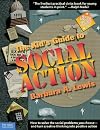
The Kid’s Guide to Social Action by Barbara A. Lewis. Epiphany-OviedoELCA library section 9 A: Juvenile (gr. K-5), Religion and Values. This tool teaches students the rudiments of social activism: petitioning, speech making, conducting protests, interviewing, doing surveys, sending faxes, writing letters, and how to get press coverage for events. It includes copyable forms such as voter registration and press releases, and gives contact information for governmental, social, education, and show more environmental groups.
Kids are guided to choose a problem to work on. Then it tells them to research the problem and from among a number of solutions, choose the best one. Then it tells how to build a coalition, work with the opposition, advertise, raise money, carry out their solution, evaluate and reflect, and not give up.
This is a very helpful book for teens (or even adults) that takes apart successful activist movements, and how to create such an activist cause, identify a worrisome problem, and work toward a solution. Every organization, church youth group, and service club member ought to read this, especially kids starting high school, and keep it close at hand for information when they identify a problem they want to solve to make the world a better place.
When our daughter joined her high school’s Amnesty International chapter, she was given much of this information from AI free of charge. With Amnesty International training, she became AI’s central Florida coordinator for the organization, led sessions on female discrimination at the central Florida conference in Orlando, and attend the southern regional conference in Atlanta, all while still in high school. She also conducted successful peaceful protests against the death penalty at the county courthouse which were covered by the local newspaper and TV stations. She was a student speaker at an anti-war rally attended by many ministers and local supporters. Had she had this book then, it would have been her activist “bible.” This book tells how to make a difference in the world and succeed at it. show less
Kids are guided to choose a problem to work on. Then it tells them to research the problem and from among a number of solutions, choose the best one. Then it tells how to build a coalition, work with the opposition, advertise, raise money, carry out their solution, evaluate and reflect, and not give up.
This is a very helpful book for teens (or even adults) that takes apart successful activist movements, and how to create such an activist cause, identify a worrisome problem, and work toward a solution. Every organization, church youth group, and service club member ought to read this, especially kids starting high school, and keep it close at hand for information when they identify a problem they want to solve to make the world a better place.
When our daughter joined her high school’s Amnesty International chapter, she was given much of this information from AI free of charge. With Amnesty International training, she became AI’s central Florida coordinator for the organization, led sessions on female discrimination at the central Florida conference in Orlando, and attend the southern regional conference in Atlanta, all while still in high school. She also conducted successful peaceful protests against the death penalty at the county courthouse which were covered by the local newspaper and TV stations. She was a student speaker at an anti-war rally attended by many ministers and local supporters. Had she had this book then, it would have been her activist “bible.” This book tells how to make a difference in the world and succeed at it. show less
Lists
Awards


You May Also Like


Associated Authors
Statistics
- Works
- 14
- Members
- 1,078
- Popularity
- #23,855
- Rating
- 3.1
- Reviews
- 14
- ISBNs
- 44
- Languages
- 1