
George R. Milner
Author of The Moundbuilders: Ancient Peoples of Eastern North America (Ancient Peoples and Places)
About the Author
George R. Milner is Distinguished Professor of Anthropology at The Pennsylvania State University, and much of his research focuses on the prehistory of eastern North America. He has also worked in Denmark, Egypt, and Micronesia, and teaches widely on archaeological topics and bioarchaeology. He is show more the author of numerous articles and several books, including The Cahokia Chiefdom: The Archaeology of a Mississippian Society. show less
Works by George R. Milner
The Moundbuilders: Ancient Peoples of Eastern North America (Ancient Peoples and Places) (2004) 134 copies, 1 review
Julien (11-S-63) Site: A MISSISSIPPIAN OCCUPATION. VOL. 7 (American Bottom Archaeology) (1984) 4 copies
The Turner and Demange Sites: American Botton Archaeology (American Bottom Archaeology) (1983) 3 copies
Robinson's Lake (11-Ms-582) Site: Emergent Mississippian Occupation. Vol. 10 (American Bottom Archaeology) (1983) 3 copies
The East St. Louis Stone Quarry Site Cemetery (11-S-468 : American Bottom Archaeology Fai-270 Site Reports) (1983) 1 copy
Tagged
Common Knowledge
- Birthdate
- 1953
- Gender
- male
- Occupations
- archaeologist
- Nationality
- USA
- Associated Place (for map)
- USA
Members
Reviews
The Moundbuilders: Ancient Peoples of Eastern North America (Ancient Peoples and Places) by George R. Milner
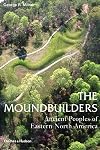
I am not an expert on the Moundbuilders, but this seems to be a good solid book on its subject, and up-to-date for its time, about 14 years ago. It describes a long development of a series of cultures that built mounds in different parts of the eastern US (chiefly east of the Mississippi); the cultures are described in roughly chronological order, though on of the author's points is that even with carbon dating and related techniques, the dates are far from exact. He sees the early cultures show more as hunter-gatherers whose food system presumably could not have supported real cities, though he argues even large mounds could be build by relatively small groups over long periods of time, perhaps centuries. Later peoples adopted "cultigens" (domesticated plants) but the local ones were original items like squashes and gourds, sunflowers and various grasses such as goosefoot (he says from experience that only necessity could make someone eat goosefoot porridge). Maize was brought in maybe 200 years ago, but only took off as a major food source about 1000 years ago. He also describes the burial practices -- some sites had a few high status graves with exotic grave goods (eg obsidian and mica and copper, even copper breastplates); others had more low-status graves dug into the same mound. He reports there weresome cases of skeletons showing clear signs of death from combat, but they were relatively rare, especially in the Adena-Hopewell era when rich exotic deposits suggest peaceful trade (or, he suggests, gifts to avert hostilities). The book goes all the way down to the arrival of Europeans --late grave goods include what may be Spanish bells. Overall, the book seems to be realistic, sensible and less melodramatic than, say, 1491. The writer tends to downplay the size of North American settlements, estimating Cahokia at 3 to 6,000 people instead of possible 20 to 40,00, for example. He says studies show most mounds could have been created by relatively small numbers of people. As usual in this series, there are a lot of good pictures and plans of sites. show less
Lists
You May Also Like


Statistics
- Works
- 13
- Members
- 193
- Popularity
- #113,336
- Rating
- 3.6
- Reviews
- 1
- ISBNs
- 10