
Anne P. Mintz
Author of Web of Deception: Misinformation on the Internet
Works by Anne P. Mintz
Web of Deceit: Misinformation and Manipulation in the Age of Social Media (2012) 44 copies, 8 reviews
Tagged
Common Knowledge
- Gender
- female
Members
Reviews

This is a straightforward manual about how to protect yourself in cyberspace: a 200-page softcover compilation of material that's been covered in a hundred breathless newspaper, magazine, and TV feature stories. It's the kind of book that school districts would assign to a high school "online literacy" course: fact-filled, practical, earnest, and dull. School districts, their libraries, and larger public libraries are -- along with well-meaning parents wanting to protect their middle- and show more high-school-age offspring -- are, in fact, probably the natural audience for this book. Few adults are likely to pay the $30 cover price, and few teens (not driven by a course assignment or parental edict) are likely to pull this off the shelf.
The book is packed with solid advice: Be thoughtful about what you post online, watch out for too-good-to-be-true offers, assume that any email asking for your bank account number or PIN code is a scam, don't give to charities without checking their credentials, turn your bullshit-detector to "high" when confronted with alarming political news. All of this is worth repeating, and repeating again . . . all of it is good advice . . . but none of it is new, and none of it goes beyond the "Online Safety 101" level. There are websites out there that will walk you, step-by-step, through how to navigate Facebook's privacy controls . . . the relevant essay in this book starts (and stops) by reminding you that Facebook has privacy controls, and that you should use them.
Like the journalistic feature stories they tend to resemble -- albeit in longer and more detailed form -- the chapters in this book shun complexity, nuance, and historical context. They barely acknowledge the possibility that the "openness" visible on social media sites is part of a larger cultural shift rather than simply youthful foolishness . . . consider the rituals through which trust (without which e-commerce would not exist) is established online . . . or address (beyond vague hand-waves at "the 24/7 news cycle) the ways in which journalism in the electronic era promotes the spread of rumor by making the existence of the rumor the story. A warning to parents against posting pictures of (or information about) their children leans on the implied -- and, according to countless studies, wildly exaggerated -- threat of stranger abduction rather than the far less clear-cut issue of privacy. A discussion of the "Obama is not an American citizen" meme characterizes it simply as a knowing lie rather than dissecting the mash-up of disinformation, misunderstanding, ignorance, xenophobia, and wishful thinking it became. An attempt to reiterate (I think) Chris Mooney's point that stories about science are ill-served by an obsession with "balance" becomes -- in its effort to treat all sides equally -- an example of precisely the phenomenon it decries.
If you need a solid, reliable, portable guide to " Bad Things That Can Happen To You Online, and How To Avoid Most of Them," this is your book. If you already know what your Facebook privacy settings are, ignore stern warnings that your bank account needs to be "verified," and routinely slap the "spam" tag on misspelled, ungrammatical emails allegedly from major corporations . . . save your money, or (better yet!) use it to go buy something by Cass Sunstein, Chris Mooney, or Cory Doctorow. show less
The book is packed with solid advice: Be thoughtful about what you post online, watch out for too-good-to-be-true offers, assume that any email asking for your bank account number or PIN code is a scam, don't give to charities without checking their credentials, turn your bullshit-detector to "high" when confronted with alarming political news. All of this is worth repeating, and repeating again . . . all of it is good advice . . . but none of it is new, and none of it goes beyond the "Online Safety 101" level. There are websites out there that will walk you, step-by-step, through how to navigate Facebook's privacy controls . . . the relevant essay in this book starts (and stops) by reminding you that Facebook has privacy controls, and that you should use them.
Like the journalistic feature stories they tend to resemble -- albeit in longer and more detailed form -- the chapters in this book shun complexity, nuance, and historical context. They barely acknowledge the possibility that the "openness" visible on social media sites is part of a larger cultural shift rather than simply youthful foolishness . . . consider the rituals through which trust (without which e-commerce would not exist) is established online . . . or address (beyond vague hand-waves at "the 24/7 news cycle) the ways in which journalism in the electronic era promotes the spread of rumor by making the existence of the rumor the story. A warning to parents against posting pictures of (or information about) their children leans on the implied -- and, according to countless studies, wildly exaggerated -- threat of stranger abduction rather than the far less clear-cut issue of privacy. A discussion of the "Obama is not an American citizen" meme characterizes it simply as a knowing lie rather than dissecting the mash-up of disinformation, misunderstanding, ignorance, xenophobia, and wishful thinking it became. An attempt to reiterate (I think) Chris Mooney's point that stories about science are ill-served by an obsession with "balance" becomes -- in its effort to treat all sides equally -- an example of precisely the phenomenon it decries.
If you need a solid, reliable, portable guide to " Bad Things That Can Happen To You Online, and How To Avoid Most of Them," this is your book. If you already know what your Facebook privacy settings are, ignore stern warnings that your bank account needs to be "verified," and routinely slap the "spam" tag on misspelled, ungrammatical emails allegedly from major corporations . . . save your money, or (better yet!) use it to go buy something by Cass Sunstein, Chris Mooney, or Cory Doctorow. show less
 This review was written for LibraryThing Early Reviewers.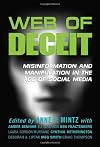
This was a great read! Although the title makes the book seem like it's written by people with tin foil hats, the actual content was very useful. It had wonderful stories about how information and misinformation can spread throughout the internet. Furthermore, there were lists of concrete things normal people can do to protect themselves. I would recommend this book to anyone that has an internet connection.
This review was written for LibraryThing Early Reviewers.The Internet has been a tremendous boon to our Information Age society – it has made available a wealth of information that I never even dreamed of twenty years ago. I graduated as an undergraduate in 1994. I first went online in 1996, and let me tell you: it wasn’t all that great, but you could see the glimmerings of its potential. In college, to do research for a class paper, I had to walk to the library, use a computer terminal to search the catalogue (yes, they did still have the show more physical card catalogues but I preferred the computer terminals) and spend an afternoon laboriously searching for likely books. Journal, magazine, and newspaper articles were not integrated into a searchable database, and you had to visit the stacks and dig through piles of paper to see if anything looked relevant. You never knew what sources you had missed. Now, as an academic, I can search through countless databases to find virtually every article, monograph, and edited collection on a given topic, instantly and from the comfort of my home or office. I can also get copies of all these pieces as long as they’re in a database to which my academic institution has access. That’s a revolutionary transformation in information availability and retrieval. And it says nothing about the revolution in online retail and entertainment options now available. I essentially never need to visit a mall or entertainment venue again, unless I want to.
But I can also get my identity stolen online, and get my bank account cleaned out by an anonymous crook. I can be tricked into believing things that aren’t true online, and I can be subtly influenced by what I read or watch online (just as with any other information source). Personally, I find that the advantages of the Internet outweigh the disadvantages, and I’m cautious about how I use the Internet.
Not everyone is cautious with their use of the Internet, or how they perceive and treat the information we are all bombarded with on a daily basis, and that’s where WEB OF DECEIT comes in. This is a collection of relatively short essays on a host of web security, online fraud, and identity protection-related issues, along with a few pieces that begin to delve into the more subtle biases we might encounter in published statements by journalists and politicians. (On this point, I must ironically note that I found several of the websites and other sources suggested for political “fact-checking” to be extremely biased. No matter what one’s political leanings, I doubt that anyone would consider the MSNBC pundit Rachel Maddow, among others, to be an objective “fact-checker” to whom one should turn for unbiased political analysis.)
Ultimately, I found WEB OF DECEIT to be a quick, fairly interesting read, but I’m not sure of its intended audience. It raises a number of issues related to Internet security, identity theft, and credibility of the information one finds online, but is any of this really new information, or for that matter, anything a thoughtful reader doesn’t already know? As a college professor, I am aware that many of my students who have come of age in a time of ubiquitous Internet access don’t treat the Internet with sufficient caution. They tend to treat all Internet sources as being equally credible, rarely interrogating their sources in a deep or meaningful way. So maybe WEB OF DECEIT could serve as an eye opener for them. It’s a quick read, and most of the essays contain at least a few interesting nuggets. I recommend it to those with a significant interest in issues of Internet privacy, but for everyone else it’s a bit ho-hum. It’s not a bad source of information – calls for heightened caution online should never fall on deaf ears – but it’s also unlikely to tell you anything you don’t already know.
Review copyright 2012 J. Andrew Byers show less
But I can also get my identity stolen online, and get my bank account cleaned out by an anonymous crook. I can be tricked into believing things that aren’t true online, and I can be subtly influenced by what I read or watch online (just as with any other information source). Personally, I find that the advantages of the Internet outweigh the disadvantages, and I’m cautious about how I use the Internet.
Not everyone is cautious with their use of the Internet, or how they perceive and treat the information we are all bombarded with on a daily basis, and that’s where WEB OF DECEIT comes in. This is a collection of relatively short essays on a host of web security, online fraud, and identity protection-related issues, along with a few pieces that begin to delve into the more subtle biases we might encounter in published statements by journalists and politicians. (On this point, I must ironically note that I found several of the websites and other sources suggested for political “fact-checking” to be extremely biased. No matter what one’s political leanings, I doubt that anyone would consider the MSNBC pundit Rachel Maddow, among others, to be an objective “fact-checker” to whom one should turn for unbiased political analysis.)
Ultimately, I found WEB OF DECEIT to be a quick, fairly interesting read, but I’m not sure of its intended audience. It raises a number of issues related to Internet security, identity theft, and credibility of the information one finds online, but is any of this really new information, or for that matter, anything a thoughtful reader doesn’t already know? As a college professor, I am aware that many of my students who have come of age in a time of ubiquitous Internet access don’t treat the Internet with sufficient caution. They tend to treat all Internet sources as being equally credible, rarely interrogating their sources in a deep or meaningful way. So maybe WEB OF DECEIT could serve as an eye opener for them. It’s a quick read, and most of the essays contain at least a few interesting nuggets. I recommend it to those with a significant interest in issues of Internet privacy, but for everyone else it’s a bit ho-hum. It’s not a bad source of information – calls for heightened caution online should never fall on deaf ears – but it’s also unlikely to tell you anything you don’t already know.
Review copyright 2012 J. Andrew Byers show less
This review was written for LibraryThing Early Reviewers.I wasn’t expecting what I got with Web of Deceit. I actually had a very hard time with this book – not because the material being covered wasn’t interesting, but because it was presented in a way that didn’t make the material appeal to me.
The biggest thing that didn’t work for me was how American-centred this book is. It is definitely geared towards an American audience, and I hadn’t been expecting that at all, especially because it’s a topic that doesn’t just affect show more Americans – the social web is a global thing. It’s one thing that the majority of the examples that this book illustrates are directly impacting the American people (such as pretty much a whole essay on the current American election)… but it’s another thing when the majority of resources that are provided are specifically for Americans: federal government resources, information about American laws, places to retrieve credit reports, etc. It’s unfortunate, but this makes this particular book only good for everyone in theory and not helpful on the practical front for people who are not American.
The other thing that really didn’t work for me in regards to this book, personally, was that I found the information to be very basic. This would make the book really great for someone who is just being introduced to social media and the social web… but for someone who has an intermediate or advanced knowledge of it, then it’s information that has been rehashed again and again.
There are some things that can be taken away from this book – the appendix that goes into evaluating websites, is definitely useful. This appendix explains what sort of stuff you’re looking for to see whether a website is legit before you fully believe the information they promote, or before you submit your credit card (or any sensitive) information. This book also helps remind readers that if you click a link in an email or on a webpage that you believe is taking you to facebook (or another social networking site) but when you look up into the address bar and it’s not the address that you’re expecting, then you probably shouldn’t trust that site.
The Bottom Line: Overall… didn’t really enjoy it. Felt it didn’t really apply to me. But I can see how it could be useful to American readers who aren’t already well-versed in social media. show less
The biggest thing that didn’t work for me was how American-centred this book is. It is definitely geared towards an American audience, and I hadn’t been expecting that at all, especially because it’s a topic that doesn’t just affect show more Americans – the social web is a global thing. It’s one thing that the majority of the examples that this book illustrates are directly impacting the American people (such as pretty much a whole essay on the current American election)… but it’s another thing when the majority of resources that are provided are specifically for Americans: federal government resources, information about American laws, places to retrieve credit reports, etc. It’s unfortunate, but this makes this particular book only good for everyone in theory and not helpful on the practical front for people who are not American.
The other thing that really didn’t work for me in regards to this book, personally, was that I found the information to be very basic. This would make the book really great for someone who is just being introduced to social media and the social web… but for someone who has an intermediate or advanced knowledge of it, then it’s information that has been rehashed again and again.
There are some things that can be taken away from this book – the appendix that goes into evaluating websites, is definitely useful. This appendix explains what sort of stuff you’re looking for to see whether a website is legit before you fully believe the information they promote, or before you submit your credit card (or any sensitive) information. This book also helps remind readers that if you click a link in an email or on a webpage that you believe is taking you to facebook (or another social networking site) but when you look up into the address bar and it’s not the address that you’re expecting, then you probably shouldn’t trust that site.
The Bottom Line: Overall… didn’t really enjoy it. Felt it didn’t really apply to me. But I can see how it could be useful to American readers who aren’t already well-versed in social media. show less
This review was written for LibraryThing Early Reviewers.Statistics
- Works
- 3
- Members
- 95
- Popularity
- #197,645
- Rating
- 3.3
- Reviews
- 8
- ISBNs
- 8
