
Vladimir Pozner (2) (1905–1992)
Author of Le mors aux dents
For other authors named Vladimir Pozner, see the disambiguation page.
Works by Vladimir Pozner
Gens du pays les 4 copies
Mille et un jours 1 copy
Der Richtplatz. Erzählungen 1 copy
Tagged
Common Knowledge
- Legal name
- Posener, Wladimir Wolf
- Other names
- Pozner, Vladimir Salomonovitch
По́знер, Влади́мир Соломо́нович - Birthdate
- 1905-01-05
- Date of death
- 1992-02-19
- Gender
- male
- Education
- Université de la Sorbonne, Paris (Licence, Lettre, 1921)
Maison des Arts, Petrograd (1919)
Ecole de l’Éducation libre, Moscou (1917) - Occupations
- Journaliste
Scénariste
Traducteur (Russe, Français) - Relationships
- Makovska, Elisabeth (Ex épouse, 19 25 | 1937)
- Nationality
- France
- Birthplace
- 6e arrondissement, Paris, Île-de-France, France
- Place of death
- 7e arrondissement, Paris, Île-de-France, France
- Map Location
- France
Members
Reviews

This is one of those rare cases, at least for me, where a discussion of a book's author, before discussing the book itself, is necessary to put the book in context. The author of this novel about the German occupation of a small French Channel Coast village is not Vladimir Pozner, the contemporary journalist, but Vladimir Pozner, the French/Russian Jewish writer and intellectual. He was born in France in 1905, where his Russian/Jewish parents had fled after publicly supporting the failed show more Russian Revolution of 1905. In 1909, the family returned to Russia after a general amnesty was declared. Pozner studied in Leningrad, and in the meantime his parents gathered a literary community around themselves. Pozner returned to Paris in 1921 to study at the Sorbonne. He remained a Communist and socialized with the prominent Russian expatriate writers (and continued writing himself) who had gathered in in France. With the rise of Hitler, Mussolini and Franco, Pozner became a vocal anti-Fascist. Oddly, the Wikipedia page on Pozner (whence comes almost all the information presented here, as I couldn't find any other info in English online) and the book's flyleaf diverge regarding Pozner's experiences during World War 2. The flyleaf says that "in the summer of 1939, {Pozner} was ordered to report to his artillery depot for active duty. For one solid year he vegetated in the army, then in six weeks he saw a lifetime of warfare, and then France fell." (The mention of "vegetated" we can assume refers to the "Phony War" during which time the French and English Armies did very little, indeed.) The flyleaf goes on to tell us about the circuitous route by which he reached New York in 1941. Oddly, the Wikipedia page makes no mention of Pozner's military service at all, saying instead:
"As Nazi panzers rolled into Paris, June 1940, he left Paris behind to join his family in Correze. He stayed with Arlette and Renaud de Jouvenel, his best friends. There they met Aragon, the Prevert brothers, Marcel Duhamel, and many other refugees, particularly Spanish republicans.
Thus the Gestapo found his Paris apartment empty. As a public anti-fascist, and militant Jewish communist, Pozner sought asylum in the United States, and was able to get this. (Quite possibly, the State Department, notoriously stingy with visas for Europeans fleeing Nazi occupation, already had their eye on him for future war work.) Leaving for New York, where his wife and family were waiting, they soon found themselves moving to California, he stayed at first in Berkeley with Barbara and Haakon Chevalier. Charpentier, the Hollywood director shot "Liberty Ships" at Richmond in the bay of San Francisco. He worked on several films with Berthold Brecht, Jons Ivens, George Sklar, Saika Viertel (starring Greta Garbo), with whom he remained friends. He was nominated for Oscars, most original screenplay, in The Dark Mirror, won by Robert Siodmak."
So, a fascinating life, which I've learned about only because somewhere along the line I purchased this beautiful first edition copy and somewhat randomly decided to pull it down off my shelf and read it last week. So, now maybe, finally, I should actually talk about the novel itself!
The novel takes place, as mentioned above, in a small, Channel Coast French village under occupation by the German Army. For the bored occupiers, there is very little going on except cold, rainy weather. For the villagers, what's going on is malnutrition, as their cattle and crops are requisitioned by the Germans. A plan is underway among the villagers to hide their wheat crop, but where? This malevolently placid setting is interrupted when a German enlisted soldier turns up missing and the occupiers look to the occupied for answers. There is a mist of unreality throughout the proceedings, particularly in the novel's first half. The characters are not fully drawn. The Germans in particular seem almost cartoon like in their foolishness. There is a degree of fable telling in the narrative, perhaps. At the beginning, I thought once or twice of the book, [The Good Soldier Schweik], although here the comedic element is much more subdued. During the book's second half, however, as the tension and sense of menace mounts, any comedic sense still maintaining serves only to underscore the cruelty of the situation. This novel, one could say, is about the banality of evil. This is not a great novel. Although we do come to know and care about several of the villagers, the relative shallowness of the characterizations drains some impact from the proceedings. But the power of the situation itself has rendered this novel a very memorable one for me. I should mention that the book was published in 1943, so it was very much a novel of its moment. show less
"As Nazi panzers rolled into Paris, June 1940, he left Paris behind to join his family in Correze. He stayed with Arlette and Renaud de Jouvenel, his best friends. There they met Aragon, the Prevert brothers, Marcel Duhamel, and many other refugees, particularly Spanish republicans.
Thus the Gestapo found his Paris apartment empty. As a public anti-fascist, and militant Jewish communist, Pozner sought asylum in the United States, and was able to get this. (Quite possibly, the State Department, notoriously stingy with visas for Europeans fleeing Nazi occupation, already had their eye on him for future war work.) Leaving for New York, where his wife and family were waiting, they soon found themselves moving to California, he stayed at first in Berkeley with Barbara and Haakon Chevalier. Charpentier, the Hollywood director shot "Liberty Ships" at Richmond in the bay of San Francisco. He worked on several films with Berthold Brecht, Jons Ivens, George Sklar, Saika Viertel (starring Greta Garbo), with whom he remained friends. He was nominated for Oscars, most original screenplay, in The Dark Mirror, won by Robert Siodmak."
So, a fascinating life, which I've learned about only because somewhere along the line I purchased this beautiful first edition copy and somewhat randomly decided to pull it down off my shelf and read it last week. So, now maybe, finally, I should actually talk about the novel itself!
The novel takes place, as mentioned above, in a small, Channel Coast French village under occupation by the German Army. For the bored occupiers, there is very little going on except cold, rainy weather. For the villagers, what's going on is malnutrition, as their cattle and crops are requisitioned by the Germans. A plan is underway among the villagers to hide their wheat crop, but where? This malevolently placid setting is interrupted when a German enlisted soldier turns up missing and the occupiers look to the occupied for answers. There is a mist of unreality throughout the proceedings, particularly in the novel's first half. The characters are not fully drawn. The Germans in particular seem almost cartoon like in their foolishness. There is a degree of fable telling in the narrative, perhaps. At the beginning, I thought once or twice of the book, [The Good Soldier Schweik], although here the comedic element is much more subdued. During the book's second half, however, as the tension and sense of menace mounts, any comedic sense still maintaining serves only to underscore the cruelty of the situation. This novel, one could say, is about the banality of evil. This is not a great novel. Although we do come to know and care about several of the villagers, the relative shallowness of the characterizations drains some impact from the proceedings. But the power of the situation itself has rendered this novel a very memorable one for me. I should mention that the book was published in 1943, so it was very much a novel of its moment. show less
I decided I wanted to read a book about Roman von Ungern-Sternberg, the strange Bloody Baron of the Russian Civil War who briefly reestablished the Mongolian empire and attempted to restore the Russian empire. There are many rumors about this strange figure who may have believed he was the reincarnation of Genghis Khan, and who some even today view as an incarnation of Jamsaran, the Buddhist god of war. I found two books, and since this one was published in France by a man with a Russian show more name in the 1930s I thought this one might have an interesting perspective, and may even have been written by someone who knew him. It was a mistake. The author is somewhat pro-Soviet, of Russian extraction but who had lived in Paris apparently his whole life. In the first few chapters the author fills in space with invented conversations with a female interlocutor and writes about how hard it was to find out anything about Baron Ungern. Most of the book is a novel-style account of Baron Ungern's role in the civil war. The author admits in the last chapter that he made a lot up. The book was amusing at times, charming at others as the author talked about himself, but ultimately this book will probably only interest either Russian Civil War enthusiasts who have read everything else or people who enjoy historical romances and don't know anything about the Russian Civil War. show less
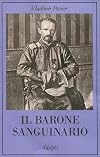
Sets up an unreal stereotype of a nice guy made fierce by loss of his family and then destroys it. Ultimately pro-Soviet. Interesting chiefly because it deals with a little-known episode of the Russian Civil War which led to Soviet control of Mongolia
Statistics
- Works
- 24
- Members
- 78
- Popularity
- #229,021
- Rating
- 2.7
- Reviews
- 3
- ISBNs
- 37
- Languages
- 7
