
Fred C. Robinson (1937–2015)
Author of A Guide to Old English
About the Author
Works by Fred C. Robinson
Pabular Book 1 - Vol. 1&2 1 copy
Pabular Book 2 - Vol. 3&4 1 copy
Pabular Book 3 - Vol. 5&6 1 copy
Pabular Book 4 - Vol. 7&8 1 copy
Associated Works
Beowulf: A Verse Translation [Norton Critical Edition] (2000) — Contributor — 1,032 copies, 9 reviews
Beowulf: A Prose Translation [Norton Critical Edition, 2nd ed.] (1998) — Contributor — 150 copies, 2 reviews
The Preservation and Transmission of Anglo-Saxon Culture: Selected Papers from the 1991 Meeting of the International Society of Anglo-Saxonists (1997) — Introduction — 7 copies
Language Form and Linguistic Variation : papers dedicated to Angus McIntosh (1982) — Contributor — 6 copies
Word Indices to Old English Non-poetic Texts: Index to the Old English Glosses of the Durham Hymnarium (1974) — Preface, some editions — 3 copies
Tagged
Common Knowledge
- Birthdate
- 1937
- Date of death
- 2015-05-05
- Place of death
- New Haven, Connecticut, USA
- Associated Place (for map)
- Connecticut, USA
Members
Reviews
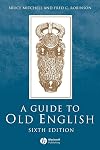
A very strong grammar and methodical reference, with texts. Not necessarily the most accessible, as it assumes some linguistic theory.
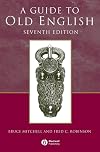
There is a lot of nonsense out there that English somehow evolved from Latin.
So a quick history lesson.
1st century: Romans came to Britannia and subjugated Celts:
-> Romans left minimal impact on the language and left at end of 4th century CE.
4th-5th century, Roman Empire collapses:
-> Latin becomes exclusive language of priesthood. Commoners stop using it and it dies.
6th century: Saxons invade and exterminated the Celts (Except for Wales/Cornwall):
-> Language of Brittania becomes Saxon
8th show more century: Vikings started raiding and eventually invade:
-> Major influence of Norse words on English language
11th century Normans (Viking/French tribe) invade:
Upper classes use French until the 15th century, then revert to English. Impact on the language is less than Vikings.
17th Century +: Britain becomes major trading empire:
-> Influence on the language from all corners of the earth - Amerindian, European, African, Indian, and East Asia.
Learning Old English is fine if you like that kind of thing. But there is no justification for learning it over say - ancient Norse. It is a dead language. Let it be so for the majority. Of course, Norman French had a greater major impact on the English language as we know it today, far greater I would argue than influence of Norse words on English. Contrast Chaucer with Beowulf. I can read and more or less understand Chaucer littered with words of French origin but the Anglo Saxon English of Beowulf? Not a chance. show less
So a quick history lesson.
1st century: Romans came to Britannia and subjugated Celts:
-> Romans left minimal impact on the language and left at end of 4th century CE.
4th-5th century, Roman Empire collapses:
-> Latin becomes exclusive language of priesthood. Commoners stop using it and it dies.
6th century: Saxons invade and exterminated the Celts (Except for Wales/Cornwall):
-> Language of Brittania becomes Saxon
8th show more century: Vikings started raiding and eventually invade:
-> Major influence of Norse words on English language
11th century Normans (Viking/French tribe) invade:
Upper classes use French until the 15th century, then revert to English. Impact on the language is less than Vikings.
17th Century +: Britain becomes major trading empire:
-> Influence on the language from all corners of the earth - Amerindian, European, African, Indian, and East Asia.
Learning Old English is fine if you like that kind of thing. But there is no justification for learning it over say - ancient Norse. It is a dead language. Let it be so for the majority. Of course, Norman French had a greater major impact on the English language as we know it today, far greater I would argue than influence of Norse words on English. Contrast Chaucer with Beowulf. I can read and more or less understand Chaucer littered with words of French origin but the Anglo Saxon English of Beowulf? Not a chance. show less
Excellent. Used this as a course book at university, but I managed to teach myself quite a lot from it before I went. This is the book you need if you want to learn, or learn about, Old English. It gives you a good grounding in Old English grammar (starting simple) and includes some classic texts (again ordered with easier ones first, getting more difficult) and a very good OE to Modern English vocabulary.
Awards

You May Also Like
Associated Authors
Statistics
- Works
- 11
- Also by
- 7
- Members
- 1,130
- Popularity
- #22,721
- Rating
- 4.1
- Reviews
- 4
- ISBNs
- 31
- Languages
- 2
- Favorited
- 1