
Thalia Kalkipsakis
Author of Go Girl!: Sister Spirit
About the Author
Series
Works by Thalia Kalkipsakis
A Grande Nadadora 1 copy
GO GIRL : PIOR ATLETA 1 copy
Tagged
Common Knowledge
Members
Reviews
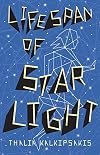
Lifespan of Starlight by Thalia Kalkipsakis is a YA science fiction novel I picked up from the library after it caught my eye in a bookshop. I went into it with some trepidation, having also read some less favourable reviews on Goodreads, but I ended up quite enjoying it.
Lifespan of Starlight is set in a near-future dystopian Melbourne, where everyone is chipped and these chips give them access to everything from food and water rations to safe road crossings. Scout (or Coutlyn) is an show more illegal. She wasn't chipped as a baby because her mother was supposed to have aborted her. Instead she bribed a doctor to keep quiet and has been sharing her own, not overly-plentiful, rations with Scout. Existing as a non-person has also taught Scout how to code and hack to get around the system. This is especially useful for things like triggering traffic lights to let her cross.
Scout's being illegal is a key element of the story, but one not mentioned in the blurb, for some reason. The blurbed part of the story — the time travel aspect — begins when Scout is moping in her cave and a dying woman suddenly appears in front of her. As in turns out, that woman was a time traveller and, when Scout steals her chip and hacks it to make it her own, she inadvertently falls in with some teens trying to learn to time travel.
The time travelling is a side-aspect of Scout's story, although it is the pivotal element. Most of Scout's time is taken up with trying to legitimise herself in the eyes of society. With her new chip she even gets to apply to go to a good school. Much of the story explores the difficulties Scout faces in being illegal, in pretending not to be illegal and what happens when her friends find out the truth. There was a poignant moment when her friends point out which "real citizen" her actions most affected, as though being a real citizen is more relevant than being a real person.
This is a fairly character-driven story. There is no world to save, no government to overthrow (well, I mean, there is because life is a bit dystopian, but none of the kids are trying to fix that through rebellion or anything). Their problems are less grand and more personal, but still culminate in an exciting semi-cliff hanger ending.
I recommend this book to fans of science fiction more than YA. I felt that it had more SF tropes and ideas in it than YA-spec fic tropes. It's not an action-packed story, but I still found that I wanted to come back to it every time I put it down. I am looking forward to reading the next book and finding out what happens in the next chapter of Scout's life.
4.5 / 5 stars show less
Lifespan of Starlight is set in a near-future dystopian Melbourne, where everyone is chipped and these chips give them access to everything from food and water rations to safe road crossings. Scout (or Coutlyn) is an show more illegal. She wasn't chipped as a baby because her mother was supposed to have aborted her. Instead she bribed a doctor to keep quiet and has been sharing her own, not overly-plentiful, rations with Scout. Existing as a non-person has also taught Scout how to code and hack to get around the system. This is especially useful for things like triggering traffic lights to let her cross.
Scout's being illegal is a key element of the story, but one not mentioned in the blurb, for some reason. The blurbed part of the story — the time travel aspect — begins when Scout is moping in her cave and a dying woman suddenly appears in front of her. As in turns out, that woman was a time traveller and, when Scout steals her chip and hacks it to make it her own, she inadvertently falls in with some teens trying to learn to time travel.
The time travelling is a side-aspect of Scout's story, although it is the pivotal element. Most of Scout's time is taken up with trying to legitimise herself in the eyes of society. With her new chip she even gets to apply to go to a good school. Much of the story explores the difficulties Scout faces in being illegal, in pretending not to be illegal and what happens when her friends find out the truth. There was a poignant moment when her friends point out which "real citizen" her actions most affected, as though being a real citizen is more relevant than being a real person.
This is a fairly character-driven story. There is no world to save, no government to overthrow (well, I mean, there is because life is a bit dystopian, but none of the kids are trying to fix that through rebellion or anything). Their problems are less grand and more personal, but still culminate in an exciting semi-cliff hanger ending.
I recommend this book to fans of science fiction more than YA. I felt that it had more SF tropes and ideas in it than YA-spec fic tropes. It's not an action-packed story, but I still found that I wanted to come back to it every time I put it down. I am looking forward to reading the next book and finding out what happens in the next chapter of Scout's life.
4.5 / 5 stars show less

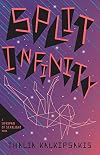
Split Infinity by Thalia Kalkipsakis is the second book in the Lifespan of Starlight trilogy, following on from book 1, Lifespan of Starlight, which I read and reviewed recently. I really enjoyed this sequel, and it made me realise that the only reason I didn't give Lifespan of Starlight 5 stars (I gave it 4.5) is because reading bad goodreads reviews before reading the book had me anticipating it taking a turn for the crappy, which it didn't. Split Infinity continued on in the same show more trope-avoiding way as the first book. Oh, also, the blurb and this review contain MAJOR SPOILERS for the first book.
As you probably gathered from my preamble, I enjoyed this book a lot. One of my favourite things about it is that Scout, the main character, is pretty smart and doesn't make stupid decisions for no better reason than to further the plot (a YA pet peeve of mine). In fact, whenever I thought "she should do blah" to solve whatever problem she was facing, she generally did or did something even more clever. That's not to say that the book was predictable, just that obvious smart courses of action weren't conveniently ignored by the protagonist.
I mentioned in my review of the first book that I didn't think the government quite counted as dystopian because almost everyone (who wasn't in Scout's position) was basically doing OK. In this book, which is mostly set a bit further in the future than we see in the first book, the repressiveness of the government took a turn for the worse and definitely feels more dystopian. Whether or not Scout (and friends) will be directly addressing that beyond just trying to keep themselves safe is unclear. Although it's more dystopian than the first book, it's not following the obvious beats of a YA dystopia (yet — I suppose the third book could change that).
On the topic of not following obvious beats, there were a few time travel beats that I thought this second book might end on and to be honest, until the very end I kind of wanted it to end that way. But once the end game was playing out, it became clear that the book wasn't going to end quite the way I expected. There is another cliff hanger, though (that bit I did expect).
In my review of the first book I didn't talk much about time travel because I didn't want to give that aspect of the story away. This second volume is very much more of a time travel narrative, so I think it should be mentioned. One of the things that I think makes this series so successfully compelling is that it took two unrelated, solid ideas — everyone being chipped and time travel — and combined them to make a story greater than the sum of its parts. It helps that the portrayal of being chipped is done in a relatively fresh way (like when Scout has trouble crossing the road without a chip), and that the method of time travel is novel and both constrained (jumping forward, not moving from where you were and arriving naked) and liberal (anyone can learn to do it).
Finally, Scout has a very close relationship with her mother, which doesn't change when the whole time travel thing starts. Scout's mother isn't conveniently out of the way or kidnapped, does worry about her, and is a motivator for Scout to do various things. Her mother's strong presence is balanced by the fact that Scout has a lot of freedom, especially for a 14 or 15 year old, but I appreciate her not being orphaned or neglected from the outset.
To reiterate, I enjoyed Split Infinity a lot and would whole-heartedly recommend it and the first book to fans of character-driven YA and science fiction. Although there is a romantic element in the books, it was actually stronger in the first book than the second, and isn't very prominent overall (and wow did I appreciate the fact that Scout didn't do anything to stupid for cute boys). I am eagerly awaiting the last book in the series, alas I think I'll be waiting about a year to read it.
5 / 5 stars
You can read more of my reviews on my blog. show less
As you probably gathered from my preamble, I enjoyed this book a lot. One of my favourite things about it is that Scout, the main character, is pretty smart and doesn't make stupid decisions for no better reason than to further the plot (a YA pet peeve of mine). In fact, whenever I thought "she should do blah" to solve whatever problem she was facing, she generally did or did something even more clever. That's not to say that the book was predictable, just that obvious smart courses of action weren't conveniently ignored by the protagonist.
I mentioned in my review of the first book that I didn't think the government quite counted as dystopian because almost everyone (who wasn't in Scout's position) was basically doing OK. In this book, which is mostly set a bit further in the future than we see in the first book, the repressiveness of the government took a turn for the worse and definitely feels more dystopian. Whether or not Scout (and friends) will be directly addressing that beyond just trying to keep themselves safe is unclear. Although it's more dystopian than the first book, it's not following the obvious beats of a YA dystopia (yet — I suppose the third book could change that).
On the topic of not following obvious beats, there were a few time travel beats that I thought this second book might end on and to be honest, until the very end I kind of wanted it to end that way. But once the end game was playing out, it became clear that the book wasn't going to end quite the way I expected. There is another cliff hanger, though (that bit I did expect).
In my review of the first book I didn't talk much about time travel because I didn't want to give that aspect of the story away. This second volume is very much more of a time travel narrative, so I think it should be mentioned. One of the things that I think makes this series so successfully compelling is that it took two unrelated, solid ideas — everyone being chipped and time travel — and combined them to make a story greater than the sum of its parts. It helps that the portrayal of being chipped is done in a relatively fresh way (like when Scout has trouble crossing the road without a chip), and that the method of time travel is novel and both constrained (jumping forward, not moving from where you were and arriving naked) and liberal (anyone can learn to do it).
Finally, Scout has a very close relationship with her mother, which doesn't change when the whole time travel thing starts. Scout's mother isn't conveniently out of the way or kidnapped, does worry about her, and is a motivator for Scout to do various things. Her mother's strong presence is balanced by the fact that Scout has a lot of freedom, especially for a 14 or 15 year old, but I appreciate her not being orphaned or neglected from the outset.
To reiterate, I enjoyed Split Infinity a lot and would whole-heartedly recommend it and the first book to fans of character-driven YA and science fiction. Although there is a romantic element in the books, it was actually stronger in the first book than the second, and isn't very prominent overall (and wow did I appreciate the fact that Scout didn't do anything to stupid for cute boys). I am eagerly awaiting the last book in the series, alas I think I'll be waiting about a year to read it.
5 / 5 stars
You can read more of my reviews on my blog. show less

Not bad but one for older readers. Erin's big sister has just left home to move in with a girlfriend. Erin wants to move into Lucy's room but when moving a bookcase discovers an empty condom packet. Erin is hurt because the 2 sisters used to share everything but obviously Lucy hasn't shared the extent of her relationship with her boyfriend.
To top this off, Erin is also concerned about how all her friends are changing wearing makeup, into clothes and worried about what boys think, and she show more could not care less.
Quite a realistic book I think for teenagers that looks at how you can cope with changing from a child to an adult. Erin's musings over Lucy and Josh's relationship and the mechanics of sex itself mean this one in the series would be for older readers. show less
To top this off, Erin is also concerned about how all her friends are changing wearing makeup, into clothes and worried about what boys think, and she show more could not care less.
Quite a realistic book I think for teenagers that looks at how you can cope with changing from a child to an adult. Erin's musings over Lucy and Josh's relationship and the mechanics of sex itself mean this one in the series would be for older readers. show less
Actual rating 3.75
A split-second decision, a single time-skip. The world that you know, gone in a blink.
Caught between finding the mother she left behind and time-skipping ahead with Mason, a series of events lead Scout deeper into the tunnel than ever before.
Split Infinity is a hard one to talk about without giving certain major plot points away, but suffice it to say that we get to see more of Scout’s world, witness some further side-effects and exploration of time travel, and are presented with a mystery that is sure to come back into play in book three.
The rest of this review can be found HERE! show less
A split-second decision, a single time-skip. The world that you know, gone in a blink.
These backstreets are familiar territory. At least, they used to be, because when I bolt down the next alley I’m met with another of those smooth walls. A smaller block of flats has been built in the middle of the lane as if some kid playing Urbancraft just dumped a 3-D model house in any old gap.Now a sharp and adept time-skipper, Scout jumps years ahead to find the world transformed. show more Technology has accelerated and the people she knows have grown up, or disappeared. Most pressing, the government that she was trying to escape has used the time to prepare for the return of the time skippers.
Caught between finding the mother she left behind and time-skipping ahead with Mason, a series of events lead Scout deeper into the tunnel than ever before.
I’m not sure how long I’ve been here. No idea who I am. More is out there somewhere, I think, beyond the horizon of no time, but I don’t know the way.The only way out is by the strength of her love and the power of her mind. The illusion of time has one more surprise, one with the power to change everything.
Here, there is no future and no past. Every moment exists at once. But every now and then I catch a glimmer of time, a spark of memory. Staring into a sky that never ends. Arms around me, holding me tight. Sharing pancakes.
Home.
Split Infinity is a hard one to talk about without giving certain major plot points away, but suffice it to say that we get to see more of Scout’s world, witness some further side-effects and exploration of time travel, and are presented with a mystery that is sure to come back into play in book three.
The rest of this review can be found HERE! show less
Lists
Dance! (1)
You May Also Like


Associated Authors
Statistics
- Works
- 35
- Members
- 641
- Popularity
- #39,338
- Rating
- 3.5
- Reviews
- 14
- ISBNs
- 116
- Languages
- 5