
Mark Elvin (1938–2023)
Author of Cultural Atlas of China
About the Author
Mark Elvin is professor of Chinese history at the Research School of Pacific and Asian Studies, Australian National University, Canberra.
Works by Mark Elvin
The Chinese City Between Two Worlds (Politics of the Smaller European Democracies) (1974) 11 copies, 1 review
Sediments of Time: Environment and Society in Chinese History (Studies in Environment and History) (1998) 10 copies
Another History: Essays on China from a European Perspective (University of Sydney East Asian Series) (1996) 3 copies
Associated Works
Searches for an Imaginary Kingdom: The Legend of the Kingdom of Prester John (1987) — Introduction, some editions — 25 copies
Tagged
Common Knowledge
- Legal name
- Elvin, John Mark Dutton
- Birthdate
- 1938-08-18
- Date of death
- 2023-12-19
- Gender
- male
- Occupations
- historian
teacher
Sinologist - Organizations
- St Antony's College, Oxford
Oxford University, Institute of Oriental Studies
School of Pacific and Asian Studies, Australian National University
Academy of the Humanities of Australia (fellow)
Sinological Institute, University of Heidelberg - Nationality
- USA
- Associated Place (for map)
- USA
Members
Reviews

I probably found this book in my searches on Google Books due to it's first sentence: "The question of the size of political units seems never to attract among historians and sociologists the attention which it deserves". However, this question does unfortunately not receive much attention in this book either, so my expectations were not quite met. The book does provide a few explanations for the exceptional durability of the large Chinese empire, but it's primarily just an economic history show more of China. The book is a pleasure to read and many of its points are nicely illustrated with quotations from historical Chinese sources. But as far as comparisons between China and Europe are concerned, I would recommend Pomeranz' The Great Divergence as a more recent work which I think covers similar ground from a slightly broader perspective. show less
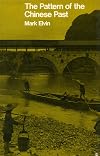
If Elvin's approach to the salients of China's historical experience is hopscotch, it is not haphazard. While the text itself is never difficult, you will feel lost if you don't already have a grasp of China's timeline. But Elvin's shrewd epitomes of the various dynasties make this book an invaluable companion to any more conventional history.

Text copyrighted in 1983. reprinted almost annually since. Provides a Chronological Table on pages 8-9 which capsulizes 4000 years of culture, culminating with "the great leader, Chairman Mao". The two authors do claim to subordinate bias and write truth.
Alia libre divisa in tres partes: (I) Space -- description of the land and its peoples, with geographic maps indicating demographic settlement patterns, climate, and agriculture. (II) Time - limns the Archaic, Imperial, and Modern epochs. show more (III) Symbols and Society.
The Preface notes that even the Chinese do not know what China has been in the past. There are few stones, and virtually no original documents. "Compared with the Mediterranean world there are few Chinese ancient monuments or building still above ground." Archivists would destroy old copies, excerpting or abstracting them. Paper was the writing material, no clay or parchment or stone. Thus, the enduring history has been subjected to loss, or worse, reinterpretation and misunderstanding. show less
Alia libre divisa in tres partes: (I) Space -- description of the land and its peoples, with geographic maps indicating demographic settlement patterns, climate, and agriculture. (II) Time - limns the Archaic, Imperial, and Modern epochs. show more (III) Symbols and Society.
The Preface notes that even the Chinese do not know what China has been in the past. There are few stones, and virtually no original documents. "Compared with the Mediterranean world there are few Chinese ancient monuments or building still above ground." Archivists would destroy old copies, excerpting or abstracting them. Paper was the writing material, no clay or parchment or stone. Thus, the enduring history has been subjected to loss, or worse, reinterpretation and misunderstanding. show less
Rich visual resource blending maps, timelines, and essays to cover Chinese history.
Lists
All Things China (6)
Awards

You May Also Like


Associated Authors
Statistics
- Works
- 11
- Also by
- 3
- Members
- 515
- Popularity
- #48,204
- Rating
- 3.9
- Reviews
- 9
- ISBNs
- 37
- Languages
- 8