
MJ DeMarco
Author of The Millionaire Fastlane: Crack the Code to Wealth and Live Rich for a Lifetime
About the Author
Image credit: public
Works by MJ DeMarco
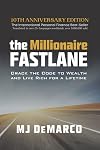
The Millionaire Fastlane: Crack the Code to Wealth and Live Rich for a Lifetime (2010) 447 copies, 9 reviews
Tagged
Common Knowledge
- Gender
- male
- Short biography
- MJ DeMarco is a semi-retired entrepreneur, investor, advisor, and international best-selling author whose books have been translated in over 25 languages worldwide. He is the current founder of Viperion Publishing Corp., a media company focused on online and print content distribution. He also is admin/founder for The Fastlane Forum, the web's leading destination forum for start-up, finance, and entrepreneurial business discussions.
Before embarking into the world of writing and authorship, he was the former start-up Founder/CEO of Limos.com (1997-2007), a global ground transportation aggregator and marketplace that he successfully built and grew into a profitable multi-million dollar company, all with no money, no formal training, and with just a few employees. In 2001, he sold the company in an exit event but later reacquired the company via bankruptcy reorganization. He later sold the company again in 2007 to a Phoenix-based private equity company.
By refusing to accept society's default template for mediocrity (THE SCRIPT: jobs, 401(k)s, frugality, give your life savings to Wall-Street) MJ was able to retire young in his thirties without sacrificing the good life. Yes, that means he isn't playing Wall-Street's "hope, wait, and pray" game where you nervously invest all your savings into the stock market, all while commiserating over the Starbucks you couldn't drink because saving $4.12 was more important. (Do people seriously believe that sh*t?)
Currently, MJ owns a publishing company that produces, distributes, and licenses his work worldwide while contributing daily to TheFastlaneForum.com: an entrepreneurial community featuring over 50,000 entrepreneurs. He lives in Scottsdale, Arizona and enjoys road trips, softball, travel, fitness and nutrition, working out, and recklessly exploring the Sonoran desert on his UTV. - Nationality
- USA
- Places of residence
- Scottsdale, Arizona, USA
Members
Reviews
I started this book in 2023. Exams, more exams, my channel- etc got in the way of it but never did I determine that I'd quit it. It's just that good.
MJ's writing may be a bit outdated in his jokes and slight homophobia (in fairness, that was the norm back then so to be expected) however his advice in entrepreneurship has been unmatched by ANY of the other books I've read. This book opens your mind to possibilities you didn't know. It's like having a small tire you're trying to make go fast, show more yet the book tells you that you could just get a bigger tire which was so obvious back in hindsight. The book teaches in a beautiful way and is one of the best things I've read/finished in the whole year. Thank you to all the people who've reccomended this book. show less
MJ's writing may be a bit outdated in his jokes and slight homophobia (in fairness, that was the norm back then so to be expected) however his advice in entrepreneurship has been unmatched by ANY of the other books I've read. This book opens your mind to possibilities you didn't know. It's like having a small tire you're trying to make go fast, show more yet the book tells you that you could just get a bigger tire which was so obvious back in hindsight. The book teaches in a beautiful way and is one of the best things I've read/finished in the whole year. Thank you to all the people who've reccomended this book. show less
Despite the corny title, this is actually one of the better books in the genre that actually may be worth picking up. The author spends the first portion of the book flaunting his mansion on a hill and his cars, which didn't build rapport to me as a reader, but he eventually digresses and provides some invaluable lessons.
Note: the affluent audience in this book is the complete opposite of those mentioned in The Millionaire Next Door. This book focuses on millionaires who live rich, show more extravagant lifestyles.
Takeaways
-The book bashes the “slow lane” of wealth, which involves getting a good job, saving 10% of your paycheck, investing in the index, and retiring rich at 65. What fun is there to be rich when you’re old? It is essentially “sacrificing your dreams and your life for a plan that pays dividends after most of your life has evaporated.” The real Golden Years of your life are when you’re young, sentient, and vibrant.
-True wealth lies in family, fitness, and freedom (the 3 Fs).
-Affordability doesn’t come with strings attached; if you think you can afford something, you can’t. There are consequences priced in.
-The slow lane formula isn’t sufficient enough to accelerate wealth fast. The mathematical flaws of compound interest are compensated with large numbers and large leverage. Compound interest is most effective with large sums of money. Exploit it at its crest; not millions of miles out in sea. For reference, the formula is Wealth = Yearly Instrinsic Value (e.g. job) + Yearly Compound Interest (e.g. financial securities and derivatives).
-Climbing up the corporate ranking is a long and difficult task. Many CEOs are in their 50s and 60s. It doesn’t happen overnight; climbing up the ranks may take decades. This would also be another slow approach.
-A millionaire is not necessarily rich; in today’s terms, a millionaire is upper middle-class. 5 million is the new 1 million. To live a lifestyle reserved for millionaires, you will need to amass far more than $1 million. Living an extravagant lifestyle may require at least $10 million.
-“Get Rich Quick” should not be associated with “Get Rich Easy.” One is completely attainable, while the other is not. Often, we associate the first phrase with “scam” since we subconsciously associate it with the second phrase in conjunction.
-The story of Azur’s pyramid and Chuma’s pyramid hint towards finding ways to automate daily tasks. The author himself started as a programmer, and I myself program to automate tasks, so I found this similarity worth noting.
-Money trees create passive income for you. In this sense, money can “grow on trees.” The main seedling of the tree the author recommends is rental property investing. He also encourages computer and software systems.
-Scale or magnitude creates wealth. For instance, pens sold in large units are an example of scale rather than magnitude; however, it still makes millions. The same is with athletes: they leverage scale and get paid millions since they entertain millions. An example of magnitude would be neurosurgeons. They serve at a smaller scale but provide much greater intrinsic value.
-Fast lane people are frugal with time; slow lane people are frugal with money. Think of this however you wish. In essence, time is king.
-A fast-laner always has his nose in a book. He or she seeks skill and expertise. Proper acquisition and application of knowledge will take you far. You can become an expert in any field that doesn’t require physical skill. He recommends [for aggressive readers] to aim to finish 1 book per week.
-He goes on to list ways on how to use your time effectively to learn and absorb knowledge. It involves squeezing every bit you can out of every day (e.g. during waits, in between sets at the gym, etc.)
-Choose topics that interest you or an area in your life that needs improvement. For instance, the author bought 6 books relating to publishing, writing, and authoring before he wrote this book.
-“I grabbed the masking tape Mom used for labeling prices. I tore four small pieces of tape and stuck them above the current price. Then on the first piece of tape, I boldly wrote $5.55 and crossed it out. The next piece of tape I wrote $4.50 and crossed it out. Then, $3.95, and the next $2.95. Each piece of tape successively had a lower price, clearly crossed out so buyers could see the “price reduction,” leaving the same old price of $2.55. Now my clock was priced exactly the same, except it was presented differently.” -I see a lot of businesses use this tactic, and it does work. Off the top of my head, Udemy utilizes this.
-Price implies value and defines your brand. Price should correlate with the intrinsic value. Other times, price can convince the consumer of value beyond the practical value. Gucci is a perfect example of this. Everyone does this in some way. Often while browsing on Amazon, I will purchase the more expensive option even if the less-expensive option may provide the same value.
-Finally someone says it: you don’t need multiple streams of income to be successful. If you divert your attention across multiple streams, none of them will be strong. Focus on 1-3 and scale them as much as possible. This same idea corresponds to the 80/20 principle mentioned in the 4 Hour Workweek.
-I, along with the author, don’t really agree with the saying “do what you love.” Often many who pursue what they enjoy from a motive other than pure passion, like money, will fall out of love with that interest. For instance, many artists lose their love for painting. Many bodybuilders lose their love for bodybuilding and competing. I lost my interest in many subjects over the years simply because of schoolwork and slow pacing. True desire will always outperform “doing what you love.” show less
Note: the affluent audience in this book is the complete opposite of those mentioned in The Millionaire Next Door. This book focuses on millionaires who live rich, show more extravagant lifestyles.
Takeaways
-The book bashes the “slow lane” of wealth, which involves getting a good job, saving 10% of your paycheck, investing in the index, and retiring rich at 65. What fun is there to be rich when you’re old? It is essentially “sacrificing your dreams and your life for a plan that pays dividends after most of your life has evaporated.” The real Golden Years of your life are when you’re young, sentient, and vibrant.
-True wealth lies in family, fitness, and freedom (the 3 Fs).
-Affordability doesn’t come with strings attached; if you think you can afford something, you can’t. There are consequences priced in.
-The slow lane formula isn’t sufficient enough to accelerate wealth fast. The mathematical flaws of compound interest are compensated with large numbers and large leverage. Compound interest is most effective with large sums of money. Exploit it at its crest; not millions of miles out in sea. For reference, the formula is Wealth = Yearly Instrinsic Value (e.g. job) + Yearly Compound Interest (e.g. financial securities and derivatives).
-Climbing up the corporate ranking is a long and difficult task. Many CEOs are in their 50s and 60s. It doesn’t happen overnight; climbing up the ranks may take decades. This would also be another slow approach.
-A millionaire is not necessarily rich; in today’s terms, a millionaire is upper middle-class. 5 million is the new 1 million. To live a lifestyle reserved for millionaires, you will need to amass far more than $1 million. Living an extravagant lifestyle may require at least $10 million.
-“Get Rich Quick” should not be associated with “Get Rich Easy.” One is completely attainable, while the other is not. Often, we associate the first phrase with “scam” since we subconsciously associate it with the second phrase in conjunction.
-The story of Azur’s pyramid and Chuma’s pyramid hint towards finding ways to automate daily tasks. The author himself started as a programmer, and I myself program to automate tasks, so I found this similarity worth noting.
-Money trees create passive income for you. In this sense, money can “grow on trees.” The main seedling of the tree the author recommends is rental property investing. He also encourages computer and software systems.
-Scale or magnitude creates wealth. For instance, pens sold in large units are an example of scale rather than magnitude; however, it still makes millions. The same is with athletes: they leverage scale and get paid millions since they entertain millions. An example of magnitude would be neurosurgeons. They serve at a smaller scale but provide much greater intrinsic value.
-Fast lane people are frugal with time; slow lane people are frugal with money. Think of this however you wish. In essence, time is king.
-A fast-laner always has his nose in a book. He or she seeks skill and expertise. Proper acquisition and application of knowledge will take you far. You can become an expert in any field that doesn’t require physical skill. He recommends [for aggressive readers] to aim to finish 1 book per week.
-He goes on to list ways on how to use your time effectively to learn and absorb knowledge. It involves squeezing every bit you can out of every day (e.g. during waits, in between sets at the gym, etc.)
-Choose topics that interest you or an area in your life that needs improvement. For instance, the author bought 6 books relating to publishing, writing, and authoring before he wrote this book.
-“I grabbed the masking tape Mom used for labeling prices. I tore four small pieces of tape and stuck them above the current price. Then on the first piece of tape, I boldly wrote $5.55 and crossed it out. The next piece of tape I wrote $4.50 and crossed it out. Then, $3.95, and the next $2.95. Each piece of tape successively had a lower price, clearly crossed out so buyers could see the “price reduction,” leaving the same old price of $2.55. Now my clock was priced exactly the same, except it was presented differently.” -I see a lot of businesses use this tactic, and it does work. Off the top of my head, Udemy utilizes this.
-Price implies value and defines your brand. Price should correlate with the intrinsic value. Other times, price can convince the consumer of value beyond the practical value. Gucci is a perfect example of this. Everyone does this in some way. Often while browsing on Amazon, I will purchase the more expensive option even if the less-expensive option may provide the same value.
-Finally someone says it: you don’t need multiple streams of income to be successful. If you divert your attention across multiple streams, none of them will be strong. Focus on 1-3 and scale them as much as possible. This same idea corresponds to the 80/20 principle mentioned in the 4 Hour Workweek.
-I, along with the author, don’t really agree with the saying “do what you love.” Often many who pursue what they enjoy from a motive other than pure passion, like money, will fall out of love with that interest. For instance, many artists lose their love for painting. Many bodybuilders lose their love for bodybuilding and competing. I lost my interest in many subjects over the years simply because of schoolwork and slow pacing. True desire will always outperform “doing what you love.” show less
It was a spontaneous pick up , after one of the random Youtubers as was watching recommended the book and something in the description he gave, reverberated with me. At first I was super against this book mostly because I was not expecting what I got. But as the chapters went as the idea grew on me and echoed my past thoughts, I started to realise that similar outlook was within me I just didn't have name for it. As this book hasn't changed much within me, it did plant a seed. And I will show more nourish it. Recommended read. show less
Read this book as an audiobook after reading the author's first book. It feels like there are two broad themes to the book. First, there is a detailed attack on status quo living habits (e.g. 9-5 jobs, spending too much, depending on the stock market for wealth creation). Then, the second half of the book relates to the author's advice on starting and growing a small business.
There is much to be gained from this book, especially as a newer entrepreneur. However, the somewhat overly earnest show more tone (preachy?) can be a bit much. I read this book as an audiobook. show less
There is much to be gained from this book, especially as a newer entrepreneur. However, the somewhat overly earnest show more tone (preachy?) can be a bit much. I read this book as an audiobook. show less
Lists
Statistics
- Works
- 4
- Members
- 571
- Popularity
- #43,840
- Rating
- 4.1
- Reviews
- 14
- ISBNs
- 23
- Languages
- 8
- Favorited
- 1