
Cecil Brown (2) (1907–1987)
Author of Suez to Singapore
For other authors named Cecil Brown, see the disambiguation page.
Works by Cecil Brown
Tagged
Common Knowledge
- Legal name
- Brown, Cecil B.
- Birthdate
- 1907-09-14
- Date of death
- 1987-10-25
- Gender
- male
- Education
- Ohio State University
- Occupations
- journalist
war correspondent
professor (communication arts) - Organizations
- Columbia Broadcasting System
Mutual Broadcasting System
National Broadcasting Company
American Broadcasting Company
California State Polytechnic University, Pomona - Awards and honors
- Hollywood Walk of Fame (for his contribution to radio)
Overseas Press Club Award
Peabody Award for Excellence in Broadcasting (1941)
Alfred I. duPont Award (1965) - Nationality
- USA
- Birthplace
- New Brighton, Pennsylvania, USA
- Associated Place (for map)
- Pennsylvania, USA
Members
Reviews

The third last part of the book, after Pearl Harbor, weaves in and out of the Dutch East Indies. Check the chapter "The Fighting Dutch."
A painfully honest memoir of an American journalist in WWII. A great pity I found no more books by him on the subject. An excellent portrayal of the "Nero fiddling while Rome burned" scenario that was Singapore. Had he the full backing of his boss at CBS he would have filled more books as Cy Sulzberger did and we would have gained a greater insight into the show more events during the whole war.
Nevertheless I can understand how this man faded from the front pages after being booted out of Italy by Mussolini, being choked on sand and flies in the Middle East campaign and almost going down with the Repulse. Enough excitement for anyone in a profession that isn't too safe at the front lines. I wish I'd met him at his classes at Cal Poly.
As memorable as Berlin Diary -- and the best journalist's story since that, which is high praise in view of the calibre of the competitors. In some ways more exciting reading, with its spirit of adventure; more challenging, with its realism and fearlessness (it is easy to see why he proved persona non grata to British brass hats); and -- on the whole -- better written. His was a perpetual Jeremiah role; he sought out the facts and battled for the truth -- in time. This is his story in detail -- again proving the old adage, that truth is stranger than fiction. From the struggle of the British in the Near East early in 1941, through the doom of the British in the Pacific:- he saw brave men at their best, and tells their stories superbly; he was on the Repulse when she sank; he told Lieutenant Chapple's undersea thriller to the world; his story of Captain Wheless' great air battle is a hair raiser. He does not hesitate to name names and air facts; he wants to show the reasons behind the events. Essentially a hard- boiled realist, he reveals a softer, human, almost sentimental side. Grand reading -- and with the promised big all-out backing of promotion and advertising, it should go place show less
A painfully honest memoir of an American journalist in WWII. A great pity I found no more books by him on the subject. An excellent portrayal of the "Nero fiddling while Rome burned" scenario that was Singapore. Had he the full backing of his boss at CBS he would have filled more books as Cy Sulzberger did and we would have gained a greater insight into the show more events during the whole war.
Nevertheless I can understand how this man faded from the front pages after being booted out of Italy by Mussolini, being choked on sand and flies in the Middle East campaign and almost going down with the Repulse. Enough excitement for anyone in a profession that isn't too safe at the front lines. I wish I'd met him at his classes at Cal Poly.
As memorable as Berlin Diary -- and the best journalist's story since that, which is high praise in view of the calibre of the competitors. In some ways more exciting reading, with its spirit of adventure; more challenging, with its realism and fearlessness (it is easy to see why he proved persona non grata to British brass hats); and -- on the whole -- better written. His was a perpetual Jeremiah role; he sought out the facts and battled for the truth -- in time. This is his story in detail -- again proving the old adage, that truth is stranger than fiction. From the struggle of the British in the Near East early in 1941, through the doom of the British in the Pacific:- he saw brave men at their best, and tells their stories superbly; he was on the Repulse when she sank; he told Lieutenant Chapple's undersea thriller to the world; his story of Captain Wheless' great air battle is a hair raiser. He does not hesitate to name names and air facts; he wants to show the reasons behind the events. Essentially a hard- boiled realist, he reveals a softer, human, almost sentimental side. Grand reading -- and with the promised big all-out backing of promotion and advertising, it should go place show less
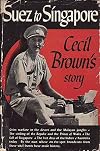
A perspective on WWII that is unlike anything I've read due to the focus on what could and could not be reported on during that time. Given the author's personality, not surprising to hear the conflict he had with Paul White later in the decade. I enjoyed the clear distinction established between what the author observed, what the author was told, and what the author was able to report.

Interesting, if occasionally whiny, memoir by a CBS radio correspondent of his experiences in the Middle East, Singapore and Australia in the period from early 1941 to early 1942. Brown got in regular trouble with British authorities and censors, which he goes into at some length; he has scathing opinions on British officialdom in general, which at one point in the book gets him into some mild hot water with Paul White, his boss at CBS News. (Brown would soon leave CBS because of similar show more disputes.) The highlight of the book is Brown's eyewitness account of the sinking of HMS Prince of Wales and HMS Repulse off the coast of Malaya in the first days of the Pacific phase of the war; Brown had been on HMS Repulse. While there were quite a few survivors (surprisingly many) from the operation, Brown's account is a rare, detailed, first-hand account, one that brought him acclaim. Brown does spend an inordinate amount of time describing (vividly) his repeated bouts of air sickness, and his constant worries about what his CBS bosses think of him (similar themes can be seen in William Shirer's memoirs as well). Bears comparison to Howard K. Smith's "Last Train from Berlin," published around the same time. show less
Awards

Statistics
- Works
- 1
- Members
- 63
- Popularity
- #268,027
- Rating
- 4.0
- Reviews
- 3
- ISBNs
- 21