
John Kerrigan (1) (1956–)
Author of Revenge Tragedy: Aeschylus to Armageddon
For other authors named John Kerrigan, see the disambiguation page.
About the Author
John Kerrigan is a Fellow of St John's College, Cambridge, and University Lecturer in English
Works by John Kerrigan
Associated Works
The Division of the Kingdoms: Shakespeare's Two Versions of King Lear (1983) — Contributor — 16 copies
Words That Count: Essays on Early Modern Authorship in Honor of MacDonald P. Jackson (2004) — Contributor — 6 copies
Tagged
Common Knowledge
- Birthdate
- 1956-06-16
- Gender
- male
- Nationality
- England
UK
Members
Reviews
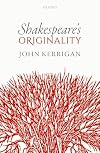
"On Shakespeare" (1630), Milton's first published poem, a 16-line eulogy written in iambic pentameter and heroic couplets, first appeared in print as "Epitaph on the admirable Dramaticke Poet, W. Shakespeare" in the Second Folio of Shakespeare's plays (1632). Milton himself was not then identified or acknowledged as the poem's author. It subsequently appeared as "On Shakespeare" in Milton's 1645 Poems. In this poem, Milton celebrates Shakespeare as inspiration yes, but also as the creator of show more the conditions of his own legacy, his own enduring pre-eminence.
In lines 133/134 of his pastoral poem "L'Allegro", also included in the 1645 Poems, Milton again celebrates Shakespeare in rhyming couplet:
Or sweetest Shakespeare, Fancy's child,
Warble his native wood-notes wild.
Here, Milton celebrates the originality or inventiveness of Shakespeare's creative or literary imagination, its force and transformative power. The Shakespeare whom Milton apostrophizes in "On Shakespeare" - "Dear son of Memory" - is here described as "Fancy's child". Milton seems to have identified the two resources every writer (worth the name) requires: inspiration and imagination; and it takes real talent to alchemize both into literature of lasting quality.
If Milton wrote this who am I to doubt Shakespeare’s imagination, inspiration, literary prowess and originality?
And what are we to make of the mysterious entry in “Romeo and Juliet”: "Would be better play if Romeo didn't prance about like such a nonce."?
Still gutted that Cardenio is lost. show less
In lines 133/134 of his pastoral poem "L'Allegro", also included in the 1645 Poems, Milton again celebrates Shakespeare in rhyming couplet:
Or sweetest Shakespeare, Fancy's child,
Warble his native wood-notes wild.
Here, Milton celebrates the originality or inventiveness of Shakespeare's creative or literary imagination, its force and transformative power. The Shakespeare whom Milton apostrophizes in "On Shakespeare" - "Dear son of Memory" - is here described as "Fancy's child". Milton seems to have identified the two resources every writer (worth the name) requires: inspiration and imagination; and it takes real talent to alchemize both into literature of lasting quality.
If Milton wrote this who am I to doubt Shakespeare’s imagination, inspiration, literary prowess and originality?
And what are we to make of the mysterious entry in “Romeo and Juliet”: "Would be better play if Romeo didn't prance about like such a nonce."?
Still gutted that Cardenio is lost. show less
Lists
Awards


You May Also Like
Associated Authors
Statistics
- Works
- 8
- Also by
- 5
- Members
- 86
- Popularity
- #213,012
- Rating
- 4.3
- Reviews
- 1
- ISBNs
- 36