

Michael Joyce (1)
Author of Of Two Minds: Hypertext Pedagogy and Poetics (Studies in Literature and Science)
For other authors named Michael Joyce, see the disambiguation page.
About the Author
Michael Joyce is Professor of English and Media Studies at Vassar College in Poughkeepsie, NY.
Works by Michael Joyce
Associated Works
New Narratives: Stories and Storytelling in the Digital Age (Frontiers of Narrative) (2011) — Contributor — 10 copies
Tagged
Common Knowledge
- Gender
- male
Members
Reviews
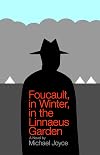
Look, I'm biased. I think Michael Joyce is an amazing stylist, one of the most beautifully elegiac writers working today -- his hyperfictions, Going the Distance, The War Outside of Ireland, Disappearance, Twentieth Century Man, these books perform this amazing literary boxing act: the emotional punch of nearly every passage, the urgency you feel while reading his stuff can discombobulate you, throw you off balance, but the prose hugs you in tight, making it difficult to break away.
I leapt show more at this one because of Joyce's technical abilities, despite not being a Foucault expert (fan? I knew of more of Foucault in terms of the pendulum that old Umberto wrote about, the same Umberto who once joked that Michael was "the real Joyce") and being a bit wary of epistolatory novels.
I think I would have enjoyed it even more, had I been a Foucault scholar or more au fait with French and/or Swedish. The letters, some sent, some unsent, are written in an English mixed with a hybrid of Swedish and French, and the overall effect, early on, was to make me feel very dumb (which I'm not disputing is the case... it was just highlighted in this case). When Gabrielle comes onto the scene, with her Brazilian exoticism in an already exotic (albeit cold) locale for Foucault, the narrative picks up. She's kind the center around which Foucault will (or will not) hold as he begins to spiral, in his letters, into or around madness. I really enjoyed her appearances, as Foucault does, and as time has past since I read the book -- I really spent a long time on this review, waiting to digest many of the impressions I'd had, and as I have I've grown to appreciate it more and more -- I appreciate the more subtle aspects to the way Joyce has constructed this book when I may have been less inclined towards the more meta (almost to the point of an obsession) moments in the letters.
There's an interview with the author at http://www.dailypublic.com/articles/04102015/complicated-geometry-michael-joyce-... that goes into the reasoning behind why the book was written the way it was and some extra background material on Foucault's life that wiggles its way into some of the letters.
Of Michael Joyce's works, this may be one of the more dense, more difficult, for me, anyway, but when the narrative shifts at the very end, like Foucault's fateful motorcar, I realized I'd been immersed inside the mind of the fictional philosopher and was just as haunted as he was. show less
I leapt show more at this one because of Joyce's technical abilities, despite not being a Foucault expert (fan? I knew of more of Foucault in terms of the pendulum that old Umberto wrote about, the same Umberto who once joked that Michael was "the real Joyce") and being a bit wary of epistolatory novels.
I think I would have enjoyed it even more, had I been a Foucault scholar or more au fait with French and/or Swedish. The letters, some sent, some unsent, are written in an English mixed with a hybrid of Swedish and French, and the overall effect, early on, was to make me feel very dumb (which I'm not disputing is the case... it was just highlighted in this case). When Gabrielle comes onto the scene, with her Brazilian exoticism in an already exotic (albeit cold) locale for Foucault, the narrative picks up. She's kind the center around which Foucault will (or will not) hold as he begins to spiral, in his letters, into or around madness. I really enjoyed her appearances, as Foucault does, and as time has past since I read the book -- I really spent a long time on this review, waiting to digest many of the impressions I'd had, and as I have I've grown to appreciate it more and more -- I appreciate the more subtle aspects to the way Joyce has constructed this book when I may have been less inclined towards the more meta (almost to the point of an obsession) moments in the letters.
There's an interview with the author at http://www.dailypublic.com/articles/04102015/complicated-geometry-michael-joyce-... that goes into the reasoning behind why the book was written the way it was and some extra background material on Foucault's life that wiggles its way into some of the letters.
Of Michael Joyce's works, this may be one of the more dense, more difficult, for me, anyway, but when the narrative shifts at the very end, like Foucault's fateful motorcar, I realized I'd been immersed inside the mind of the fictional philosopher and was just as haunted as he was. show less

This book reminded me of Joseph O'Connor's "Ghost Light."
You're faced with an unreliable narrator in both, someone who's been marginalized by society by their age and sheer bloody-mindedness of continuing to exist, possibly long after they have.
Joyce forces this shriveled old professor, Cy, with all his warts and naked gooseflesh onto center stage, which is a very uncomfortable place for him to be as he attempts to reconcile just what it was he saw in the woods: was it the dead body of his show more assistant's lover? Or was he hallucinating, an old man driven mad by his sometimes cruel aide?
Moreso than Ghost Light you -- and the book points out at the second person perspective, which I'm normally not a big fan of, but it works, in this case -- are dropped in the same muddle as the narrator. This makes the book a bit thicker read than Mr. O'Connor's, it's a little tougher to get into, but the effort is well worth it.
The bit players in the drama round out the book. The caretaker of the cabin in which the narrator takes refuge, the local policeman who stops by to check on things and rough it up with the caretaker, Cy's daughter, the sadistic assistant Cy is saddled with for his language work at the university, the dead/not-dead boyfriend, the shade of Cy's departed wife, who sailed off into the sunrise some time ago and continues to haunt his days.
It's a beautiful book about aging, loss, with a slow simmering mystery on the back burner the whole time. It's not quite the fact-paced thriller whodunit, it's more of a thoughtful examination of a life. show less
You're faced with an unreliable narrator in both, someone who's been marginalized by society by their age and sheer bloody-mindedness of continuing to exist, possibly long after they have.
Joyce forces this shriveled old professor, Cy, with all his warts and naked gooseflesh onto center stage, which is a very uncomfortable place for him to be as he attempts to reconcile just what it was he saw in the woods: was it the dead body of his show more assistant's lover? Or was he hallucinating, an old man driven mad by his sometimes cruel aide?
Moreso than Ghost Light you -- and the book points out at the second person perspective, which I'm normally not a big fan of, but it works, in this case -- are dropped in the same muddle as the narrator. This makes the book a bit thicker read than Mr. O'Connor's, it's a little tougher to get into, but the effort is well worth it.
The bit players in the drama round out the book. The caretaker of the cabin in which the narrator takes refuge, the local policeman who stops by to check on things and rough it up with the caretaker, Cy's daughter, the sadistic assistant Cy is saddled with for his language work at the university, the dead/not-dead boyfriend, the shade of Cy's departed wife, who sailed off into the sunrise some time ago and continues to haunt his days.
It's a beautiful book about aging, loss, with a slow simmering mystery on the back burner the whole time. It's not quite the fact-paced thriller whodunit, it's more of a thoughtful examination of a life. show less
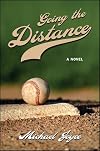
Michael Joyce is a master at evoking a sense of loss, memory and how unreliable it can be (the line from "afternoon, a story," the seminal hyper fiction, is a great example: "I want to say I may have seen my son die this morning."), and connections.
When I read fiction by Joyce I'm most often reminded of someone who's woven a fine tapestry. Or a rug. He leaves out the strands from the finished cloth for you, the reader, to grab a hold of, and sometimes he's woven them in tightly, and it takes show more some work to ferret them out, to realize that you are slowly unraveling the whole story. In a story like Twelve Blue [http://www.eastgate.com/TwelveBlue/] he just comes right out and *shows* you the story that way, the threads running alongside the text you're reading and you can leap from strand to strand like some reading, hyper monkey. It's a method of storytelling he can't help but do.
I'd just finished reading "The Genie at Low Tide" [http://savannahnow.com/arts/2013-09-05/story-savannah-author-released-prestigious-digital-first-series#.Ul837xZYV7H], which is another excellent piece of baseball fiction about a retired pitcher with an angel of mercy appearing on his doorstep, when I got an email from Michael Joyce regarding the re-publication of his novel "Going the Distance." I used to be an assistant in some of Michael's classes at Vassar College back in the day, and I consider him a friend and mentor, so I may be a little biased. "The War Outside Ireland" is one of my favorite all-time books, and I've collaborated on a web-based hyper fiction called "The Sonatas of Saint Francis" [http://supertart.com/sonatas/] with Michael and his wife and Andrea Morris. But...
"Going the Distance" is an amazing book. You're left, along with the protagonist, Jack Flynn, to unravel just what it is he's doing in way upstate New York with Emma, how he got there, what has happened to his family, his career, and even his fans. Michael portrays an ex-pitcher and the era in which he pitched, the people with whom he shared a clubhouse or field so well you forget, for a second, that Jack Flynn is a fictional pitcher, teammate of Sidd Fynch, for all intents and purposes. I loved these sequences and got lost in the intricacies of how a pitcher thinks about the count: "People misunderstood. Oh-and-two was commonly thought a pitcher's pitch; it wasn't, not always, not even usually with the good ones." You could feel how a pitcher thinks, feels, out there, all alone on the mound, even as Jack's arm begins to feel the toll of all those violent motions, plate-wards.
Let's just say I'm a sucker for baseball fiction, whether I'm writing it or reading it. But there has been plenty of commentary on how the game lends itself to literature, and Joyce, himself, quotes from A. Bartlett Giamatti's "The Green Fields of the Mind" to kick the whole thing off, which is the where I'll leave the analysis of baseball as a suitable fictional setting:
"The game begins in the spring, when everything else begins again, and it blossoms in the summer, filling the afternoons and evenings, and then as soon as the chill rains come, it stops and leaves you to face the fall all alone."
But what makes the book amazing is that that's just one thread. It could stand as a pretty good book all on its own as a baseball story, if that were all there were to it. But he weaves in Emma's story, Wolfman, Restless, the story of aunt Bertie, living life in front of the TV, the story of the whole of Jack's family, left behind in North Country New York along the river, fastened to the river, it seems, which becomes a character in its own right.
It's a beautiful, lyrical novel, and well worth your time as the baseball season draws towards its conclusion. Or anytime, really. show less
When I read fiction by Joyce I'm most often reminded of someone who's woven a fine tapestry. Or a rug. He leaves out the strands from the finished cloth for you, the reader, to grab a hold of, and sometimes he's woven them in tightly, and it takes show more some work to ferret them out, to realize that you are slowly unraveling the whole story. In a story like Twelve Blue [http://www.eastgate.com/TwelveBlue/] he just comes right out and *shows* you the story that way, the threads running alongside the text you're reading and you can leap from strand to strand like some reading, hyper monkey. It's a method of storytelling he can't help but do.
I'd just finished reading "The Genie at Low Tide" [http://savannahnow.com/arts/2013-09-05/story-savannah-author-released-prestigious-digital-first-series#.Ul837xZYV7H], which is another excellent piece of baseball fiction about a retired pitcher with an angel of mercy appearing on his doorstep, when I got an email from Michael Joyce regarding the re-publication of his novel "Going the Distance." I used to be an assistant in some of Michael's classes at Vassar College back in the day, and I consider him a friend and mentor, so I may be a little biased. "The War Outside Ireland" is one of my favorite all-time books, and I've collaborated on a web-based hyper fiction called "The Sonatas of Saint Francis" [http://supertart.com/sonatas/] with Michael and his wife and Andrea Morris. But...
"Going the Distance" is an amazing book. You're left, along with the protagonist, Jack Flynn, to unravel just what it is he's doing in way upstate New York with Emma, how he got there, what has happened to his family, his career, and even his fans. Michael portrays an ex-pitcher and the era in which he pitched, the people with whom he shared a clubhouse or field so well you forget, for a second, that Jack Flynn is a fictional pitcher, teammate of Sidd Fynch, for all intents and purposes. I loved these sequences and got lost in the intricacies of how a pitcher thinks about the count: "People misunderstood. Oh-and-two was commonly thought a pitcher's pitch; it wasn't, not always, not even usually with the good ones." You could feel how a pitcher thinks, feels, out there, all alone on the mound, even as Jack's arm begins to feel the toll of all those violent motions, plate-wards.
Let's just say I'm a sucker for baseball fiction, whether I'm writing it or reading it. But there has been plenty of commentary on how the game lends itself to literature, and Joyce, himself, quotes from A. Bartlett Giamatti's "The Green Fields of the Mind" to kick the whole thing off, which is the where I'll leave the analysis of baseball as a suitable fictional setting:
"The game begins in the spring, when everything else begins again, and it blossoms in the summer, filling the afternoons and evenings, and then as soon as the chill rains come, it stops and leaves you to face the fall all alone."
But what makes the book amazing is that that's just one thread. It could stand as a pretty good book all on its own as a baseball story, if that were all there were to it. But he weaves in Emma's story, Wolfman, Restless, the story of aunt Bertie, living life in front of the TV, the story of the whole of Jack's family, left behind in North Country New York along the river, fastened to the river, it seems, which becomes a character in its own right.
It's a beautiful, lyrical novel, and well worth your time as the baseball season draws towards its conclusion. Or anytime, really. show less
Cy, a 93 year old man (emeritus professor of linguistics)drives alone from his daughter Deirdre's country house where he now lives to friends Allie & Alex's cabin in Maine after having discovered (imagined, dreamed, remembered?) the dead body of his young research assistant Aileen's boyfriend at the edge of a woods on Deirdre's property. The novel isn't, however, a murder mystery, but rather more a mystery of mind. We suspect early on that Cy isn't an entirely reliable narrator. Even his show more unreliability is unreliable, however, since we experience it by way of the words & actions of others: his daughter on the phone (once Cy turns his phone on); Jams, the Abenaki-Quebecois caretaker who has been told to look in on & look out for him; Louis, local law enforcement officer & friend of Jams (they were in Iraq together)&, at the end of the novel, Albert, a video artist at Dartmouth who shows Cy a film clip that causes him to question his memory of what he has seen. Often the responses of these others to what Cy does or says imply that something different than what he reports has been going on. But then again, it is Cy, as narrator, who reports what the others say & do, so we are on shaky ground all the way around. Cy drifts in & out of various modes of perceiving reality, until the overall impression is that of "now you see it, now you don't." There are dreams that aren't exactly "dream-dreams" and memories that aren't what we generally think of as memories. Joyce creates an almost hallucinogenic effect. Weaving through Cy's thoughts, dreams,& memories are always scenes from his 25 year marriage to Constance, his much younger wife (he, a professor in his 50s, she, a student in her early 20's)who unexpectedly died at sea about 10 years earlier(she sailed away, she didn't return, her body was never found). In the course of his sojourn, everything Cy is certain of, that he knows, is called into question. show less
Awards


You May Also Like
Associated Authors
Statistics
- Works
- 14
- Also by
- 2
- Members
- 141
- Popularity
- #145,670
- Rating
- 3.8
- Reviews
- 6
- ISBNs
- 31