
Judith Rossell
Author of Withering-by-Sea
About the Author
Judith Russell is an illustrator and author of children's books. Her fisrt job was working as a government scientist. Over time she was drawn into illistrating because she loves drawing pictures. She has written 11 books and illustrated more than 80. Her books have been published in the UK and the show more USA. Her title Withering-By-the-Sea won an ABIA 2015 Award in the category of Book of the Year for Older Children (0 - 8 years). This same title won a Davitt Awards 2015 in the category of Children's novel. Judith Russell also won an Honour Book at the 2015 Children's Book Council of Australia (CBCA) Book of the Year Awards with her title Withering-by-Sea: A Stella Montgomery Intrigue. (Bowker Author Biography) show less
Image credit: Judith Rossell
Series
Works by Judith Rossell
Me and You 1 copy
Withering Sea Boxed Set 1 copy
Associated Works
Tagged
Common Knowledge
- Gender
- female
- Short biography
- [from Oliver dust jacket]
Judith Rossell studied textile design in Scotland and worked for a cotton spinning company before finding her true calling as a full-time illustrator. - Places of residence
- Melbourne, Victoria, Australia
- Associated Place (for map)
- Victoria, Australia
Members
Reviews
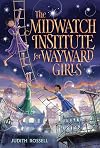
The Midwatch Institute for Wayward Girls is a fabulous middle grade adventure with tons of girl power!
It reminded me a lot of the YA novel Etiquette & Espionage from the Finishing School series by Gail Carriger, but for the younger set.
I've always loved books about plucky young girls who start out in dire straits, but eventually succeed. In this novel, you get a gaggle of girls who get sent to a unique orphanage. Their experience there is unexpected, unconventional and not what it seems. show more Lots of steampunk touches, a creepy monster, and a big baddie. At the heart of the story are girls working together and developing and using their unique strengths to solve a mystery.
I could easily see this becoming a series, but it reads well as a standalone. No cliffhangers! show less
It reminded me a lot of the YA novel Etiquette & Espionage from the Finishing School series by Gail Carriger, but for the younger set.
I've always loved books about plucky young girls who start out in dire straits, but eventually succeed. In this novel, you get a gaggle of girls who get sent to a unique orphanage. Their experience there is unexpected, unconventional and not what it seems. show more Lots of steampunk touches, a creepy monster, and a big baddie. At the heart of the story are girls working together and developing and using their unique strengths to solve a mystery.
I could easily see this becoming a series, but it reads well as a standalone. No cliffhangers! show less

Maggie Fishbone is brought to the Midwatch Institute for Wayward Girls after she is kicked out of her old orphanage. A dark foyer, dreary organ music in the background, and a procession of downtrodden girls in gray uniforms would convince anyone that life at the Midwatch is going to be pretty miserable... but things are not always as they seem. As soon as Maggie is ushered through the doors to the rest of the school, she discovers warmth, friendship, and purpose. The girls of the Midwatch show more are being trained in all manner of useful things for girls to know: Hiding, Climbing, and Observation are just some of the courses offered, and there are opportunities to earn badges for special projects like knot tying and lock picking. Moreover, when the police and the City Commissioner run into trouble, they often contact the head of the school, who assigns the girls special missions around the city. Maggie and her fellow first-years aren't likely to get any really challenging assignments yet -- but they're itching to show what they can do!
I always like a boarding school story, especially if the school has some sort of secret or magic. Readers who share this fondness would be well advised to take a look at the Midwatch Institute, as it's a fun mix of steampunk and spycraft, effervescent as a fizzy drink, with friendships being built along the way. show less
I always like a boarding school story, especially if the school has some sort of secret or magic. Readers who share this fondness would be well advised to take a look at the Midwatch Institute, as it's a fun mix of steampunk and spycraft, effervescent as a fizzy drink, with friendships being built along the way. show less

This appears to be the introduction to a series, though my American copy doesn't include the "A Stella Montgomery Intrigue" tagline that other editions do. While the story is full and satisfying to me, it does end without resolving one particular thing that left the book feeling a bit incomplete, in addition to a mystery or two that weren't closed. I don't need the mystery solved, but I think it's clearly meant to be a hook for a next book, as the other edition's tagline show more indicates.
Withering-by-Sea is both written and illustrated by Judith Rossell in a charming faux-Victorian or faux-Edwardian style. The illustrations appear to be watercolor or pen-and-ink and are scattered throughout the book, either as decorations on a page related to the text or full-page images of a scene. They are all monochromely blue, shading into a deep navy, as is the color used for printing all the text. I was surprised by the navy-blue printing - the only time I have seen anything like it outside of a picture book, it was an apparent error, because it was limited to just a few spots on a few pages. In dim or yellow lighting, the text looks black or nearly black. I have no idea why this choice was made, but the illustrations look very good in blue.
Of course, the printing and style match the content of the book. It is a fantasy country resembling perhaps Bath or Brighton, a bit damp and cold when the story takes place. Our heroine, eleven-year-old Stella Montgomery, is an orphan who lives in a fancy hotel with her three dour and very strict aunts, who travel to different places for their health (this hotel is known for its smelly springs, where the aunts bathe for hours each day). The Hotel Majestic is a marvelously modern Victorian affair, from the imposing facade to the indoor plumbing. At one point, I realized that Rossell had described something in a round-about way, then noticed that it was an attempt to have a 19th-century point of view, and that as far as I can tell, she did not use any modern metaphors or slang terms. There is a lot of old-fashioned (Australian) slang, befitting the pov character, and in the second half of the book, we visit an opera house or vaudeville place or something like it, and get oodles of funny old-fashioned language from a troupe of girl performers all around Stella's age.
The plot is this: while hiding from her aunts in the hotel's conservatory and reading an atlas of the world (complete with descriptions of places and animals far away), Stella sees a strange guest bury something in a potted plant. When she sneaks back to see what it was, and to make sure her own book is hidden, she becomes the unlucky witness of a murder. The creepy magician Professor Starke and his goons are trying to get a magical object and the strange guest attempted to protect it. They have dragged him into the conservatory to hand the object over, but stab him through the chest when he refuses. A small boy is able to scry into ink to discover where it was buried, but Stella has already taken it, and now the Professor is on the hunt for her.
The next morning, the strange guest has disappeared and left a skeleton of twigs and branches in his place, Stella has seen a Hand of Glory and the boy's clairvoyance, and the object she now possesses is creepily mysterious - and very clearly not normal. It appears that there is actual magic in the world, but she must put her head down and do as her aunts wish, and there is no way that any of the three of them, or the maids, will tell her anything. Only, one of them does accidentally allude to something magical having happened to their family, and when she encounters the Professer's boy, he tells Stella that she is also fey. Before she can get any answers or even think of how to get the answers, the Professor's goons kidnap her, and she must escape.
Stella does, eventually, escape the Professor and save the magical object from him. She also makes friends in the boy he controlled, Ben, and some people from the vaudeville hall where she temporarily hides. She learns that Ben is definitely right and she is magical herself, but not the extent of her abilities or anything about the family mystery her aunt referred to. Unfortunately, we don't even learn what happens when she finally returns to her aunts after being away for several days with cops searching for her. Is she punished? hugged? what do they say when she shows up again, considering how she was kept on bread-and-water rations for the very brief time she had wandered away at the beginning of the book to talk to Ben?
Overall, I thought it was a fun little story and would have loved it as a kid (it's very similar to other books I read and loved when I was in the target audience), but I was really bothered by not knowing how the aunts would respond to Stella's return. A fuzzy "eventually, maybe she learned the answers to the other mysteries" would have been fine, making the focus of the book the adventure plot and a fun tour of a fantasy country, but I really want to know if they made her go to bed without dinner for the crime of being kidnapped! show less
Withering-by-Sea is both written and illustrated by Judith Rossell in a charming faux-Victorian or faux-Edwardian style. The illustrations appear to be watercolor or pen-and-ink and are scattered throughout the book, either as decorations on a page related to the text or full-page images of a scene. They are all monochromely blue, shading into a deep navy, as is the color used for printing all the text. I was surprised by the navy-blue printing - the only time I have seen anything like it outside of a picture book, it was an apparent error, because it was limited to just a few spots on a few pages. In dim or yellow lighting, the text looks black or nearly black. I have no idea why this choice was made, but the illustrations look very good in blue.
Of course, the printing and style match the content of the book. It is a fantasy country resembling perhaps Bath or Brighton, a bit damp and cold when the story takes place. Our heroine, eleven-year-old Stella Montgomery, is an orphan who lives in a fancy hotel with her three dour and very strict aunts, who travel to different places for their health (this hotel is known for its smelly springs, where the aunts bathe for hours each day). The Hotel Majestic is a marvelously modern Victorian affair, from the imposing facade to the indoor plumbing. At one point, I realized that Rossell had described something in a round-about way, then noticed that it was an attempt to have a 19th-century point of view, and that as far as I can tell, she did not use any modern metaphors or slang terms. There is a lot of old-fashioned (Australian) slang, befitting the pov character, and in the second half of the book, we visit an opera house or vaudeville place or something like it, and get oodles of funny old-fashioned language from a troupe of girl performers all around Stella's age.
The plot is this: while hiding from her aunts in the hotel's conservatory and reading an atlas of the world (complete with descriptions of places and animals far away), Stella sees a strange guest bury something in a potted plant. When she sneaks back to see what it was, and to make sure her own book is hidden, she becomes the unlucky witness of a murder. The creepy magician Professor Starke and his goons are trying to get a magical object and the strange guest attempted to protect it. They have dragged him into the conservatory to hand the object over, but stab him through the chest when he refuses. A small boy is able to scry into ink to discover where it was buried, but Stella has already taken it, and now the Professor is on the hunt for her.
The next morning, the strange guest has disappeared and left a skeleton of twigs and branches in his place, Stella has seen a Hand of Glory and the boy's clairvoyance, and the object she now possesses is creepily mysterious - and very clearly not normal. It appears that there is actual magic in the world, but she must put her head down and do as her aunts wish, and there is no way that any of the three of them, or the maids, will tell her anything. Only, one of them does accidentally allude to something magical having happened to their family, and when she encounters the Professer's boy, he tells Stella that she is also fey. Before she can get any answers or even think of how to get the answers, the Professor's goons kidnap her, and she must escape.
Stella does, eventually, escape the Professor and save the magical object from him. She also makes friends in the boy he controlled, Ben, and some people from the vaudeville hall where she temporarily hides. She learns that Ben is definitely right and she is magical herself, but not the extent of her abilities or anything about the family mystery her aunt referred to. Unfortunately, we don't even learn what happens when she finally returns to her aunts after being away for several days with cops searching for her. Is she punished? hugged? what do they say when she shows up again, considering how she was kept on bread-and-water rations for the very brief time she had wandered away at the beginning of the book to talk to Ben?
Overall, I thought it was a fun little story and would have loved it as a kid (it's very similar to other books I read and loved when I was in the target audience), but I was really bothered by not knowing how the aunts would respond to Stella's return. A fuzzy "eventually, maybe she learned the answers to the other mysteries" would have been fine, making the focus of the book the adventure plot and a fun tour of a fantasy country, but I really want to know if they made her go to bed without dinner for the crime of being kidnapped! show less
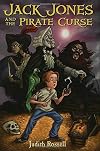
Avast there shipmate!! I love a good swashbuckling adventure. This one was pretty good. It had pirates, but still kept all the adventure close to home...meaning: the parents were still present and active in the story. As great as freedom is, orphans & missing parents don't always make the story better. This book allows me to put up a good argument in that department. Jack "Morgan" Jones's parents help him as he tries to figure out a way to undue the pirate curse that has been a part of his show more family's heritage since the treason committed by his great-(times a lot)-grandfather, Blackstrap Morgan. Along the way, Jack will face many challenges and gain a new friend or two. The end will surprise.... =) show less
Lists
Awards


You May Also Like


Associated Authors
Statistics
- Works
- 22
- Also by
- 4
- Members
- 681
- Popularity
- #37,120
- Rating
- 3.8
- Reviews
- 19
- ISBNs
- 86
- Languages
- 4