

Bud Sparhawk
Author of Distant Seas
About the Author
Image credit: From MilSciFi, 2008. (http://www.milscifi.com/)
Works by Bud Sparhawk
Magic's Price 8 copies
Primrose and Thorn {novella} 6 copies
Clay's Pride 3 copies
Frost 2 copies
Primrose Rescue 2 copies
Broadside 1 copy
The Complete Sam Boone 1 copy
Chandra's Pup 1 copy
The Suit 1 copy
The Late Sam Boone 1 copy
The Super 1 copy
Scout 1 copy
No Cord Or Cable 1 copy
The Old Man's Best 1 copy
Encounter In A Yellow Wood 1 copy
Pumpkin 1 copy
Etiquette 1 copy
Alliances 1 copy
Short Fiction Collection 1 copy
Associated Works
The Year's Best Science Fiction: Fourteenth Annual Collection (1997) — Contributor — 444 copies, 2 reviews
Analog Science Fiction/Science Fact: Vol. XCVI, No. 8 (August 1976) (1976) — Contributor — 29 copies, 2 reviews
Analog Science Fiction/Science Fact: Vol. XCVII, No. 1 (January 1977) (1977) — Contributor — 28 copies, 1 review
Analog Science Fiction and Fact: Vol. CXVIII, No. 7 & 8 (July/August 1998) (1998) — Contributor — 16 copies
Analog Science Fiction and Fact: Vol. CXXI, No. 3 (March 2001) (2001) — Author, some editions — 10 copies
Tagged
Common Knowledge
- Legal name
- Sparhawk, John C.
- Birthdate
- 1937
- Gender
- male
- Organizations
- Science Fiction and Fantasy Writers of America
- Nationality
- USA
- Birthplace
- Baltimore, Maryland, USA
- Places of residence
- Annapolis, Maryland, USA
Richmond, Virginia, USA - Associated Place (for map)
- Maryland, USA
Members
Reviews
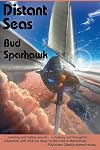
This was a free book I applied for as part of the Library Thing first reviews, and the first one I’ve ever received from them [review originally written in 2015]. It was a good choice, as it matched up to the description, which is something that often puts me off!
Louella is a professional sailor – single-handed round-the-world races being the sort of thing she does, although there are also four colleagues who occasionally form crews for crewed races. We meet her first in the Southern show more Ocean, handling high seas and tremendous danger, with all the technical sailing jargon you could wish for and terrific descriptions of the seas, wind, wildlife and isolation. Having overcome adversity on this trip, she’s looking for the next challenge, and new sponsors, when the Jupiter Investment Company come a-calling and make her and three others offers they can’t really refuse to have a sailing race on Jupiter.
Yes, you know there are no seas on Jupiter, and the atmosphere is full of storms and noxious gases. Science fiction takes over, and it’s a really nice bit of scientific fiction. I love the concept of sailing Jupiter’s skies, and to me the difficulties that need to be overcome were spot on. When that race is finally done, the sailors are inveigled into one last race within their contract – this time on Mars. You’re joking. No sailing on Mars, surely? Well, it’s a type of landyacht or sandkart, with huge sails to make the most of the slight winds involved – and it’s very dangerous! Again, the maths behind the sailing is excellent, and the tactical approach to the race more like harbour racing than the endurance aspect involved in Jupiter’s skies.
I couldn’t quite work out whether this was four novellas that had been squished together or whether it really was intended as a novel. Maybe it’s both, but in the new cover they haven’t done enough to squish them – there is a little too much repetition (adrift like a latter day Flying Dutchman came up three times in quick succession), and when I was looking for covers for this post I discovered the blurb for one of the editions simply lists a number of short stories (although they don’t necessarily fit the ones I read). I think the author could streamline it into a single novel to good effect.
Some people may find the level of technical detail on the sailing to be too much for them. I enjoy sailing, although only as a holiday activity, and the detail was okay for me, just – rather like descriptions of baseball games in a good book to be reviewed next week, I could skim the detailed stuff without losing the thread or the action. If you don’t know your bowsprit from your bowline you may find it a bit taxing. Equally the depth of the technical exceeds the characterisation – except that in my experience people who do extreme sports and/or exploration tend to be a bit one-dimensional anyway and only come alive when immersed in their chosen medium. Otherwise the tension between characters and the plotting is good, and I really looked forward to every session reading it (unlike another book I gave up on during this period).
So, overall, an amazingly intricate and exciting sailing science fiction with first class factual groundwork, which I really like in my scifi. Could do with a little polishing, but I still gave it four stars. show less
Louella is a professional sailor – single-handed round-the-world races being the sort of thing she does, although there are also four colleagues who occasionally form crews for crewed races. We meet her first in the Southern show more Ocean, handling high seas and tremendous danger, with all the technical sailing jargon you could wish for and terrific descriptions of the seas, wind, wildlife and isolation. Having overcome adversity on this trip, she’s looking for the next challenge, and new sponsors, when the Jupiter Investment Company come a-calling and make her and three others offers they can’t really refuse to have a sailing race on Jupiter.
Yes, you know there are no seas on Jupiter, and the atmosphere is full of storms and noxious gases. Science fiction takes over, and it’s a really nice bit of scientific fiction. I love the concept of sailing Jupiter’s skies, and to me the difficulties that need to be overcome were spot on. When that race is finally done, the sailors are inveigled into one last race within their contract – this time on Mars. You’re joking. No sailing on Mars, surely? Well, it’s a type of landyacht or sandkart, with huge sails to make the most of the slight winds involved – and it’s very dangerous! Again, the maths behind the sailing is excellent, and the tactical approach to the race more like harbour racing than the endurance aspect involved in Jupiter’s skies.
I couldn’t quite work out whether this was four novellas that had been squished together or whether it really was intended as a novel. Maybe it’s both, but in the new cover they haven’t done enough to squish them – there is a little too much repetition (adrift like a latter day Flying Dutchman came up three times in quick succession), and when I was looking for covers for this post I discovered the blurb for one of the editions simply lists a number of short stories (although they don’t necessarily fit the ones I read). I think the author could streamline it into a single novel to good effect.
Some people may find the level of technical detail on the sailing to be too much for them. I enjoy sailing, although only as a holiday activity, and the detail was okay for me, just – rather like descriptions of baseball games in a good book to be reviewed next week, I could skim the detailed stuff without losing the thread or the action. If you don’t know your bowsprit from your bowline you may find it a bit taxing. Equally the depth of the technical exceeds the characterisation – except that in my experience people who do extreme sports and/or exploration tend to be a bit one-dimensional anyway and only come alive when immersed in their chosen medium. Otherwise the tension between characters and the plotting is good, and I really looked forward to every session reading it (unlike another book I gave up on during this period).
So, overall, an amazingly intricate and exciting sailing science fiction with first class factual groundwork, which I really like in my scifi. Could do with a little polishing, but I still gave it four stars. show less
 This review was written for LibraryThing Early Reviewers.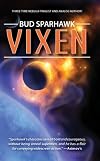
Space drama. Scout ship the Covenant awakes from a two-hundred year frozen sleep, arriving in the Thetti star system seeking a fresh planet to establish a new colony on.
Meridian is a perfect Earth-like planet, but Tam, the mission leader, suspects everything isn't as simple as it appears when, rubbing the ice from his eyes, he glimpses a strange light over the planet.
A few sentences were garbled. The editing isn't perfect, but the meticulous detail and deep characterisation make me show more interested to try more reads by this author. The open ending leaves scope for a sequel. What will happen when the main colony ship following the Covenant arrives with thousands of colonists?
Inserting uncommon diacriticals in the spelling of common words (rendering an uncommon spelling) is unnecessary and undesirable. Diacriticals guide pronunciation. But the pronunciation of common words (unlike e.g. unique names) is not in doubt for most readers. Pronunciation can be confirmed from a word's dictionary entry in any case. The use of diacriticals didn't appear to be consistent. show less
Meridian is a perfect Earth-like planet, but Tam, the mission leader, suspects everything isn't as simple as it appears when, rubbing the ice from his eyes, he glimpses a strange light over the planet.
A few sentences were garbled. The editing isn't perfect, but the meticulous detail and deep characterisation make me show more interested to try more reads by this author. The open ending leaves scope for a sequel. What will happen when the main colony ship following the Covenant arrives with thousands of colonists?
Inserting uncommon diacriticals in the spelling of common words (rendering an uncommon spelling) is unnecessary and undesirable. Diacriticals guide pronunciation. But the pronunciation of common words (unlike e.g. unique names) is not in doubt for most readers. Pronunciation can be confirmed from a word's dictionary entry in any case. The use of diacriticals didn't appear to be consistent. show less
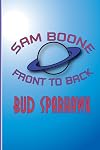
In the late 22nd Century, Earth’s first interstellar spaceship is involved in a collision with a much larger vessel outside the approved travel lanes. In its desperation to avoid the Galactic Hegemony, the captain gives Earth a more modern ship out of its inventory. This allows Earth to build more ships, and explore local space. Intelligent life is pretty common, and the only reason Earth hasn’t heard about it is their use of inefficient and outdated electromagnetic energy for show more communication, instead of the much more efficient galactic phloomb. About the only talent humans have, according to the rest of the galaxy, is that of negotiation and arbitration.
Sam Boone works at Earth’s major spaceport, near Trenton, New Jersey. It’s there because one of the favorite tourist destinations is the nearby city of Hoboken (along with Disneyworld, of course). In one story, Sam must deal with a pair of alien races who decide to settle their differences in a professional wrestling ring, thinking that humans also do it this way. Another popular export for Earth is magazines of any type. Whether it is a home and garden magazine or a mechanical hobby magazine, the other alien races find them absolutely hilarious. In another story, Sam must escort a pair of aliens around Disneyworld. This wouldn’t seem so difficult, except these are group mind aliens, where one individual inhabits 20 or 30 separate bodies. Do they get a group discount on tickets? In each of these stories, Sam must deal with very different cultural values, while keeping his alien boss happy and keeping himself out of some potentially disastrous situations.
There is a sad lack of humor in science fiction. This book helps to fill the gap. For lighter, humorous reading that is still well written, this is very much worth checking out. show less
Sam Boone works at Earth’s major spaceport, near Trenton, New Jersey. It’s there because one of the favorite tourist destinations is the nearby city of Hoboken (along with Disneyworld, of course). In one story, Sam must deal with a pair of alien races who decide to settle their differences in a professional wrestling ring, thinking that humans also do it this way. Another popular export for Earth is magazines of any type. Whether it is a home and garden magazine or a mechanical hobby magazine, the other alien races find them absolutely hilarious. In another story, Sam must escort a pair of aliens around Disneyworld. This wouldn’t seem so difficult, except these are group mind aliens, where one individual inhabits 20 or 30 separate bodies. Do they get a group discount on tickets? In each of these stories, Sam must deal with very different cultural values, while keeping his alien boss happy and keeping himself out of some potentially disastrous situations.
There is a sad lack of humor in science fiction. This book helps to fill the gap. For lighter, humorous reading that is still well written, this is very much worth checking out. show less

Bud Sparhawk. Here is an author whose very name seems to conjure up images of the sea and sailing upon it. Bud, reminiscent of Melville’s “handsome sailor,” and Sparhawk bringing to mind the mast that holds the sail and the cold winter wind that drives it. Seemingly the universe wanted Bud Sparhawk either sailing or writing about sailing. As it turns out, Sparhawk does both. And if he sails as well as he writes about sailing then he must be a very accomplished sailor.
In Distant Seas, show more a collection of short stories all involving sailing, we are taken from the oceans of earth to the “seas” of Jupiter and Mars. The bulk of the stories concern two veteran earth racing sailors, Louella and Pascal, who find their racing careers taking an unexpected turn as they are compelled to race the gaseous sea of Jupiter and the sand sea of Mars.
While each bit of off-world sailing is obviously fictitious it is wonderful to see how Sparhawk’s accounts have the heft of detailed non-fiction accounts. Those accounts make up for the weakness in character development. This is not to say there isn’t character development, just that it is, at times, too stilted, too stereotypical to draw you in as do his sailing scenes. But the rap against character development is minor when set against the excellent moments of sailing adventure.
As I read his stories I was reminded of another author who devoted himself to writing about sailing, Tristan Jones. While Sparhawk is not quite Jones’ writing equal it was nice to have such fine writing remind me of another writer of sailing tales.
I received this book as part of the Early Reviewers Program through Librarything show less
In Distant Seas, show more a collection of short stories all involving sailing, we are taken from the oceans of earth to the “seas” of Jupiter and Mars. The bulk of the stories concern two veteran earth racing sailors, Louella and Pascal, who find their racing careers taking an unexpected turn as they are compelled to race the gaseous sea of Jupiter and the sand sea of Mars.
While each bit of off-world sailing is obviously fictitious it is wonderful to see how Sparhawk’s accounts have the heft of detailed non-fiction accounts. Those accounts make up for the weakness in character development. This is not to say there isn’t character development, just that it is, at times, too stilted, too stereotypical to draw you in as do his sailing scenes. But the rap against character development is minor when set against the excellent moments of sailing adventure.
As I read his stories I was reminded of another author who devoted himself to writing about sailing, Tristan Jones. While Sparhawk is not quite Jones’ writing equal it was nice to have such fine writing remind me of another writer of sailing tales.
I received this book as part of the Early Reviewers Program through Librarything show less
This review was written for LibraryThing Early Reviewers.Awards

You May Also Like
Associated Authors
Statistics
- Works
- 37
- Also by
- 12
- Members
- 110
- Popularity
- #176,728
- Rating
- 3.7
- Reviews
- 7
- ISBNs
- 10
