
Maurice Richardson (1907–1978)
Author of The Exploits of Engelbrecht
About the Author
Series
Works by Maurice Richardson
Associated Works
Tagged
Common Knowledge
- Legal name
- Richardson, Maurice Lane
- Other names
- Raven, Charles (pseudonym)
- Birthdate
- 1907
- Date of death
- 1978
- Gender
- male
- Nationality
- UK
- Associated Place (for map)
- UK
Members
Reviews
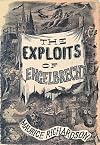
The narrator first meets Engelbrecht at the Walpurgis Night Witch Shoot, which is just like a duck shoot except that the vicar and choir are the beaters, the loaders are chaplains and instead of ducks, the prey are witches and warlocks. Englebrecht seemed a pleasant enough little chap - a dwarf, of course, like nearly all surrealist boxers who do most of their fighting with clocks."" He and the narrator are sharing "the finest witch stand in England, and they say the splash as the witches show more plop into the water all round you is the most exciting sound in the world for a witch shooter and one he never forgets."
The Exploits of Englebrecht is a collection of short stories, most of them based on sporting contests organised by the Surrealist Sporting Club. They're all ludicrous and extremely funny. There's Engelbrecht's greatest ever fight, with a Grandfather clock, a golf match that covers the universe and goes on for centuries, a football match against Mars. The narration is deadpan, as though these are the sort of events you'd read about in the daily paper.
I'd be almost certain that The Exploits of Engelbrecht wouldn't qualify as surrealist literature, despite being littered with the term surrealist. Every time I came across the phrase "when he recovered the priceless gift of consciousness" I had to laugh.
I absolutely recommend this extraordinarily funny, madly imaginative book. show less
The Exploits of Englebrecht is a collection of short stories, most of them based on sporting contests organised by the Surrealist Sporting Club. They're all ludicrous and extremely funny. There's Engelbrecht's greatest ever fight, with a Grandfather clock, a golf match that covers the universe and goes on for centuries, a football match against Mars. The narration is deadpan, as though these are the sort of events you'd read about in the daily paper.
I'd be almost certain that The Exploits of Engelbrecht wouldn't qualify as surrealist literature, despite being littered with the term surrealist. Every time I came across the phrase "when he recovered the priceless gift of consciousness" I had to laugh.
I absolutely recommend this extraordinarily funny, madly imaginative book. show less
Writing a book of nonsense is an easy task: the difficult, nay almost impossible task is to write a good book of nonsense. With Engelbrecht, the dwarf surrealist boxer, Maurice Richardson has demonstrated precisely how to write a good nonsense book.
There are two aspects of 'The Exploits of Engelbrecht' that make it a timeless classic. First of all, and most crucially, Richardson takes his subject matter seriously. Outside of the dialogue, I do not recall a single exclamation mark, and the show more prose is free of hyperbole. The nonsense that occurs merely occurs, and much passes without judgement. The world, therefore, is real, and we are witnesses to the dark horror of funny things happening that are not considered even remotely funny by any of the marvellous cast of characters - they are events that must be lived through.
The second aspect is the delightful language through which the stories are told. Engelbrecht is unfailingly introduced as the dwarf surrealist boxer, as if, moving from story to story, we might have forgotten who he was. Then there are the little 'cliches' that Richardson invents, such as referring to the 'priceless gift of consciousness'. Every time he recycles such language it is like meeting an esteemed colleague on the street - a joy, in other words.
'The Exploits of Engelbrecht' is not for everyone. I like to think that it appeals most to those of us with the most refined sensibilities (among whom of course I count myself); if you'd like to join the club, we can thank Rhys Hughes for the new Kindle version, and Christopher Fowler for reminding us all of this magnificent writer, in his book 'Forgotten Authors'. show less
There are two aspects of 'The Exploits of Engelbrecht' that make it a timeless classic. First of all, and most crucially, Richardson takes his subject matter seriously. Outside of the dialogue, I do not recall a single exclamation mark, and the show more prose is free of hyperbole. The nonsense that occurs merely occurs, and much passes without judgement. The world, therefore, is real, and we are witnesses to the dark horror of funny things happening that are not considered even remotely funny by any of the marvellous cast of characters - they are events that must be lived through.
The second aspect is the delightful language through which the stories are told. Engelbrecht is unfailingly introduced as the dwarf surrealist boxer, as if, moving from story to story, we might have forgotten who he was. Then there are the little 'cliches' that Richardson invents, such as referring to the 'priceless gift of consciousness'. Every time he recycles such language it is like meeting an esteemed colleague on the street - a joy, in other words.
'The Exploits of Engelbrecht' is not for everyone. I like to think that it appeals most to those of us with the most refined sensibilities (among whom of course I count myself); if you'd like to join the club, we can thank Rhys Hughes for the new Kindle version, and Christopher Fowler for reminding us all of this magnificent writer, in his book 'Forgotten Authors'. show less

Editor, Maurice Richardson, has selected an interesting and diverse collection of stories of consistently high quality. Even where there are some superficial similarities, such as a couple of the protagonist being writers of mystery stories who solve 'real' crimes, their characterisation is distinct enough to feel different and fresh as you move from one tale to the next.
A couple of the stories were ones I'd already read (Poe and Hammett), but most of others were new to me (there's one story show more I knew through a television adaptation), and I was engaged by them all. Some new old authors to keep my eye out for when I'm browsing through second-hand books shops.
The Purloined Letter by Edgar Allan Poe: The third of Poe's three stories of 'consulting detective' (though, actually, he's an amateur dilettante rather than a committed professional) C. Auguste Dupin is interesting enough, though it felt a little dry and cerebral on an initial reading. The suggestion of aristocratic infidelity forming the plot background is too little explored (and rightly so, as being of no import to the matter of the mystery) to excite any emotional involvement, and even the hints of a grudge between Dupin and the villainous Minister D- are too oblique to provide fertile ground for the growth of any great sympathetic feeling. However, not having Mr. Poe's fluency with Latin and French, nor his knowledge of Ancient Greek and eighteenth-century French drama, I had missed a number of his literary allusions, though curiosity and access to the internet remedied those deficits. With this added information to hand, Dupin's interest in the case, his delight in solving the mystery, and his relish in leaving his 'calling card' for Minister D-, added greatly to my enjoyment of Poe's tale. Oh, for a classical education! But praise be! for the democratisation of knowledge provided by the internet (providing you use reliable sources).
The Greek legend of Atreus and Thyestes provides a pattern for the theft of the letter and, perhaps, though the analogy is not exact, of the secret substitution of the original letter with its facsimile. Most interestingly, that Dupin and D- are brothers is suggested in a number of ways: they have the same initial; D- has a poet brother, and Dupin modestly comments on his own attempts at 'doggerel'; by the equivalence of intellect that Dupin draws between himself and D-; that D- is well acquainted with Dupin's handwriting; and, which Poe presents as a dramatic flourish, his final lines referencing the myth of Atreus and Thyestes, twin brothers who, in best tragic tradition, hated and plotted against each other. 4 stars (following research)
The Superfluous Finger by Jacques Futrelle: A couple of pages in and I was certain that I'd read this story before and, while I do have it in another collection of detective stories, More Rivals of Sherlock Holmes: Cosmopolitan Crimes, I haven't yet read that. My perplexity lasted for some time, until I remembered the 1970s TV series, The Rivals of Sherlock Holmes, which I have on DVD. Checking that, the mystery was solved as an adaptation of the story was made for the TV drama and I have watched it! Actually, I recall the adaptation as being somewhat better than the story I've just read, which is a shame. Perhaps having prior knowledge of the solution to the mystery spoiled it for me somewhat. Anyway, the set up is rather intriguing, even if the denouement seemed rather pedestrian by contrast. 3 stars.
The Doomdorf Mystery by Melville Davisson Post: A locked-room murder mystery set in old West Virginia just before the Civil War. In a few brief words, Post paints a picture of the unspoiled natural beauty of the Virginia mountains which put me in mind of Tolkien's Carrock, to the east of the Misty Mountains, illustrating the narrative interjection, "It is a law of the story-teller's art that he does not tell a story. It is the listener who tells it. The story-teller does but provide him with the stimuli." The detecting duties are initially shared between the unnamed narrator's Uncle Abner and Justice of the Peace, Squire Randolph, though it becomes clear that Uncle Abner has the more discerning mind.
Having formed a two-person posse to deal with Doomdorf and his moonshine still, Uncle Abner and Squire Randolph arrive to find their quarry dead in a room locked from the inside and with no sign, or possibility, of alternate entry. Not only do they have two suspects, the dead man's abused 'wife' and a manic mountain preacher also bent on destroying Doomdorf's still, both suspects confess to the crime! Squire Randolph demonstrates his humanity in dealing with the confessors, whilst Uncle Abner supplies the answer to the mystery, an example of poetic, if not to say heavenly, justice.
I enjoyed this story very much. I've not previously heard of Post and on checking out his Wikipedia entry find that he was a prolific author of mysteries, much respected in his time and apparently still frequently anthologised today. Uncle Abner appeared in twenty-two stories and I'm inclined to seek out more of them given the quality of this one. 4 stars.
A Man Called Spade by Dashiell Hammett: From the expansive, outdoorsie feeling of Uncle Abner's antebellum Virginia to the closed-in, claustrophobic feeling of Sam Spade's pre-WWII San Francisco. I have to assume this was a deliberate choice in the editor's part, and the change of tone is an effective one.
After briefly joining Sam and Effie in their office, we move with Spade to the murder scene, and stay there for what feels like a "real-time" investigation. Officers are sent out to follow up lines of enquiry and return to Sam and Lieutenant Dundy to report their results, or with suspects and witnesses in tow for a grilling (and maybe a slap or two). Sam is laconic and amused, Dundy intense and aggressive. Sam is in this for the game (he's not likely to get his fee for this one), but Dundy is under pressure to produce results. Hammett shows his writing skill in fleshing out these two characters, at least, within the confines of a few pages. He's also able to deftly slip in a few red herrings and blind alleys as to the culprit and their motive, playing on the reader's expectations for his otherwise stock supporting cast. There's also a hint of something irregular in the relationship between the murdered man and his daughter - is it financial or sexual? I'm not sure, but the latter possibility makes more sense of the depth of Mrs. Hooper's antipathy towards the dead man, and of her protectiveness of the young woman in her care .
An all-too-brief outing for Hammett's "blonde Satan". 4.5 stars (an extra half star than I initially rated it, because, hey! it's Sam Spade!).
The Mackenzie Case by Viola Brothers Shore: Reading this tale, I was struck by the natural, conversational flow of the dialogue, so it came as little surprise to find that the author was a Hollywood screenwriter. This was further evidenced by Hollywood entering into the plot, and that one of the clues (which I didn't pick up) hinged uponthe content and style of dialogue .
The plot is fairly convoluted and although I picked out some of the strands, I did need the explanation that the sleuth, fictional author of detective novels, Gwynn Leith-Keats, gave to her somewhat bemused husband and their friends to fully unravel the clew. A fun read, with an engaging protagonist. If Hammett's Nora Charles had her own film franchise or radio serial (The Thin Woman?), it might have the feel of this outing for Shore's heroine. 4 stars
The Adventure of the Seven Black Cats by Ellery Queen: This is my first outing with Ellery Queen though, of course, I knew the name by reputation. I was pleased to find that I liked the story, which isn't a given just because a writer is well-known. The quirky way the adventure got started was engaging and I felt as caught up in Queen's curiosity about the initial, seemingly trivial, mystery as was the character of Pet Shoppe (sic) owner, Miss Marie Curleigh. That the seven cats of the title have come to a bad end is not so unexpected as to be a spoiler, but the nature of their demise is nicely worked out by Queen, as is the reason, linked as it is tothe disappearance of two eccentric old ladies . Then, there's the unexpected appearance of Harry Potter ! 4 stars.
Introducing Susan Dare by Mignon G. Eberhart: A 'death amongst the rich and privileged' story, which I'm not usually greatly enamoured of, but Eberhart's characterisation of Susan Dare makes up for the regular cast of suave businessmen, spoiled playboys and socialites. If I'd been spending a weekend with this lot in a country pile, then like Dare, I'd have retired to an isolated cottage, too! There's plenty of suspects, but the culprit is the one I wanted as I disliked them so much. 4 stars. show less
A couple of the stories were ones I'd already read (Poe and Hammett), but most of others were new to me (there's one story show more I knew through a television adaptation), and I was engaged by them all. Some new old authors to keep my eye out for when I'm browsing through second-hand books shops.
The Purloined Letter by Edgar Allan Poe: The third of Poe's three stories of 'consulting detective' (though, actually, he's an amateur dilettante rather than a committed professional) C. Auguste Dupin is interesting enough, though it felt a little dry and cerebral on an initial reading. The suggestion of aristocratic infidelity forming the plot background is too little explored (and rightly so, as being of no import to the matter of the mystery) to excite any emotional involvement, and even the hints of a grudge between Dupin and the villainous Minister D- are too oblique to provide fertile ground for the growth of any great sympathetic feeling. However, not having Mr. Poe's fluency with Latin and French, nor his knowledge of Ancient Greek and eighteenth-century French drama, I had missed a number of his literary allusions, though curiosity and access to the internet remedied those deficits. With this added information to hand, Dupin's interest in the case, his delight in solving the mystery, and his relish in leaving his 'calling card' for Minister D-, added greatly to my enjoyment of Poe's tale. Oh, for a classical education! But praise be! for the democratisation of knowledge provided by the internet (providing you use reliable sources).
The Superfluous Finger by Jacques Futrelle: A couple of pages in and I was certain that I'd read this story before and, while I do have it in another collection of detective stories, More Rivals of Sherlock Holmes: Cosmopolitan Crimes, I haven't yet read that. My perplexity lasted for some time, until I remembered the 1970s TV series, The Rivals of Sherlock Holmes, which I have on DVD. Checking that, the mystery was solved as an adaptation of the story was made for the TV drama and I have watched it! Actually, I recall the adaptation as being somewhat better than the story I've just read, which is a shame. Perhaps having prior knowledge of the solution to the mystery spoiled it for me somewhat. Anyway, the set up is rather intriguing, even if the denouement seemed rather pedestrian by contrast. 3 stars.
The Doomdorf Mystery by Melville Davisson Post: A locked-room murder mystery set in old West Virginia just before the Civil War. In a few brief words, Post paints a picture of the unspoiled natural beauty of the Virginia mountains which put me in mind of Tolkien's Carrock, to the east of the Misty Mountains, illustrating the narrative interjection, "It is a law of the story-teller's art that he does not tell a story. It is the listener who tells it. The story-teller does but provide him with the stimuli." The detecting duties are initially shared between the unnamed narrator's Uncle Abner and Justice of the Peace, Squire Randolph, though it becomes clear that Uncle Abner has the more discerning mind.
I enjoyed this story very much. I've not previously heard of Post and on checking out his Wikipedia entry find that he was a prolific author of mysteries, much respected in his time and apparently still frequently anthologised today. Uncle Abner appeared in twenty-two stories and I'm inclined to seek out more of them given the quality of this one. 4 stars.
A Man Called Spade by Dashiell Hammett: From the expansive, outdoorsie feeling of Uncle Abner's antebellum Virginia to the closed-in, claustrophobic feeling of Sam Spade's pre-WWII San Francisco. I have to assume this was a deliberate choice in the editor's part, and the change of tone is an effective one.
After briefly joining Sam and Effie in their office, we move with Spade to the murder scene, and stay there for what feels like a "real-time" investigation. Officers are sent out to follow up lines of enquiry and return to Sam and Lieutenant Dundy to report their results, or with suspects and witnesses in tow for a grilling (and maybe a slap or two). Sam is laconic and amused, Dundy intense and aggressive. Sam is in this for the game (he's not likely to get his fee for this one), but Dundy is under pressure to produce results. Hammett shows his writing skill in fleshing out these two characters, at least, within the confines of a few pages. He's also able to deftly slip in a few red herrings and blind alleys as to the culprit and their motive, playing on the reader's expectations for his otherwise stock supporting cast. There's also a hint of something irregular in the relationship between the murdered man and his daughter - is it financial or sexual? I'm not sure, but
An all-too-brief outing for Hammett's "blonde Satan". 4.5 stars (an extra half star than I initially rated it, because, hey! it's Sam Spade!).
The Mackenzie Case by Viola Brothers Shore: Reading this tale, I was struck by the natural, conversational flow of the dialogue, so it came as little surprise to find that the author was a Hollywood screenwriter. This was further evidenced by Hollywood entering into the plot, and that one of the clues (which I didn't pick up) hinged upon
The plot is fairly convoluted and although I picked out some of the strands, I did need the explanation that the sleuth, fictional author of detective novels, Gwynn Leith-Keats, gave to her somewhat bemused husband and their friends to fully unravel the clew. A fun read, with an engaging protagonist. If Hammett's Nora Charles had her own film franchise or radio serial (The Thin Woman?), it might have the feel of this outing for Shore's heroine. 4 stars
The Adventure of the Seven Black Cats by Ellery Queen: This is my first outing with Ellery Queen though, of course, I knew the name by reputation. I was pleased to find that I liked the story, which isn't a given just because a writer is well-known. The quirky way the adventure got started was engaging and I felt as caught up in Queen's curiosity about the initial, seemingly trivial, mystery as was the character of Pet Shoppe (sic) owner, Miss Marie Curleigh. That the seven cats of the title have come to a bad end is not so unexpected as to be a spoiler, but the nature of their demise is nicely worked out by Queen, as is the reason, linked as it is to
Introducing Susan Dare by Mignon G. Eberhart: A 'death amongst the rich and privileged' story, which I'm not usually greatly enamoured of, but Eberhart's characterisation of Susan Dare makes up for the regular cast of suave businessmen, spoiled playboys and socialites. If I'd been spending a weekend with this lot in a country pile, then like Dare, I'd have retired to an isolated cottage, too! There's plenty of suspects, but the culprit is the one I wanted as I disliked them so much. 4 stars. show less
Reread *****
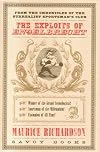
Certainly no regrets about buying a copy, the savoy edition is wonderful and while the novelty wears slightly i enjoyed it so much i'm going to round up anyway.
First Read ****
Surreal comedy. Sort of like a mix of 'Fear & Loathing in Las Vegas' with the 'Adventures of Baron Munchausen'. Its presented as a sequence of short stories covering various events such as a boxing match against a grandfather clock, a play preformed by plants, a football match against Mars etc.
Its quite show more funny and does manage to hold the attention unlike many other surreal or tall tale stories. Each section is just long enough so the absurdity doesn't have time to get old and each is presented like a real event except for the extraordinary Things which are doing it. So for example the sports stories are all told with a good sports commentary impression. This keeps things from becoming too surreal, which is something i hate. If you go full surreal and have no grounding element then there's simply no sense of stakes and it becomes boring.
I did have a few problems understanding parts of it, the cricket and horseracing in particular, probably as these are not sports i know very well.
I have a feeling if any of the sections (or the book as a whole) was longer the novelty would have worn off along with the entertainment value but as it stands quite enjoyable.
The ebook version doesn't have any drawings i'll have to search about on the net and see what i'm missing. show less
Certainly no regrets about buying a copy, the savoy edition is wonderful and while the novelty wears slightly i enjoyed it so much i'm going to round up anyway.
First Read ****
Surreal comedy. Sort of like a mix of 'Fear & Loathing in Las Vegas' with the 'Adventures of Baron Munchausen'. Its presented as a sequence of short stories covering various events such as a boxing match against a grandfather clock, a play preformed by plants, a football match against Mars etc.
Its quite show more funny and does manage to hold the attention unlike many other surreal or tall tale stories. Each section is just long enough so the absurdity doesn't have time to get old and each is presented like a real event except for the extraordinary Things which are doing it. So for example the sports stories are all told with a good sports commentary impression. This keeps things from becoming too surreal, which is something i hate. If you go full surreal and have no grounding element then there's simply no sense of stakes and it becomes boring.
I did have a few problems understanding parts of it, the cricket and horseracing in particular, probably as these are not sports i know very well.
I have a feeling if any of the sections (or the book as a whole) was longer the novelty would have worn off along with the entertainment value but as it stands quite enjoyable.
The ebook version doesn't have any drawings i'll have to search about on the net and see what i'm missing. show less
Lists
Awards


You May Also Like
Associated Authors
Statistics
- Works
- 12
- Also by
- 8
- Members
- 135
- Popularity
- #150,830
- Rating
- 3.7
- Reviews
- 5
- ISBNs
- 9
- Languages
- 1