
Ono no Komachi (825–900)
Author of The Ink Dark Moon: Love Poems by Ono no Komachi and Izumi Shikibu, Women of the Ancient Court of Japan
About the Author
Works by Ono no Komachi
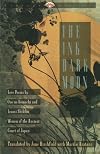
The Ink Dark Moon: Love Poems by Ono no Komachi and Izumi Shikibu, Women of the Ancient Court of Japan (1990) — Author — 366 copies, 13 reviews
Associated Works
Anthology of Japanese Literature: From the Earliest Era to the Mid-Nineteenth Century (1960) — Contributor — 808 copies
World Poetry: An Anthology of Verse from Antiquity to Our Time (1998) — Contributor — 499 copies, 2 reviews
Tagged
Common Knowledge
- Canonical name
- Ono no Komachi
- Birthdate
- 825
- Date of death
- 900
- Gender
- female
- Nationality
- Japan
- Associated Place (for map)
- Japan
Members
Reviews
The Ink Dark Moon: Love Poems by Ono no Komachi and Izumi Shikibu, Women of the Ancient Court of Japan (Vintage Classics) by Jane Hirshfield
‘’On a night
when the moon
shines as brightly as this,
the unspoken thoughts
of even the most discreet heart might
be seen.’’
(Izumi Shikibu)
Ono Komachi and Izumi Shikibu are the two leading figures of Japanese poetry during the Heian era. In a period when men were obliged to write in Chinese, women were exempt from this rule, and this independence led to the flourishing of poetry that moves the modern reader, giving voice to feelings we are all destined to suffer.
Yes. Emphasis on show more ‘suffer’ because love, especially the ‘unsafe’ kind of love (‘illicit’ or unrequited), is the worst emotional torture.There is a bitter truth here that anyone who has loved 'unsafely' will instantly recognize…
*Why do we use the word ‘illicit’? I will never understand. We turn love and desire into something sordid, almost criminal. I find the hypocrisy exhausting; these poems prove that such 'forbidden' longing is the most honest state of being.*
‘’You ask my thoughts
through the long night?
I spent it listening
to the heavy rain
beating against the window.’’
(Izumi Shikibu)
The two ladies welcome the reader into a world of longing, desire, elegant eroticism, meditation. But there is also loss, despair, uncertainty, pain. The arrival of the autumnal days and the spring blossoms that eventually wither and are scattered by the blowing wind. Komachi is the autumn, Shikibu is the spring. They sing of the desire for the one who may or may not come, the one who leaves you in limbo because this is what happens when you are stupid enough to let your guard down. The world’s eternal lie…
‘’This abandoned house
shining
in the mountain village -
how many nights
has the autumn moon spent here?’’
(Ono Komachi)
All the while, the one witness, the comforter, the sole companion that reminds us we are not as alone as we may feel, is the moon. The ink dark moon that watches the longing, the silver moonlight which lightens the path of the lovers, the twilight that encompasses every ache in a heart numb with hunger. Even the principles of Buddhism and the interconnected courses of the material and the incorporeal become a step to ascend the climax of an existence that is hungry for love. At least, it makes us feel alive…If broken…
This edition includes a fascinating Appendix on the impossible task of translating poetry and an insightful Notes on the Poems section.
Poetry written ages ago. Fully relatable. Fully sensitive. Fully human.
‘’What is it
about this twilight hour?
Even the sound
of a barely perceptible breeze
pierces the heart’’
(Izumi Shikibu)
My reviews can also be found on https://theopinionatedreaderblog.wordpress.com/ show less
when the moon
shines as brightly as this,
the unspoken thoughts
of even the most discreet heart might
be seen.’’
(Izumi Shikibu)
Ono Komachi and Izumi Shikibu are the two leading figures of Japanese poetry during the Heian era. In a period when men were obliged to write in Chinese, women were exempt from this rule, and this independence led to the flourishing of poetry that moves the modern reader, giving voice to feelings we are all destined to suffer.
Yes. Emphasis on show more ‘suffer’ because love, especially the ‘unsafe’ kind of love (‘illicit’ or unrequited), is the worst emotional torture.There is a bitter truth here that anyone who has loved 'unsafely' will instantly recognize…
*Why do we use the word ‘illicit’? I will never understand. We turn love and desire into something sordid, almost criminal. I find the hypocrisy exhausting; these poems prove that such 'forbidden' longing is the most honest state of being.*
‘’You ask my thoughts
through the long night?
I spent it listening
to the heavy rain
beating against the window.’’
(Izumi Shikibu)
The two ladies welcome the reader into a world of longing, desire, elegant eroticism, meditation. But there is also loss, despair, uncertainty, pain. The arrival of the autumnal days and the spring blossoms that eventually wither and are scattered by the blowing wind. Komachi is the autumn, Shikibu is the spring. They sing of the desire for the one who may or may not come, the one who leaves you in limbo because this is what happens when you are stupid enough to let your guard down. The world’s eternal lie…
‘’This abandoned house
shining
in the mountain village -
how many nights
has the autumn moon spent here?’’
(Ono Komachi)
All the while, the one witness, the comforter, the sole companion that reminds us we are not as alone as we may feel, is the moon. The ink dark moon that watches the longing, the silver moonlight which lightens the path of the lovers, the twilight that encompasses every ache in a heart numb with hunger. Even the principles of Buddhism and the interconnected courses of the material and the incorporeal become a step to ascend the climax of an existence that is hungry for love. At least, it makes us feel alive…If broken…
This edition includes a fascinating Appendix on the impossible task of translating poetry and an insightful Notes on the Poems section.
Poetry written ages ago. Fully relatable. Fully sensitive. Fully human.
‘’What is it
about this twilight hour?
Even the sound
of a barely perceptible breeze
pierces the heart’’
(Izumi Shikibu)
My reviews can also be found on https://theopinionatedreaderblog.wordpress.com/ show less
The Ink Dark Moon: Love Poems by Onono Komachi and Izumi Shikibu, Women of the Ancient Court of Japan by Jane Hirshfield
It took me a while to get beneath the surface of these poems, perseverance being rewarded. Of the two poets, I preferred Shikibu to Komachi; she seems to touch in a broader range of topics, though this could be due to fewer of her poems having survived, the smaller collection of her works in this volume, the editor's selection, or a combination of the three.
In addition to, and often at the same time as, writing about love, Shikibu talks of the transient and impermanent nature of existence; show more bereavement, loss and grief; enlightenment, acceptance and contentment.
The introduction, appendix and notes were very welcome to this Westerner with little (that is, zero) knowledge of the cultural context and literary antecedents upon which the poems are founded. With that help, I was able to appreciate some of the subtleties of the verses, which I'm sure we'll reward rereading.
The phrase "ink dark moon" is not used by either poet (unless I missed it), although the individual words appear many times thought the collection. The introduction mentions the ancient Greek use of standard poetic descriptions, citing Homer's "wine dark sea" as an example, and I think that's the allusion made in the title.
Beautiful and poignant verses. show less
In addition to, and often at the same time as, writing about love, Shikibu talks of the transient and impermanent nature of existence; show more bereavement, loss and grief; enlightenment, acceptance and contentment.
The introduction, appendix and notes were very welcome to this Westerner with little (that is, zero) knowledge of the cultural context and literary antecedents upon which the poems are founded. With that help, I was able to appreciate some of the subtleties of the verses, which I'm sure we'll reward rereading.
The phrase "ink dark moon" is not used by either poet (unless I missed it), although the individual words appear many times thought the collection. The introduction mentions the ancient Greek use of standard poetic descriptions, citing Homer's "wine dark sea" as an example, and I think that's the allusion made in the title.
Beautiful and poignant verses. show less
The Ink Dark Moon: Love Poems by Onono Komachi and Izumi Shikibu, Women of the Ancient Court of Japan (Vintage Classics) by Jane Hirshfield
“The autumn nightI love love poems
Is long only in name—
We’ve done no more
Than gaze at each other
And it’s already dawn.”
“The bamboo’s
old root
hasn’t changed at all—
Is there even one night
he sleeps at home? No.
3.5
The Ink Dark Moon: Love Poems by Ono no Komachi and Izumi Shikibu, Women of the Ancient Court of Japan (Vintage Classics) by Jane Hirshfield
I spent two days trying to recall where I’d first encountered the name Ono no Komachi, one of the two poets of this poetry collection, before. Then finally after I had grown weary with frustration, as it tends to happen, I did what I had avoided while hoping that memory would do its work, and I looked up the writer and rediscovered the kusōzu paintings. A series of nine paintings portraying “the death of a noble lady and the decay of the body” I had read about and seen a few years ago show more when I first learned of the Buddhist teachings on impermanence.
The aim of the paintings, believed to have been done during 18th century Japan, showing the different levels of the decomposition of the flesh in their unsightliness, is the transience of all things. That nothing is permanent and all things come to an end. The paintings are graphic (not extremely though) and direct, as religious depictions with a message usually are, and so I won't be sharing them here, but they're easily accessible on the internet for the curious.
While the poems collected here are influenced by the same Buddhist teachings of transience as the paintings, they're certainly subtler and prettier. For instance, from Ono no Komachi:
How sad,
to think I will end
as only
a pale green mist
drifting the far fields
And from Izumi Shikibu, written when mourning the death of her daughter:
Why did you vanish
into empty sky?
Even the fragile snow,
when it falls,
falls in this world.
Both instances alluding to the process of cremation after death. As well as the impermanence of life.
Most of the poems in this volume, collected and translated wonderfully by Jane Hirschfield, are about love and the passion and longing it causes.
Komachi:
How sad that I hope
to see you even now,
after my life has emptied itself
like this stalk of grain
into the autumn wind.
Shikibu:
In this world
love has no color—
yet how deeply
my body
is stained by yours
Also by Shikibu:
Seeing you is the thread
that ties me to this life—
if that knot
were cut this moment,
I’d have no regret.
Yesterday,
what were my reasons
for sighing?
This morning,
love is more painful still.
Wishing to see him,
to be seen by him—
if only he
were the mirror
I face each morning.
Sleeplessly
I watch over
the spring night—
but no amount of guarding
is enough to make it stay.
Reading the poems often brought to mind this Anne Carson quote I discovered recently: “The experience of eros is a study in the ambiguities of time. Lovers are always waiting. They hate to wait; they love to wait. Wedged between these two feelings, lovers come to think a great deal about time, and to understand it very well, in their perverse way.” True to this, the lovers here are in such intimate terms with time, always biding their time, mourning its loss, and breaking it down to the times of day: morning and night–in the yearning of night and departure of the lover that follows morning, and the seasons–especially spring.
That as well as the impatience, frustration, despair, and sweet longing, all caused by the yearning to love and be loved, just as palpable in the lover today as they were rendered so honestly and beautifully by these poets a millennium ago.
Finally, striking too are the two last poems by both Komachi and Shikibu. Both alluding to their deaths, and Shikibu’s believed to be written while on her deathbed.
Komachi’s:
This body
grown fragile, floating,
a reed cut from its roots…
If a stream would ask me
to follow, I’d go, I think
While watching
the long rains falling on this
world
my heart, too, fades
with the unseen color
of the spring flowers.
How invisibly
it changes color
in this world,
the flower
of the human heart.
In this world the living grow fewer,
the dead increase—
how much longer must I
carry this body of grief?
This abandoned house
shining
in the mountain village—
how many nights
has the autumn moon spent
here?
Shikibu’s:
The way I must enter
leads through darkness to dark
ness—
O moon above the mountains’
rim,
please shine a little further
on my path.
What else can I say? These poems are magnificent. show less
The aim of the paintings, believed to have been done during 18th century Japan, showing the different levels of the decomposition of the flesh in their unsightliness, is the transience of all things. That nothing is permanent and all things come to an end. The paintings are graphic (not extremely though) and direct, as religious depictions with a message usually are, and so I won't be sharing them here, but they're easily accessible on the internet for the curious.
While the poems collected here are influenced by the same Buddhist teachings of transience as the paintings, they're certainly subtler and prettier. For instance, from Ono no Komachi:
How sad,
to think I will end
as only
a pale green mist
drifting the far fields
And from Izumi Shikibu, written when mourning the death of her daughter:
Why did you vanish
into empty sky?
Even the fragile snow,
when it falls,
falls in this world.
Both instances alluding to the process of cremation after death. As well as the impermanence of life.
Most of the poems in this volume, collected and translated wonderfully by Jane Hirschfield, are about love and the passion and longing it causes.
Komachi:
How sad that I hope
to see you even now,
after my life has emptied itself
like this stalk of grain
into the autumn wind.
Shikibu:
In this world
love has no color—
yet how deeply
my body
is stained by yours
Also by Shikibu:
Seeing you is the thread
that ties me to this life—
if that knot
were cut this moment,
I’d have no regret.
Yesterday,
what were my reasons
for sighing?
This morning,
love is more painful still.
Wishing to see him,
to be seen by him—
if only he
were the mirror
I face each morning.
Sleeplessly
I watch over
the spring night—
but no amount of guarding
is enough to make it stay.
Reading the poems often brought to mind this Anne Carson quote I discovered recently: “The experience of eros is a study in the ambiguities of time. Lovers are always waiting. They hate to wait; they love to wait. Wedged between these two feelings, lovers come to think a great deal about time, and to understand it very well, in their perverse way.” True to this, the lovers here are in such intimate terms with time, always biding their time, mourning its loss, and breaking it down to the times of day: morning and night–in the yearning of night and departure of the lover that follows morning, and the seasons–especially spring.
That as well as the impatience, frustration, despair, and sweet longing, all caused by the yearning to love and be loved, just as palpable in the lover today as they were rendered so honestly and beautifully by these poets a millennium ago.
Finally, striking too are the two last poems by both Komachi and Shikibu. Both alluding to their deaths, and Shikibu’s believed to be written while on her deathbed.
Komachi’s:
This body
grown fragile, floating,
a reed cut from its roots…
If a stream would ask me
to follow, I’d go, I think
While watching
the long rains falling on this
world
my heart, too, fades
with the unseen color
of the spring flowers.
How invisibly
it changes color
in this world,
the flower
of the human heart.
In this world the living grow fewer,
the dead increase—
how much longer must I
carry this body of grief?
This abandoned house
shining
in the mountain village—
how many nights
has the autumn moon spent
here?
Shikibu’s:
The way I must enter
leads through darkness to dark
ness—
O moon above the mountains’
rim,
please shine a little further
on my path.
What else can I say? These poems are magnificent. show less
Lists
You May Also Like
Associated Authors
Statistics
- Works
- 6
- Also by
- 7
- Members
- 375
- Popularity
- #64,332
- Rating
- 4.0
- Reviews
- 14
- ISBNs
- 10
- Languages
- 3
- Favorited
- 1