
Theo Coster
Author of We All Wore Stars
Works by Theo Coster
We All Wore Stars: Memories of Anne Frank from Her Classmates by Coster Theo (2011-09-27) Hardcover (1600) 1 copy
Guess Who? 1 copy
Stacrobats 1 copy
Guess Who? 1 copy
Tagged
Common Knowledge
- Birthdate
- 1929
- Gender
- male
- Occupations
- toymaker
game designer
producer - Short biography
- Theo Coster was a classmate and friend of Anne Frank at the Amsterdam Jewish Lyceum. A toymaker and game designer (he created the universally loved board game "Guess Who?"), he is executive producer of the documentary film The Classmates of Anne Frank.
- Nationality
- Netherlands
- Places of residence
- Amsterdam, Netherlands
Tel Aviv, Israel - Associated Place (for map)
- Netherlands
Members
Discussions
We All Wore Stars by, Theo Coster in Reviews of Early Reviewers Books (November 2011)
Reviews
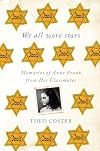
Coster's book "We All Wore Stars" is both disturbing and eminently readable. It is particularly hard to read for many reasons. Firstly, it concerns Anne Frank and her Secret Annex, which in itself is hard to read. Secondly, the varied experiences of the classmates is difficult. They range from relative freedom (the author) to hiding and moving constantly. It all came down to luck and how one looked. Finally, it reveals an indictment of the Dutch who, according to the author, could have done show more more to protect the innocent. That said, Coster has provided a very readable book. His ability to put together recollections of disparate people who were classmates of Anne Frank is unparalleled. A good book about a difficult subject. show less
 This review was written for LibraryThing Early Reviewers.
Theo Coster lives in Israel now and, along with his wife, is known for designing world renowned games. But once, he was a thirteen year old Jewish kid living in Amsterdam and going to school with Anne Frank. Sixty-five years later, Theo decides that he wants to record his story for his grandchildren. Instead of writing a memoir, Theo is inspired by the publication of the book Absent: Memories of the Jewish Lyceum in Amsterdam. He decides to find as many of his old classmates as he can and show more tell their stories collectively within the framework of their all having been school chums with Anne, or Annelies, as they knew her. His project grew into the documentary, The Classmates of Anne Frank, and has been shown around the world. This book is an outgrowth of his work on the film.
The book tells the story of how Theo is able to track down five of his and Anne's classmates, their recollections of Anne, and their own stories of being a child during the Holocaust. I was a bit trepidatious about the book at first glance, worried that the author was trying to make some money off his acquaintance with the Anne. Instead, I found a warm story of a microcosm of Jewish children and how they each survived the Holocaust. Although each person interviewed is asked what they remember of Anne, the main thrust is their own stories, each of which is told in a few simple pages.
What particularly strikes me at this point, even more than I had expected, is how differently each of us has experienced the war. Individual experiences of historical events can vary incredibly widely.
Theo and his family were fortunate and unusual in that they all survived the war and returned to their former house and lives. Theo's years in hiding were with a caring family in the country, and he was able to attend school and play outside. The classmates he interviews had more difficult times. Albert Gomes de Mesquita was moved ten times during the war, and although he and his sister starved at times, Albert does not remember his time in hiding as oppressive. Lenie Duyzend looked Jewish and was unable to hide in the open as Theo did. Until she was betrayed, she lived in a small room built into the ground that was only large enough for a bed and was accessed through a trapdoor in a closet. For a while she lived with an assortment of partisans, downed Allied pilots, and fellow Jews in the woods. Again, she and the others were betrayed.
In a short chapter entitled "Levels of Suffering", Albert, the one who changed hiding places so often, talks about how Jews didn't talk much about their experiences, but did compare them internally:
Compared to other children in hiding, I don't think my story amounts to much. What happened to me wasn't all that bad, was it? Three years in hiding with the family and all four of us surviving...isn't that splendid?
But that's not really how it works at all-that one form of suffering is worse than another. It's not true; it's all a matter of each individual's personal experience, and yet that's how they were handling it: the worst thing was to have been in a camp; next was that of the child from a large family who'd been in hiding and separated from them, and then came back on his or her own; and a situation such as ours, well, that wasn't terribly serious, even we ourselves agreed. And yet, I'd lost three-quarters of my family.
Running through the book is a discussion about the role of the Dutch in the Holocaust. They talk about the very high death rate of Jews in the Netherlands (80%), compared to places like Belgium and Denmark. They share stories of the Dutch who risked their own lives to shelter them. And they remark upon the utter lack of emotional or psychological help for them after they were liberated.
Less than 200 pages long, this collective memoir is interesting for its insights into Anne Frank's relationships with friends, but even more so for the conversation that Theo Cosner has with his former classmates. show less
The book tells the story of how Theo is able to track down five of his and Anne's classmates, their recollections of Anne, and their own stories of being a child during the Holocaust. I was a bit trepidatious about the book at first glance, worried that the author was trying to make some money off his acquaintance with the Anne. Instead, I found a warm story of a microcosm of Jewish children and how they each survived the Holocaust. Although each person interviewed is asked what they remember of Anne, the main thrust is their own stories, each of which is told in a few simple pages.
What particularly strikes me at this point, even more than I had expected, is how differently each of us has experienced the war. Individual experiences of historical events can vary incredibly widely.
Theo and his family were fortunate and unusual in that they all survived the war and returned to their former house and lives. Theo's years in hiding were with a caring family in the country, and he was able to attend school and play outside. The classmates he interviews had more difficult times. Albert Gomes de Mesquita was moved ten times during the war, and although he and his sister starved at times, Albert does not remember his time in hiding as oppressive. Lenie Duyzend looked Jewish and was unable to hide in the open as Theo did. Until she was betrayed, she lived in a small room built into the ground that was only large enough for a bed and was accessed through a trapdoor in a closet. For a while she lived with an assortment of partisans, downed Allied pilots, and fellow Jews in the woods. Again, she and the others were betrayed.
In a short chapter entitled "Levels of Suffering", Albert, the one who changed hiding places so often, talks about how Jews didn't talk much about their experiences, but did compare them internally:
Compared to other children in hiding, I don't think my story amounts to much. What happened to me wasn't all that bad, was it? Three years in hiding with the family and all four of us surviving...isn't that splendid?
But that's not really how it works at all-that one form of suffering is worse than another. It's not true; it's all a matter of each individual's personal experience, and yet that's how they were handling it: the worst thing was to have been in a camp; next was that of the child from a large family who'd been in hiding and separated from them, and then came back on his or her own; and a situation such as ours, well, that wasn't terribly serious, even we ourselves agreed. And yet, I'd lost three-quarters of my family.
Running through the book is a discussion about the role of the Dutch in the Holocaust. They talk about the very high death rate of Jews in the Netherlands (80%), compared to places like Belgium and Denmark. They share stories of the Dutch who risked their own lives to shelter them. And they remark upon the utter lack of emotional or psychological help for them after they were liberated.
Less than 200 pages long, this collective memoir is interesting for its insights into Anne Frank's relationships with friends, but even more so for the conversation that Theo Cosner has with his former classmates. show less
This review was written for LibraryThing Early Reviewers.Sometimes it's easy to think that Anne Frank was the only young Jewish girl who was in hiding during World War II, since she's the only one whose diary became a best-seller. But Anne had classmates, and one of them took it upon himself in 2007-2008 to produce a documentary film about a group of people in the same class as Anne Frank, each with different "adventures" during the war, the only difference between them and Anne being survival. Theo Coster wrote this book about his interviews and show more talks with his fellow classmates about how they survived the war and how their lives turned out. A very different perspective on the war, and one that, again, makes you wonder how these things can happen. show less
This review was written for LibraryThing Early Reviewers.It is fashionable for a reviewer to establisher his bona fides by mentioning extensive experience with the topic at hand. When it comes to the Holocaust, such a maneuver seems particularly crass. A thousand memoirs read are as nothing compared to a tattoo on the arm. But the memoirists themselves do us a great service. The most valuable of these accounts allow us to bear witness to the capacity for the greatest evil, and in its wake, the greatest resilience and will to survive. And they show more offer up the weight of an almost unimaginable emotional landscape: one painted in fear, hunger, death and obscenity.
I wish I could report that "We All Wore Stars: Memories of Anne Frank from her Classmates" by Theo Coster is such an account. Mr. Coster has produced a book based on meetings and interviews with his – and her --- former classmates. This emerged out of his documentary film “The Classmates of Anne Frank” based on the same project.
In fact, the title of this book is misleading. The memories of Anne Frank are present but spare, and the book deals more with Mr. Coster’s interviews focusing on experiences in Holland during the War, and his own story of surviving the war in the care of a Christian family. That the Anne Frank name is prominent in the title is testament more to her continuing marketability, and one wonders whether the appearance of exploitation crossed Mr. Coster’s mind.
Perhaps Miss Frank would have no objection. But precocious and talented writer that she was, she could not have forgiven the rest. It is hard to conceive that an account of Jews surviving Nazi occupation amid the murders of their fellows could be sterile. But that is what Mr. Coster has accomplished. The emotional tone throughout is shockingly cheerful and chatty; it is as if the team survived a particularly bad game, and then went out for dinner.
It is not clear whether the author is able to appreciate the full brunt of his subject, but is not writer enough to articulate it. Or whether – could it be due to wartime trauma? – his limited emotional insight does not allow him to address this difficult topic. One wished throughout that Anne Frank were only here to leap to the author’s aid. show less
I wish I could report that "We All Wore Stars: Memories of Anne Frank from her Classmates" by Theo Coster is such an account. Mr. Coster has produced a book based on meetings and interviews with his – and her --- former classmates. This emerged out of his documentary film “The Classmates of Anne Frank” based on the same project.
In fact, the title of this book is misleading. The memories of Anne Frank are present but spare, and the book deals more with Mr. Coster’s interviews focusing on experiences in Holland during the War, and his own story of surviving the war in the care of a Christian family. That the Anne Frank name is prominent in the title is testament more to her continuing marketability, and one wonders whether the appearance of exploitation crossed Mr. Coster’s mind.
Perhaps Miss Frank would have no objection. But precocious and talented writer that she was, she could not have forgiven the rest. It is hard to conceive that an account of Jews surviving Nazi occupation amid the murders of their fellows could be sterile. But that is what Mr. Coster has accomplished. The emotional tone throughout is shockingly cheerful and chatty; it is as if the team survived a particularly bad game, and then went out for dinner.
It is not clear whether the author is able to appreciate the full brunt of his subject, but is not writer enough to articulate it. Or whether – could it be due to wartime trauma? – his limited emotional insight does not allow him to address this difficult topic. One wished throughout that Anne Frank were only here to leap to the author’s aid. show less
This review was written for LibraryThing Early Reviewers.You May Also Like
Associated Authors
Statistics
- Works
- 6
- Members
- 107
- Popularity
- #180,614
- Rating
- 4.2
- Reviews
- 26
- ISBNs
- 10
- Languages
- 4
