
Noel Polk (1943–2012)
Author of Outside the Southern Myth
About the Author
Noel Polk was born in 1943. He was a professor, literary scholar, critic and poet. He was Emeritus Professor of English at Mississippi State University and editor of the Mississippi Quarterly. Polk was best known for his editorial and critical work on William Faulkner and his critical work on show more Eudora Welty. He co-edited five volumes of Faulkner¿s novels with biographer Joseph Blotner for The Library of America. He passed away in 2012 at his home in Jackson Mississippi. (Bowker Author Biography) show less
Image credit: Mississippi State University
Series
Works by Noel Polk
Associated Works
Novels 1930-1935 : As I Lay Dying, Sanctuary, Light in August, Pylon (1985) — Editor, some editions — 779 copies, 9 reviews
Requiem for a Nun: William Faulkner Manuscripts 19, Volume IV: Playscript Materials (1987) — Editor — 2 copies
Tagged
Common Knowledge
- Birthdate
- 1943-02-23
- Date of death
- 2012-08-22
- Gender
- male
- Education
- Mississippi College (B.A. 1965)
Mississippi College (M.A. 1966)
University of South Carolina (PhD 1970) - Occupations
- professor of English
Editor, Mississippi Quarterly
Editor, Southern Quarterly
author
Editor and critic - Awards and honors
- Fulbright Senior Scholar, University of Lodz, Poland
Richard Wright Literary Excellence Award - Nationality
- USA
- Birthplace
- Picayune, Mississippi, USA
- Places of residence
- Mississippi, USA
- Place of death
- Jackson, Mississippi, USA
- Associated Place (for map)
- Mississippi, USA
Members
Reviews
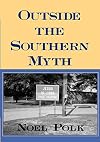
In Outside the Southern Myth, Polk makes the case for his hometown, Picayune, Mississippi, fitting much more into the "normal American" mold than the stereotypical "Southern" small town so commonly portrayed in the media. This is a memoir, but Polk works persistently to make it more about a large segment of Southern males than just about himself, giving us a picture of a small American town with no connection to the Civil War (Picayune has no antebellum history; it did not exist until just show more after the turn of the 20th century); no racial conflict (which is not to say there was no racism, just that both sides followed the rules, so it never erupted into violence or even confrontation); no glorious traditions to uphold or be buried under. It's very good reading, indeed, especially when he gets to the chapter entitled "One Baptist Son", in which he deconstructs Baptist theology from the perspective of a "survivor" who once (at the age of 11 or 12) felt the call to preach, but grew up and out of it, despite the lingering appeal of the certitude of fundamentalist faith. Polk treats his hometown, the people in it, and his own childhood, with respect, even tenderness at times, but never drifts over the line into sentimentality, often explaining but never rationalizing the kind of racial attitudes and conditions that unquestionably existed then and there.
Noel Polk was a professor at Mississippi State University (not to be confused with Ole Miss, the University of Mississippi), an expert on Faulkner and Welty, and an editor whose name you will find everywhere in recent editions of their works, most especially the Library of America volumes, and the "corrected" editions of Faulkner. Sadly, he passed away in 2012. I think he could have given us even more to think about if he had stayed with us a few more years.
(Review written in 2014) show less
Noel Polk was a professor at Mississippi State University (not to be confused with Ole Miss, the University of Mississippi), an expert on Faulkner and Welty, and an editor whose name you will find everywhere in recent editions of their works, most especially the Library of America volumes, and the "corrected" editions of Faulkner. Sadly, he passed away in 2012. I think he could have given us even more to think about if he had stayed with us a few more years.
(Review written in 2014) show less

This was a small collection of essays on the history of Natchez, Mississippi up to 1830. The French and Spanish periods are included. I would have preferred to have seen more topical essays included. For example, an essay on religion in Natchez up to 1830 would have been useful instead of having to get a paragraph or two from three or four essays to form a picture. This collection is useful to persons studying this period of Natchez' history.

"Papers from a conference held at the University of Southern Mississippi, Mar. 29-31, 1984. Crosby Memorial Lectures in Mississippi Culture, 1985. Essays by various Mississippi scholars on differing aspects of the historical culture of the Piney Woods section of south Mississippi.
You May Also Like
Associated Authors
Statistics
- Works
- 25
- Also by
- 4
- Members
- 112
- Popularity
- #174,305
- Rating
- 3.7
- Reviews
- 3
- ISBNs
- 39
- Languages
- 1