
Glynn James
Author of Diary of the Displaced: The Journal of James Halldon
About the Author
Image credit: Glynn James
Series
Works by Glynn James
What Lies Below (Thrown Away, #5) 6 copies
What Lies Ahead (Thrown Away #6) 3 copies
Reconditioned (Thrown Away, #4) 3 copies
Diary of the Displaced - Part 6 3 copies
Diary of the Displaced - Part 3 2 copies
The Baying of Wolves (Dustfall #3) 2 copies
Diary of the Displaced - Part 2 2 copies
Diary of the Displaced - Part 8 2 copies
ARISEN, Box Set - Books 1-4 1 copy
The Corridor 1 copy
Tagged
Common Knowledge
- Birthdate
- 1972
- Gender
- male
- Short biography
- Glynn is a writer of Dark Fantasy novels, born in Wellingborough, England in 1972. He hasn't managed to escape from there yet.
He has an obsession with anything to do with zombies, Cthulhu Mythos and post-apocalyptic fiction and films that began when he started reading HP Lovecraft and Richard Matherson's "I Am Legend" back when he was eight years old. - Nationality
- England
UK - Birthplace
- Wellingborough, Northamptonshire, England, UK
Members
Reviews
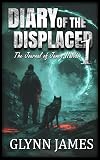
Diary of the Displaced by Glynn James is about a man who wakes up in a dark, unfamiliar place with no idea of when or how he arrived there. As the story progresses, he explores this new, dark world, discovering strange dog-like creatures; weird, Frankenstein-esque zombies; giant mushrooms; and other, stranger things. This story is equal parts stranded survivalist; memory mystery; ghost story; treasure hunt and horror adventure, set in an eerie semi-apocalyptic landscape and is told in show more diary-form.
The author generates an excellent sense of atmosphere; at no point do you think the landscape he has created is safe or familiar. Even when a familiar item turns up, it only deepens the sense of unease because it isn't where it ought to be. Because the story is told using a single point of view, the reader is put in a state of sympathy in something like the same state of confusion as the narrator. His questions are largely ours, as is his frustration at the lack of answers. The antagonist* has the feel of a folk tale, and is largely effective because of the shadows and half-truths of the rhymes in which he is shrouded; nothing is as creepy as a child's rhyme.
On the downside, I felt that the writing could be tighter and that minor issues - grammar and typos - could have been spotted by an editor. Recounted conversations also felt stilted a bit, and could be made smoother and less expository**, though I do recognise that making them flow in a more regular manner could be difficult or awkward. Naturally, you're only going to remember the highlights/ important parts of a conversation if you're writing it into a diary; I just felt that they could be a bit better. I felt initially that the language is at times too simple, though this does improve as the book progresses, so this could be taken as part of representing the narrator's state of mind.
I'd recommend this to readers of dark or horror fantasy with a touch of mystery. It has a slow start to it, but builds well. I'm looking forward to reading the sequels.
Overall: 3.5 or 4 stars
Review copy supplied by the author as part of LibraryThing's Member Giveaway program.
*He reminded me of Jack of Irons (Brian Froud's illustration in Faeries with the heads hanging from his belt was called to mind) from folklore, as much as the landscape reminded me of the hollow hills of the Irish Sidhe or the interior of an enchanted barrow, perhaps.
**They felt a bit like conversations one has when playing an adventure game and speaking with non-player characters in town. This book did have the feel of a game script when it started, so that may have biased me a bit. show less
The author generates an excellent sense of atmosphere; at no point do you think the landscape he has created is safe or familiar. Even when a familiar item turns up, it only deepens the sense of unease because it isn't where it ought to be. Because the story is told using a single point of view, the reader is put in a state of sympathy in something like the same state of confusion as the narrator. His questions are largely ours, as is his frustration at the lack of answers. The antagonist* has the feel of a folk tale, and is largely effective because of the shadows and half-truths of the rhymes in which he is shrouded; nothing is as creepy as a child's rhyme.
On the downside, I felt that the writing could be tighter and that minor issues - grammar and typos - could have been spotted by an editor. Recounted conversations also felt stilted a bit, and could be made smoother and less expository**, though I do recognise that making them flow in a more regular manner could be difficult or awkward. Naturally, you're only going to remember the highlights/ important parts of a conversation if you're writing it into a diary; I just felt that they could be a bit better. I felt initially that the language is at times too simple, though this does improve as the book progresses, so this could be taken as part of representing the narrator's state of mind.
I'd recommend this to readers of dark or horror fantasy with a touch of mystery. It has a slow start to it, but builds well. I'm looking forward to reading the sequels.
Overall: 3.5 or 4 stars
Review copy supplied by the author as part of LibraryThing's Member Giveaway program.
*He reminded me of Jack of Irons (Brian Froud's illustration in Faeries with the heads hanging from his belt was called to mind) from folklore, as much as the landscape reminded me of the hollow hills of the Irish Sidhe or the interior of an enchanted barrow, perhaps.
**They felt a bit like conversations one has when playing an adventure game and speaking with non-player characters in town. This book did have the feel of a game script when it started, so that may have biased me a bit. show less
This review was written for LibraryThing Member Giveaways.
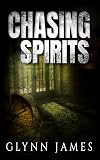
In Chasing Spirits (Diary of the Displaced #2), Reg Weldon, a very old man in a nursing home, recounts his eventful and peculiar life story on a Dictaphone, beginning from an early orphaned childhood of foster homes (and worse), and continuing on to describe life as a street urchin, being illegally drafted onto the front lines of World War I, a vanishing, starting over in post-war London, being part of a landing party during World War II, and so on. During his adventures, he experiences show more several inexplicable moments involving monsters and madness, extreme cruelty and kindness; strange creatures and beings that cross his path at various times throughout his life. This is a novella that has ties to the world in Diary of the Displaced, but is not a straightforward continuation of that story. It also acts as a bridge to the next part, Last to Fall, utilising a sort of elliptical storytelling, as some of the questions from Diary of the Displaced gradually begin to get answered.
Reg's world is basically our own (taking into account the passage of time) and his landscape is less alien than that of the dark realm in the preceding volume, making it easier to follow and relate to his story. Reg is less confused and disoriented than the narrator in Diary which allows the author more freedom to improve his writing, and also allows for more character interaction*. there are nice touched of historical details - the weather in 1908, or the likely items available to soldiers during World War I, for example (though I question the walk by the canal, given what I know of city waterways and plumbing.)
On the downside, Reg presents himself as more willing to reveal things about people other than himself, which is peculiar in this autobiographical tale. Reg does say at the beginning it's meant to be about the weird things he'd seen/experienced, but it feels like a cop out. Unexplained weirdness (e.g., appearances of strange beings/creatures, Marie's mystery, importance of the knife) feel like tease events and are unresolved. While frustratingly vague on the points above, other things have a lot of space devoted to them (e.g., the game with the kids early on),that feels out of balance with the rest. Minor editing is needed to clarify the early villains - their names appear to be interchangeable in places. More development is needed to flesh out relationships, especially Marie (it would be good to know more about her - she has no voice in this) and Joe, who has a voice but feels very much a surface character (until the next installment.)
Overall rating: 4 stars show less
Reg's world is basically our own (taking into account the passage of time) and his landscape is less alien than that of the dark realm in the preceding volume, making it easier to follow and relate to his story. Reg is less confused and disoriented than the narrator in Diary which allows the author more freedom to improve his writing, and also allows for more character interaction*. there are nice touched of historical details - the weather in 1908, or the likely items available to soldiers during World War I, for example (though I question the walk by the canal, given what I know of city waterways and plumbing.)
On the downside, Reg presents himself as more willing to reveal things about people other than himself, which is peculiar in this autobiographical tale. Reg does say at the beginning it's meant to be about the weird things he'd seen/experienced, but it feels like a cop out. Unexplained weirdness (e.g., appearances of strange beings/creatures, Marie's mystery, importance of the knife) feel like tease events and are unresolved. While frustratingly vague on the points above, other things have a lot of space devoted to them (e.g., the game with the kids early on),that feels out of balance with the rest. Minor editing is needed to clarify the early villains - their names appear to be interchangeable in places. More development is needed to flesh out relationships, especially Marie (it would be good to know more about her - she has no voice in this) and Joe, who has a voice but feels very much a surface character (until the next installment.)
Overall rating: 4 stars show less

I know what you are thinking: I have only myself to blame. I mean, I'm reading a zombie book that's a step up from self-published. What was I thinking? Do you really want to know? Really?
I was thinking about urgent care, and the record numbers of people in October trying to be seen for upper respiratory infections.
I was thinking about my upcoming beach vacation, cancelled because my dad has to be hospitalized for a couple of days and then undergo a medical procedure.
I was thinking about, in show more current pop psychology parlance, my attachment-avoidant relationship with humanity.
I might have even been thinking about upcoming elections. Not because I want to, but because the ads are effing unavoidable.
***************
Given my over-full brain, I really wanted something cathartic. Enter zombies. You get to kill off a whole bunch of humanity in satisfyingly horrible but clearly impossible ways (as opposed to real life ways that one does get to witness in an emergency room) and then focus on the efforts of a few to survive both at an individual level and to pull together the splinters of humanity. It's fucking amazing, really; stripping us down to our most basic function: can we work together enough to survive?
Alas, this entry in the genre, a collaboration between one writer that specializes in military-focused stories and another that specializes in post-apocalyptic something-or-another, was a disappointment. I enjoyed the idea of elite, multi-specialty military teams doing targeted missions to recover whatever data there was on vaccines/cures from various companies--this is a premise that actually makes some sense--but the actual storytelling felt awkward. The premise is great--that elite special forces have training to survive in terrible situations:
"But military personnel, especially special operations guys, had been operating in catastrophic vacuums of order and structure for most of their careers. Think Somalia, Bosnia, Afghanistan, and Iraq during its civil war. Being able to be effective in such wretched, menacing places was much of what it meant to be a special operator. Homer supposed the end of civilization really just supercharged what had always been the main human problem – working together to survive. The civilians had been shielded from that for a long time."
But authorial skill limited the development of such a great concept. As we jumped from one character to another, it started to feel a little 'samesies.' Like each person was just a military dude that gave up a personal life to become an elite. It made for some awkward info-dumping that allowed the author to show-up knowledge about elite military divisions but not so much about personality traits. There is a token woman, and interestingly, what we learn is that she is having sex with someone and the rest of the guys speculate who. There's also a Muslim who is, of course, very religious and will say last rites, etc (because to be Muslim is to be religious?). There's a couple of guys that are huge and like to intimidate other men through their size. And that's about all I remember of the special ops team. There's a couple more 'ordinary' military people who get pulled into meeting the special team, for reasons that are clearly silly.
The authors used an underused resource in apocalypse fiction, that of aenormous Navy carrier, built to stay at sea for months. This had the most interesting potential, particularly when they started to get into the Doomsday cult or mentality that develops after extended time at sea. Possibly this would continue and be further developed in the next book. This section hinted at issues raised in [b:The Last Policeman|13330370|The Last Policeman (The Last Policeman, #1)|Ben H. Winters|https://i.gr-assets.com/images/S/compressed.photo.goodreads.com/books/1344370646l/13330370._SY75_.jpg|18538006], which I hadn't seen before in a zombie apocalypse. I am curious as to that potential.
As one might expect, the book ends as they head into a life-or-death--most likely death--mission. Overall, the unique military focus wasn't enough to overcome the problems in story-telling flow and lack of character development. show less
I was thinking about urgent care, and the record numbers of people in October trying to be seen for upper respiratory infections.
I was thinking about my upcoming beach vacation, cancelled because my dad has to be hospitalized for a couple of days and then undergo a medical procedure.
I was thinking about, in show more current pop psychology parlance, my attachment-avoidant relationship with humanity.
I might have even been thinking about upcoming elections. Not because I want to, but because the ads are effing unavoidable.
***************
Given my over-full brain, I really wanted something cathartic. Enter zombies. You get to kill off a whole bunch of humanity in satisfyingly horrible but clearly impossible ways (as opposed to real life ways that one does get to witness in an emergency room) and then focus on the efforts of a few to survive both at an individual level and to pull together the splinters of humanity. It's fucking amazing, really; stripping us down to our most basic function: can we work together enough to survive?
Alas, this entry in the genre, a collaboration between one writer that specializes in military-focused stories and another that specializes in post-apocalyptic something-or-another, was a disappointment. I enjoyed the idea of elite, multi-specialty military teams doing targeted missions to recover whatever data there was on vaccines/cures from various companies--this is a premise that actually makes some sense--but the actual storytelling felt awkward. The premise is great--that elite special forces have training to survive in terrible situations:
"But military personnel, especially special operations guys, had been operating in catastrophic vacuums of order and structure for most of their careers. Think Somalia, Bosnia, Afghanistan, and Iraq during its civil war. Being able to be effective in such wretched, menacing places was much of what it meant to be a special operator. Homer supposed the end of civilization really just supercharged what had always been the main human problem – working together to survive. The civilians had been shielded from that for a long time."
But authorial skill limited the development of such a great concept. As we jumped from one character to another, it started to feel a little 'samesies.' Like each person was just a military dude that gave up a personal life to become an elite. It made for some awkward info-dumping that allowed the author to show-up knowledge about elite military divisions but not so much about personality traits. There is a token woman, and interestingly, what we learn is that she is having sex with someone and the rest of the guys speculate who. There's also a Muslim who is, of course, very religious and will say last rites, etc (because to be Muslim is to be religious?). There's a couple of guys that are huge and like to intimidate other men through their size. And that's about all I remember of the special ops team. There's a couple more 'ordinary' military people who get pulled into meeting the special team, for reasons that are clearly silly.
The authors used an underused resource in apocalypse fiction, that of a
As one might expect, the book ends as they head into a life-or-death--most likely death--mission. Overall, the unique military focus wasn't enough to overcome the problems in story-telling flow and lack of character development. show less
This book for me was the most subtle of the three I've just read in terms of strange events/paranormal, but I found it heartbreaking. The tale of a man's life, and the regrets he has for what he missed were extremely poignant. There's a lot going on in this book that I can't describe for fear of spoilers, but I loved the tie-in references to the other Displaced books I've read - something about that just feeds my inner geek - but of all the characters Glynn James has written this one really show more resonated for me. I think Reg Weldon will haunt me for a little while. show less
This review was written for LibraryThing Member Giveaways.
You May Also Like


Associated Authors
Statistics
- Works
- 77
- Members
- 1,086
- Popularity
- #23,653
- Rating
- 3.9
- Reviews
- 92
- ISBNs
- 38
- Favorited
- 2
