
Melissa C. Walker
Author of Violet on the Runway
About the Author
Works by Melissa C. Walker
Associated Works
Dear Teen Me: Authors Write Letters to Their Teen Selves (2012) — Contributor — 118 copies, 19 reviews
Tagged
Common Knowledge
- Gender
- female
Members
Reviews

Good-girl Lacey Anne Byer is the darling of her town’s steadfastly evangelical church. Lacey can’t wait to star in a leading role in Hell House, an annual event her church puts on in order to illustrate dangerous sins and encourage visitors to devote themselves to Christ. However, as unexpected events take place—members of the church are discovered to have performed the very sins they condemn—Lacey is forced to reexamine her faith and her beliefs, in order to carve out the best show more future for herself.
YA contemporary fiction just gets more and more stunning in their nuanced, relatable, and thought-provoking treatments of difficult subjects. Melissa Walker’s latest novel, SMALL TOWN SINNERS, is arguably the best examination of religious evangelism that I have read in YA fiction. Its sympathetic cast of characters and the careful way it treads the middle ground between black and white make it a superb literary accomplishment.
Religion is, as ever, a sensitive topic, one that is often difficult to talk about due to its highly personal and subjective manner. Which is why what Melissa Walker does in SMALL TOWN SINNERS is so impressive. Virtually all of the characters in this novel support rather unpopular and subjectively archaic positions on today’s controversial hot topics like abortion and gay marriage. However, rather than simply demonizing religious evangelists, Walker deftly makes all of her characters likeable, or at the very least sympathetic. It’s easy to hate issues and take solid stances on them when they are distant. However, when the issues hit home—when they become personal—is what SMALL TOWN SINNERS does so well. Walker shows that things such as faith and beliefs are individual and personal. This is a lesson that everyone could care to learn and promote.
The theme of SMALL TOWN SINNERS is a wonderful one, which makes up for the fact that sometimes, I felt like the characters were a little…mild. Lacey is a great protagonist in that she really captures the ambiguity of questioning her church-based faith, but there are times when I wanted her to be more than simply a mind-churning, tears-swallowing, does-he-like-me-or-not girlie-girl. Lacey’s best friend Starla Joy is said to be this more gregarious and outspoken girl, but she doesn’t very often display that. Ty, the supposed love interest, is, in my opinion, blown a bit out of proportion in the book’s synopsis. In SMALL TOWN SINNERS, romance definitely takes a backseat to the more compelling plotline of characters questioning their former beliefs. In fact, one may even think that the romance is a little lacking, a little too contrived.
But these minor qualms of mine regarding the characters don’t really matter in light of the book’s larger message. I love that the characters of SMALL TOWN SINNERS change over the course of the story—but in a way that stays true to who they are, and the way they were brought up. Needless to say, this is probably one of the most skilled and nuanced portrayals of extreme religion I’ve read in YA literature. All sorts of readers, I think, find this book compelling and eye-opening. show less
YA contemporary fiction just gets more and more stunning in their nuanced, relatable, and thought-provoking treatments of difficult subjects. Melissa Walker’s latest novel, SMALL TOWN SINNERS, is arguably the best examination of religious evangelism that I have read in YA fiction. Its sympathetic cast of characters and the careful way it treads the middle ground between black and white make it a superb literary accomplishment.
Religion is, as ever, a sensitive topic, one that is often difficult to talk about due to its highly personal and subjective manner. Which is why what Melissa Walker does in SMALL TOWN SINNERS is so impressive. Virtually all of the characters in this novel support rather unpopular and subjectively archaic positions on today’s controversial hot topics like abortion and gay marriage. However, rather than simply demonizing religious evangelists, Walker deftly makes all of her characters likeable, or at the very least sympathetic. It’s easy to hate issues and take solid stances on them when they are distant. However, when the issues hit home—when they become personal—is what SMALL TOWN SINNERS does so well. Walker shows that things such as faith and beliefs are individual and personal. This is a lesson that everyone could care to learn and promote.
The theme of SMALL TOWN SINNERS is a wonderful one, which makes up for the fact that sometimes, I felt like the characters were a little…mild. Lacey is a great protagonist in that she really captures the ambiguity of questioning her church-based faith, but there are times when I wanted her to be more than simply a mind-churning, tears-swallowing, does-he-like-me-or-not girlie-girl. Lacey’s best friend Starla Joy is said to be this more gregarious and outspoken girl, but she doesn’t very often display that. Ty, the supposed love interest, is, in my opinion, blown a bit out of proportion in the book’s synopsis. In SMALL TOWN SINNERS, romance definitely takes a backseat to the more compelling plotline of characters questioning their former beliefs. In fact, one may even think that the romance is a little lacking, a little too contrived.
But these minor qualms of mine regarding the characters don’t really matter in light of the book’s larger message. I love that the characters of SMALL TOWN SINNERS change over the course of the story—but in a way that stays true to who they are, and the way they were brought up. Needless to say, this is probably one of the most skilled and nuanced portrayals of extreme religion I’ve read in YA literature. All sorts of readers, I think, find this book compelling and eye-opening. show less

It's not usually a good idea for me to start reading a book because I think the cover is beautiful. That almost never ends well. But this cover is so beautiful, with its calm and dreamy pink wash, and the inside flap description is spare and intriguing...I couldn't help myself.
And, at first, I regretted it. I'm not wild about the writing, which seems at times to try too hard for a casual and teen-y voice and references bits of pop culture that I suspect are over the heads of the book's show more intended teen audience. And Clementine, the main character, is at first so on-the-nose with her angst that I couldn't help feeling as though she'd been dumbed down for that same teen audience.
Then, instead of merely huddling in her guilt and grief, Clementine started talking to the people around her, and with each conversation, the characters, including Clementine, took on depth and dimension. When the reason for that guilt and grief finally revealed itself, I discovered that I wanted very much for her to come to grips with the consequences of her choices and find a way to forgive herself.
I enjoyed the love story, too---more than I usually do when it comes to contemporary young adult fiction---and I particularly liked that when Clementine finally started paying attention to the world and the people around her, she discovered that other people were in the midst of their own difficult journeys.
I'm glad I picked this up. It's not perfect, but I grew to love the characters and wish the best for them. And it provided an always-needed reminder that relationships ebb and flow and that sometimes the hardest thing to do is forgive yourself for your mistakes and keep trying. show less
And, at first, I regretted it. I'm not wild about the writing, which seems at times to try too hard for a casual and teen-y voice and references bits of pop culture that I suspect are over the heads of the book's show more intended teen audience. And Clementine, the main character, is at first so on-the-nose with her angst that I couldn't help feeling as though she'd been dumbed down for that same teen audience.
Then, instead of merely huddling in her guilt and grief, Clementine started talking to the people around her, and with each conversation, the characters, including Clementine, took on depth and dimension. When the reason for that guilt and grief finally revealed itself, I discovered that I wanted very much for her to come to grips with the consequences of her choices and find a way to forgive herself.
I enjoyed the love story, too---more than I usually do when it comes to contemporary young adult fiction---and I particularly liked that when Clementine finally started paying attention to the world and the people around her, she discovered that other people were in the midst of their own difficult journeys.
I'm glad I picked this up. It's not perfect, but I grew to love the characters and wish the best for them. And it provided an always-needed reminder that relationships ebb and flow and that sometimes the hardest thing to do is forgive yourself for your mistakes and keep trying. show less
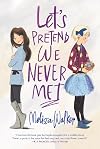
If it were up to Mattie Markham, there would be a law that said your family wasn’t allowed to move in the middle of the school year. After all, sixth grade is hard enough without wondering if you’ll be able to make new friends or worrying that the kids in Pennsylvania won’t like your North Carolina accent.
But when Mattie meets her next-door neighbor and classmate, she begins to think maybe she was silly to fear being the “new girl.” Agnes is like no one Mattie has ever show more met—she’s curious, hilarious, smart, and makes up the best games. If winter break is anything to go by, the rest of the school year should be a breeze.
Only it isn’t, because when vacation ends and school starts, Mattie realizes something: At school Agnes is known as the weird girl who no one likes. All Mattie wants is to fit in (okay, and maybe be a little popular too), but is that worth ending her friendship with Agnes? show less
But when Mattie meets her next-door neighbor and classmate, she begins to think maybe she was silly to fear being the “new girl.” Agnes is like no one Mattie has ever show more met—she’s curious, hilarious, smart, and makes up the best games. If winter break is anything to go by, the rest of the school year should be a breeze.
Only it isn’t, because when vacation ends and school starts, Mattie realizes something: At school Agnes is known as the weird girl who no one likes. All Mattie wants is to fit in (okay, and maybe be a little popular too), but is that worth ending her friendship with Agnes? show less
I could intensely relate to the drama that is central to Let's Pretend We Never Met, seeing parallels from my own life with circumstances for the character of Agnes.
At Calistoga Elementery School and at Calistoga Junior/Senior High School, I was the weird girl, the person ostracized and shunned by the school population. There was no understanding for an autism spectrum when I was going to school, so my differences went unexplained.
Learning that the character of Agnes in this book is possibly show more autistic, made me interested in reading it. I'm interested in the ways that authors portray characters who are on the autism spectrum -- and in this case, Agnes is also "the girl that no one likes" at protagonist Mattie's school.
Other readers have complained that Agnes is not specifically identified as being autistic; instead, Mattie overhears Agnes's mother say that Agnes has a "social disorder" and anxiety.
Well, Agnes's behavior seems consistent with a person who is on the autism spectrum, and as a reader, I can attempt to interpret the behaviors and motivations of characters in stories.
It's possible that Agnes's mother might find it simpler to tell people that Agnes has a "a social disorder" -- especially people whom she's only recently met. Agnes' mother might worry that people might make assumptions on the basis of stigma attached to the word "autism."
To be clear, in matters of disability representation, Agnes is a secondary character. This book tells Mattie's story, and centers around her perspective, so Agnes and her disability are presented through a neurotypical character's viewpoint.
I value this book for its possible encouragement for "up-standers" against bullying. (As my regular readers may know, this is a crusade that is dear to my heart.)
The targets of bullying shouldn't have to combat bullying alone. An entire community needs to unite in support of bullying's victims. And fictional works like Melissa C. Walker's book can help foster that united community. show less
At Calistoga Elementery School and at Calistoga Junior/Senior High School, I was the weird girl, the person ostracized and shunned by the school population. There was no understanding for an autism spectrum when I was going to school, so my differences went unexplained.
Learning that the character of Agnes in this book is possibly show more autistic, made me interested in reading it. I'm interested in the ways that authors portray characters who are on the autism spectrum -- and in this case, Agnes is also "the girl that no one likes" at protagonist Mattie's school.
Other readers have complained that Agnes is not specifically identified as being autistic; instead, Mattie overhears Agnes's mother say that Agnes has a "social disorder" and anxiety.
Well, Agnes's behavior seems consistent with a person who is on the autism spectrum, and as a reader, I can attempt to interpret the behaviors and motivations of characters in stories.
It's possible that Agnes's mother might find it simpler to tell people that Agnes has a "a social disorder" -- especially people whom she's only recently met. Agnes' mother might worry that people might make assumptions on the basis of stigma attached to the word "autism."
To be clear, in matters of disability representation, Agnes is a secondary character. This book tells Mattie's story, and centers around her perspective, so Agnes and her disability are presented through a neurotypical character's viewpoint.
I value this book for its possible encouragement for "up-standers" against bullying. (As my regular readers may know, this is a crusade that is dear to my heart.)
The targets of bullying shouldn't have to combat bullying alone. An entire community needs to unite in support of bullying's victims. And fictional works like Melissa C. Walker's book can help foster that united community. show less
Lists
For me to read (1)
Awards


You May Also Like
Associated Authors
Statistics
- Works
- 11
- Also by
- 4
- Members
- 1,007
- Popularity
- #25,603
- Rating
- 3.7
- Reviews
- 103
- ISBNs
- 36
- Languages
- 1