

Emily C. A. Snyder
Author of Niamh and the Hermit: A Fairy Tale
Works by Emily C. A. Snyder
Charming Princes 1 copy
Math For Actors 1 copy
Associated Works
Tagged
Common Knowledge
- Canonical name
- Snyder, Emily C. A.
- Legal name
- Snyder, Emily Christine
- Birthdate
- 1977-09-10
- Gender
- female
- Education
- Emerson College
- Occupations
- playwright
director
novelist
teacher
actor - Organizations
- Turn to Flesh Productions
- Short biography
- Emily C. A. Snyder has been inventing stories since she was old enough to babble, and writing them down since she was old enough to dictate. A prolific writer, Snyder is the author of The Twelve Kingdoms series from Arx Publishing, LLC which includes "Niamh and the Hermit" and "Charming the Moon," as well as "Nachtsturm Castle: A Gothic Austen Novel" from Girlebooks.com, a pastiche and sequel to "Northanger Abbey."
She has written over 40 plays, operas, ballets, musicals, pageants, masques, etc., four of which have been published from Playscripts.com: "Math for Actors," "Charming Princes," "Wallace's Will" and "The French Butler." Her work has been performed throughout the United States, and internationally as well - from Dublin, Ireland to Christchurch, New Zealand.
Her original five-act iambic pentameter play, "Cupid and Psyche" debuted in Boston in 2009, and was a semi-finalist in the Princess Grace Awards that same year. On Valentine's Day 2014, it will be revived for a limited Off-Broadway run through her production company, Turn to Flesh Productions. You can read more about it, catch exclusive content, and help support the project at http://www.cupidandpsyche.net
Snyder holds an MA in Theatre Education from Emerson College, Boston, MA and a BA in Literature and Drama from Franciscan University of Steubenville, OH. She studied screenwriting in Hollywood, CA with the ActOne program, and studied verse drama with the Theatre-in-England/Shakespeare School in London and Stratford-upon-Avon, England, under the direction of Vivien Heilbron and Bernard Lloyd. She is a member of the Dramatists Guild, and currently lives in New York City.
When not writing, Emily can most often be seen teaching or directing Shakespeare. And when not doing that, chances are she's driving aimlessly in her car, singing at the top of her lungs. For more information, please visit her website http://www.emilycasnyder.com or http://www.youtube.com/gaudete. - Nationality
- USA
- Birthplace
- Amherst, Massachusetts, USA
- Places of residence
- New York, New York, USA
- Map Location
- USA
Members
Reviews
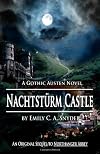
Pride and Prejudice gets all the attention, and Northanger Abbey deserves more!
Like many young ladies today who take their sparkly vampire stories just a little too seriously, Catherine Morland loved The Mysteries of Udolpho not wisely but too well, and learned a lesson from the experience. In this sequel to Northanger Abbey, Catherine is married, settled, and ready for and deserving of a proper heroine's adventure.
As the story begins, the newlywed Tilneys prepare for a trip to the show more Continent, following the same path traveled by Emily St. Aubert in Udolpho. Mr. Tilney, we learn, has continued his delightfully teasing ways, even going so far as to dress as a gypsy and deliver a "fortune" to his bride. Catherine sees through the deception, even as she enjoys it (as does the reader).
In Paris, an encounter with a real gypsy, as well as a real Englishman, sends the Tilneys to Nachstürm Castle, high in the Alps and as windswept and mysterious as any heroine could wish. A series of strange occurrences there are not as confusing to Catherine as one might expect, as she assumes, not unnaturally, that Henry has planned the whole thing for her enjoyment. Henry, meanwhile, has some adventures of his own, and the reader cannot be so sanguine as to whether our heroes will prevail. Who is the mysterious Donna Fortuna, whose portrait looks so much like Catherine? What is the mystery surrounding Young Will, whom everyone says is the former master's natural child, but who claims to be the legitimate heir? And what is up with the oh-so-creepy Edric, steward of Nachtstürm?
Like the recently-published P&P sequel, Mr. Darcy, Vampyre, Nachtstürm Castle is an homage to the Gothic novels, with all the expected conventions: a half-ruined castle, creepy servants, a mystery to solve, and a touch of romance. Ms. Snyder, clearly as well-read as her heroine, skillfully uses archaic spellings, language, and structural conventions, which serve to increase the charm of the work; we were particularly fond of the chapter subheadings, which have a truly 18th-century ring to them. Like the original Gothics, there are occasional asides for descriptions of picturesque landscape, and digressions into didactic commentary for the benefit of the reader. Those familiar with the original Gothics, and who appreciate the fun of them, will get a few giggles out of these digressions.
Many Austen paraliterature writers pander to the Darcy fans, turning Darcy into a brooding action hero, shooting rapists and becoming a ninja warrior or a distinguished statesman and whatnot; we were delighted that for once our own favorite Austen hero, Henry Tilney, has been elevated to truly heroic proportions, all the many capes of his great coat flying as he performs his own stunts. If even the most hardened Darcy-lover doesn't swoon at least a little bit over ActionHero!Henry, then you are just made of stone and that is all there is to it.
While Nachtstürm Castle is at times fantastic and other-worldly, it never takes itself too seriously; like the novel which inspired it, it is delivered very much tongue-in-cheek, and engages to entertain the reader not only with a series of thrills but with a knowing, literate humor, and fortunately without the cringe-inducing earnestness of much Austen paraliterature. If you love Northanger Abbey and its adorable heroine and witty hero, we think you will find Nachtstürm Castle to be a very "nice" story indeed. show less
Like many young ladies today who take their sparkly vampire stories just a little too seriously, Catherine Morland loved The Mysteries of Udolpho not wisely but too well, and learned a lesson from the experience. In this sequel to Northanger Abbey, Catherine is married, settled, and ready for and deserving of a proper heroine's adventure.
As the story begins, the newlywed Tilneys prepare for a trip to the show more Continent, following the same path traveled by Emily St. Aubert in Udolpho. Mr. Tilney, we learn, has continued his delightfully teasing ways, even going so far as to dress as a gypsy and deliver a "fortune" to his bride. Catherine sees through the deception, even as she enjoys it (as does the reader).
In Paris, an encounter with a real gypsy, as well as a real Englishman, sends the Tilneys to Nachstürm Castle, high in the Alps and as windswept and mysterious as any heroine could wish. A series of strange occurrences there are not as confusing to Catherine as one might expect, as she assumes, not unnaturally, that Henry has planned the whole thing for her enjoyment. Henry, meanwhile, has some adventures of his own, and the reader cannot be so sanguine as to whether our heroes will prevail. Who is the mysterious Donna Fortuna, whose portrait looks so much like Catherine? What is the mystery surrounding Young Will, whom everyone says is the former master's natural child, but who claims to be the legitimate heir? And what is up with the oh-so-creepy Edric, steward of Nachtstürm?
Like the recently-published P&P sequel, Mr. Darcy, Vampyre, Nachtstürm Castle is an homage to the Gothic novels, with all the expected conventions: a half-ruined castle, creepy servants, a mystery to solve, and a touch of romance. Ms. Snyder, clearly as well-read as her heroine, skillfully uses archaic spellings, language, and structural conventions, which serve to increase the charm of the work; we were particularly fond of the chapter subheadings, which have a truly 18th-century ring to them. Like the original Gothics, there are occasional asides for descriptions of picturesque landscape, and digressions into didactic commentary for the benefit of the reader. Those familiar with the original Gothics, and who appreciate the fun of them, will get a few giggles out of these digressions.
Many Austen paraliterature writers pander to the Darcy fans, turning Darcy into a brooding action hero, shooting rapists and becoming a ninja warrior or a distinguished statesman and whatnot; we were delighted that for once our own favorite Austen hero, Henry Tilney, has been elevated to truly heroic proportions, all the many capes of his great coat flying as he performs his own stunts. If even the most hardened Darcy-lover doesn't swoon at least a little bit over ActionHero!Henry, then you are just made of stone and that is all there is to it.
While Nachtstürm Castle is at times fantastic and other-worldly, it never takes itself too seriously; like the novel which inspired it, it is delivered very much tongue-in-cheek, and engages to entertain the reader not only with a series of thrills but with a knowing, literate humor, and fortunately without the cringe-inducing earnestness of much Austen paraliterature. If you love Northanger Abbey and its adorable heroine and witty hero, we think you will find Nachtstürm Castle to be a very "nice" story indeed. show less

I hadn't thought I would enjoy an Austen sequel but this turned out to be a fun, light read. Following on from the events in Northanger Abbey, Henry Tilney decides to tease Catherine a little by taking her on a European tour with the intention of visiting some Radcliffe inspired gothic castles (Catherine, of course, takes her beloved copy of The Mysteries of Udolpho with her). In the course of their travels the Tilney's receive an invitation to stay at Nachtsturm Castle which promises to show more fulfil Catherine's wildest gothic dreams.
Emily Snyder is obviously a lover of gothic literature in general as well as Jane Austen's novels and I think this worked well as a homage to gothic novels in general as well as to Northanger Abbey. Whilst I don't think it was as good as Northanger it was a very enjoyable read, frequently funny and I thought Synder had captured Jane Austen's style well. show less
Emily Snyder is obviously a lover of gothic literature in general as well as Jane Austen's novels and I think this worked well as a homage to gothic novels in general as well as to Northanger Abbey. Whilst I don't think it was as good as Northanger it was a very enjoyable read, frequently funny and I thought Synder had captured Jane Austen's style well. show less

This would be a hard book for me to rate..
Quite a mix of epistolary covering an array of JA characters and genres ~ contemporary variety from gothic to mashup ~ definitely not for purists :)
I did love the conversations of Jane's various characters brought together by Emily's writing ~
P&P mixing it up with S&S, Persuasion, Emma, MP and NA ~ with laughable results! Dramatic story representations of both female gatherings and old boys clubbing ...
Great examples of Emily's capable, creative show more thinking and excellent delivery.
AN unusual Austen in August addition to my selections for Roof Beam Reader's 2012 Challenge ~
Definitely a unique reading diversion!
Thanks, Emily, for sharing your writing creativity with JA readers :) show less
Quite a mix of epistolary covering an array of JA characters and genres ~ contemporary variety from gothic to mashup ~ definitely not for purists :)
I did love the conversations of Jane's various characters brought together by Emily's writing ~
P&P mixing it up with S&S, Persuasion, Emma, MP and NA ~ with laughable results! Dramatic story representations of both female gatherings and old boys clubbing ...
Great examples of Emily's capable, creative show more thinking and excellent delivery.
AN unusual Austen in August addition to my selections for Roof Beam Reader's 2012 Challenge ~
Definitely a unique reading diversion!
Thanks, Emily, for sharing your writing creativity with JA readers :) show less
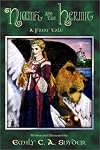
Emily Snyder's Niamh And The Hermit: A Fairy Tale is a fantasy novel written in the verbose and lyrical style associated with Lord Dunsany. It is the imaginative tale of the daughter of a King, and the story of a Fairy whose beauty is so great that it drives ordinary men mad. Only a hermit with the piety of a saint can hope to share happiness as her bride, yet a vengeful Count lays plots and schemes to sow misery for the princess and her destined one. Niamh And The Hermit is highly show more recommended for fans of "high fantasy" as being an original, captivating, and thoroughly enticing fable.
-Amazon.com
I liked this book because while it was Catholic it was also a magical fantasy. It was a bit dull in a few parts but I was satisfied by the end. show less
-Amazon.com
I liked this book because while it was Catholic it was also a magical fantasy. It was a bit dull in a few parts but I was satisfied by the end. show less
Lists
Austenland (1)
You May Also Like
Associated Authors
Statistics
- Works
- 7
- Also by
- 1
- Members
- 54
- Popularity
- #299,229
- Rating
- 3.8
- Reviews
- 7
- ISBNs
- 4
