
Edgar Cantero
Author of Meddling Kids: A Novel
About the Author
Edgar Cantero is a writer and cartoonist from Barcelona. His books are written in Catalan, Spanish, and English. He is the author of "The Supernatural Enhancements" (2014) and "Meddling Kids" (2017). His book "Dormir amb Winona Ryder", won the 2007 Joan Crexells Award. (Bowker Author Biography)
Works by Edgar Cantero
Associated Works
Spooky Short Stories — Contributor — 2 copies
Tagged
Common Knowledge
- Birthdate
- 1981-05-27
- Gender
- male
- Awards and honors
- Joan Crexells Award (2007)
- Nationality
- Spain
- Birthplace
- Barcelona, Catalonia, Spain
- Map Location
- Spain
Catalonia
Catalonia, Spain
Members
Reviews

TL;DR - transphobic, not recommended
In the summer of 1977 in Blyton Hills, Oregon, four thirteen-year-olds solved spooky mysteries - it was always an adult in a mask! Years later, in 1990, the former kid sleuths are not doing so hot. Andrea "Andy" Rodriguez (the tomboy) breaks out of prison and picks up Kerri (the brains) so they can break Nate (the dreamer) out of a mental health facility he's been locked in for having hallucinations of Peter (the handsome leader) who committed suicide a show more year earlier. Andy explains that nothing has been right with them since their final mystery in 1977, and they have to go back to the haunted mansion on top of a mine shaft in the middle of Sleepy Lake in Oregon. And this time the villain is definitely not just a normal adult in a mask.
The general idea of this book is very good, but the writing and the execution are awful. The close-third person narration is completely inconsistent, bouncing between characters within the same paragraph, sometimes within the same sentence. Randomly, the dialog is occasionally presented as lines from a script, complete with camera directions, for no discernible reason. I assume that this is meant to be clever, as are the heaping piles of references to disciplines that the author does not understand. These range from the very minor (two 26yos who barely know each other would not have an argument about Captain Planet within a few weeks of its TV premiere) to complete misrepresentations of mental health (Nate keeps admitting himself to an in-patient mental health facility just because he likes the slow pace of life there, and goes on and off his anti-hallucinogenic medication willy-nilly, with no side effects), sciences of all kinds (Kerri has a bachelors degree in biology and zero work experience, which qualifies her to perform a police autopsy, and she has studied insects but has never owned hiking boots), women and sexuality (Andy has been in love with Kerri since they were 13 and is constantly creepily ogling or touching her while they're supposed to be running for their lives or whatever. She ends upbeing in a relationship with Kerri at the end, despite the fact that Kerri says many times that she is not attracted to women and might not ever want to be physically intimate, and Andy says she's fine with that? What?? ).
All of that is small potatoes compared to the most egregious: this book is very transphobic. It starts at the beginning, with unnecessarily referring to a one-sentence background character only as "the H********dite" (a slur for intersex) and continues through the end wherethe villain turns out to be an immortal witch who changes their gender through surgery every 30-ish years so no one will realize they have been causing trouble since Salem. Gender reassignment surgery presented as a means to trick people for nefarious reasons. The author kind of tries to counterbalance by hinting that the main character, Andy, might be trans herself. However, the only vague evidence for this is 1) she wants to be called Andy, NOT Andrea; 2) she has short hair; 3) she gets mad at the idea that girls can't do things that boys can do; and 4) she is attracted to women. Mostly irrelevant and unconvincing.
There's little of value here to balance what is objectively offensive. Where was this author's editor??
Very much NOT recommended. show less
In the summer of 1977 in Blyton Hills, Oregon, four thirteen-year-olds solved spooky mysteries - it was always an adult in a mask! Years later, in 1990, the former kid sleuths are not doing so hot. Andrea "Andy" Rodriguez (the tomboy) breaks out of prison and picks up Kerri (the brains) so they can break Nate (the dreamer) out of a mental health facility he's been locked in for having hallucinations of Peter (the handsome leader) who committed suicide a show more year earlier. Andy explains that nothing has been right with them since their final mystery in 1977, and they have to go back to the haunted mansion on top of a mine shaft in the middle of Sleepy Lake in Oregon. And this time the villain is definitely not just a normal adult in a mask.
The general idea of this book is very good, but the writing and the execution are awful. The close-third person narration is completely inconsistent, bouncing between characters within the same paragraph, sometimes within the same sentence. Randomly, the dialog is occasionally presented as lines from a script, complete with camera directions, for no discernible reason. I assume that this is meant to be clever, as are the heaping piles of references to disciplines that the author does not understand. These range from the very minor (two 26yos who barely know each other would not have an argument about Captain Planet within a few weeks of its TV premiere) to complete misrepresentations of mental health (Nate keeps admitting himself to an in-patient mental health facility just because he likes the slow pace of life there, and goes on and off his anti-hallucinogenic medication willy-nilly, with no side effects), sciences of all kinds (Kerri has a bachelors degree in biology and zero work experience, which qualifies her to perform a police autopsy, and she has studied insects but has never owned hiking boots), women and sexuality (Andy has been in love with Kerri since they were 13 and is constantly creepily ogling or touching her while they're supposed to be running for their lives or whatever. She ends up
All of that is small potatoes compared to the most egregious: this book is very transphobic. It starts at the beginning, with unnecessarily referring to a one-sentence background character only as "the H********dite" (a slur for intersex) and continues through the end where
There's little of value here to balance what is objectively offensive. Where was this author's editor??
Very much NOT recommended. show less
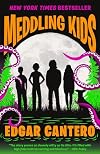
Meddling Kids was definitely not was I was expecting when I cracked it open, and in this case that's not a good thing. Even were I to disregard not living up to expectations, there are also some jarring craft issues that leave me baffled as to its popularity and success (besides what I'm sure is Blumhouse's marketing machine).
First, do not go in expecting an actual scooby doo, or in even scooby gang, style romp. It bills itself as that and as horror/comedy and neither is really fitting. show more Scooby doo and lovecraftian influences can be mixed to a great deal of success, as Mystery Inc. showed us, and a more grown up, adult version of those characters could have been a lot of fun. Though I do think a lot of current things playing in this space overlook the fact that in original scooby doo the gang was clearly in their late teens through mid 20s rather than stranger things-esque children. That's not what we get here. There's backstory about them as a scooby style troop in their pre-teen years, but by the time we pick up the story one of them is dead and the rest aren't really analogous to scooby gang characters (velma and daphne seem merged into one character and we have a non-anthropomorphic dog, but otherwise the characters seem disconnected from that mythos).
There's a lot of weird anthropomorphizing of one characters hair throughout the book that seems to serve no purpose?
The dog is definitely *not* anthropomorphized, yet we get occasional and seemingly random internal monologue from him, that also doesn't seem to be explained by the pay off at the end.
We have a hallucination, that insists its a ghost, that apparently isn't a ghost, but is also not effected by if or how much of his medication the hallucinating character takes, which feels nonsensical but also serves to make the entire character extraneous to the plot?
Culturally, I feel like there's some questionable treatment of LGBTQIA+ folks. Its great we have an LGBTQ main character, but her internal narrative and behavior towards others seems *very* male gaze-y and insists she's not a lesbian save for one specific character? Which feels like a combination of erasure and just being poorly written by a male author. There's also a lot of distasteful stuff towards where everyone seems to be pressuring that character to be trans because they're a butch/masc maybe lesbian? There's also a character that is repeatedly referred to as a 'hermaphrodite', but I'm not even sure its referring to their sexual organs?
On to the problems with craft...
Seemingly at random, the structure of the writing changes back and forth between a novel and a script. This includes stage and camera direction. Sometimes there is stage and camera direction even when its structured like a novel. There are also, again seemingly at random, offhand meta-textual comments about the structure of the text and how it relates to events which *sometimes* characters also seem aware of? This might mean describing or referencing an event that happened as 'it occurred two lines ago' or 'as we saw in the previous paragraph'. Maybe I'm too dense and there's some pattern to all of this that is absolutely brilliant ala House of Leaves playing with text, but I'm pretty sure there isn't and its just lazy.
The author also has a bad of making up words...not in a creative, Shakespearean, expanding-the-language sort of way but rather by just mashing two pre-existing words together an calling it good. Again, it feels lazy.
I have some piddly quibbles with how the action is written as well, but those are minor.
The positives I would say I had were 1)I think its got some great things to say about traumas and how they effect the rest of our lives, have the potential to change us as people, and the road to recovery. And 2) I think some of the minor, side characters were a lot of fun and a lot better written than our protagonists.
All in all, a disappointment that really misses the mark on what could either have been a very dark and grown up interpretation of scooby doo, or a very fun light hearted romp that either way I could have seen expanded into a series. show less
First, do not go in expecting an actual scooby doo, or in even scooby gang, style romp. It bills itself as that and as horror/comedy and neither is really fitting. show more Scooby doo and lovecraftian influences can be mixed to a great deal of success, as Mystery Inc. showed us, and a more grown up, adult version of those characters could have been a lot of fun. Though I do think a lot of current things playing in this space overlook the fact that in original scooby doo the gang was clearly in their late teens through mid 20s rather than stranger things-esque children. That's not what we get here. There's backstory about them as a scooby style troop in their pre-teen years, but by the time we pick up the story one of them is dead and the rest aren't really analogous to scooby gang characters (velma and daphne seem merged into one character and we have a non-anthropomorphic dog, but otherwise the characters seem disconnected from that mythos).
There's a lot of weird anthropomorphizing of one characters hair throughout the book that seems to serve no purpose?
The dog is definitely *not* anthropomorphized, yet we get occasional and seemingly random internal monologue from him, that also doesn't seem to be explained by the pay off at the end.
We have a hallucination, that insists its a ghost, that apparently isn't a ghost, but is also not effected by if or how much of his medication the hallucinating character takes, which feels nonsensical but also serves to make the entire character extraneous to the plot?
Culturally, I feel like there's some questionable treatment of LGBTQIA+ folks. Its great we have an LGBTQ main character, but her internal narrative and behavior towards others seems *very* male gaze-y and insists she's not a lesbian save for one specific character? Which feels like a combination of erasure and just being poorly written by a male author. There's also a lot of distasteful stuff towards where everyone seems to be pressuring that character to be trans because they're a butch/masc maybe lesbian? There's also a character that is repeatedly referred to as a 'hermaphrodite', but I'm not even sure its referring to their sexual organs?
On to the problems with craft...
Seemingly at random, the structure of the writing changes back and forth between a novel and a script. This includes stage and camera direction. Sometimes there is stage and camera direction even when its structured like a novel. There are also, again seemingly at random, offhand meta-textual comments about the structure of the text and how it relates to events which *sometimes* characters also seem aware of? This might mean describing or referencing an event that happened as 'it occurred two lines ago' or 'as we saw in the previous paragraph'. Maybe I'm too dense and there's some pattern to all of this that is absolutely brilliant ala House of Leaves playing with text, but I'm pretty sure there isn't and its just lazy.
The author also has a bad of making up words...not in a creative, Shakespearean, expanding-the-language sort of way but rather by just mashing two pre-existing words together an calling it good. Again, it feels lazy.
I have some piddly quibbles with how the action is written as well, but those are minor.
The positives I would say I had were 1)I think its got some great things to say about traumas and how they effect the rest of our lives, have the potential to change us as people, and the road to recovery. And 2) I think some of the minor, side characters were a lot of fun and a lot better written than our protagonists.
All in all, a disappointment that really misses the mark on what could either have been a very dark and grown up interpretation of scooby doo, or a very fun light hearted romp that either way I could have seen expanded into a series. show less

Rating: 4.5 of 5
The Supernatural Enhancements earned an almost-perfect rating, only the second 5-star rating I gave to a first-time read thus far in 2014. The cover and the jacket blurb lured me in then the first two pages hooked me completely. The protagonists, A. and Niamh, had some of the best chemistry ever (without being romantic), and I loved that Niamh, the mute female teenager, was the protector. Who am I kidding, I loved darn near every dang thing about this book.
Highly recommended show more to:
- those who enjoy having to pay attention while they read
- those who have almost as much fun trying to solve the story's mystery as they do just sitting back and watching it unfold
- those who don't have to have everything spelled out for them by the end
- those with strong stomatchs for a bit of graphic violence during the story's climax
- those who enjoy stories told through diary entries, letters, telegrams, postcards, video footage, audio recordings
I'm crossing my fingers Cantero will write more stories starring A. and Niamh! show less
The Supernatural Enhancements earned an almost-perfect rating, only the second 5-star rating I gave to a first-time read thus far in 2014. The cover and the jacket blurb lured me in then the first two pages hooked me completely. The protagonists, A. and Niamh, had some of the best chemistry ever (without being romantic), and I loved that Niamh, the mute female teenager, was the protector. Who am I kidding, I loved darn near every dang thing about this book.
Highly recommended show more to:
- those who enjoy having to pay attention while they read
- those who have almost as much fun trying to solve the story's mystery as they do just sitting back and watching it unfold
- those who don't have to have everything spelled out for them by the end
- those with strong stomatchs for a bit of graphic violence during the story's climax
- those who enjoy stories told through diary entries, letters, telegrams, postcards, video footage, audio recordings
I'm crossing my fingers Cantero will write more stories starring A. and Niamh! show less
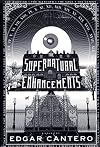
Read this book.
Buy this book. Give yourself the treat of a thick, hardcover, beautiful book.
Read this book again, or at least sections of it. There is far too much going on to catch it all the first time.
Drawing from Foucault’s Pendulum, House of Leaves, and even The Blair Witch Project, Edgar Cantero creates a masterpiece with The Supernatural Enhancements. The premise is that a young British twenty-three year-old man gets notification that he is the last living relative of a millionaire show more in Virginia who died by defenestration, and has inherited his house and all its contents. He arrives at Axton House with a teenaged mute Irish punk girl, to find a mansion beyond his wildest dreams.
Beyond all the accoutrements of a mansion, the place has got a ghost, hidden rooms, a hedge maze, woods, a missing butler… what more can you ask for from a story??? I could tell you how much more is coming, but that would ruin all your fun.
Know this: this is not a passive reading experience. By dint of the way the story is told – through diary entries, letters to Aunt Liza, dream journal entries, notes scribbled by mute Niamh, transcriptions of recordings made by the cameras set up around the house or by security footage in public places, and the like – the reader is required to piece it together. There is very little straight-ahead narrative here. You have to do the work. But fear not: the payoff is well worth it.
Beyond the engaging plot, the language is exquisite. Cantero is from Spain, and writes in Spanish, English, and Catalan. This is his debut novel written in English, and his experience of smithing phrases from more than one lexicon shines through on every page. I look forward to his next book. And I wouldn't mind if it was a continuation of this fascinating tale ;) show less
Buy this book. Give yourself the treat of a thick, hardcover, beautiful book.
Read this book again, or at least sections of it. There is far too much going on to catch it all the first time.
Drawing from Foucault’s Pendulum, House of Leaves, and even The Blair Witch Project, Edgar Cantero creates a masterpiece with The Supernatural Enhancements. The premise is that a young British twenty-three year-old man gets notification that he is the last living relative of a millionaire show more in Virginia who died by defenestration, and has inherited his house and all its contents. He arrives at Axton House with a teenaged mute Irish punk girl, to find a mansion beyond his wildest dreams.
Beyond all the accoutrements of a mansion, the place has got a ghost, hidden rooms, a hedge maze, woods, a missing butler… what more can you ask for from a story??? I could tell you how much more is coming, but that would ruin all your fun.
Know this: this is not a passive reading experience. By dint of the way the story is told – through diary entries, letters to Aunt Liza, dream journal entries, notes scribbled by mute Niamh, transcriptions of recordings made by the cameras set up around the house or by security footage in public places, and the like – the reader is required to piece it together. There is very little straight-ahead narrative here. You have to do the work. But fear not: the payoff is well worth it.
Beyond the engaging plot, the language is exquisite. Cantero is from Spain, and writes in Spanish, English, and Catalan. This is his debut novel written in English, and his experience of smithing phrases from more than one lexicon shines through on every page. I look forward to his next book. And I wouldn't mind if it was a continuation of this fascinating tale ;) show less
Lists
Awards


You May Also Like


Associated Authors
Statistics
- Works
- 8
- Also by
- 2
- Members
- 3,114
- Popularity
- #8,207
- Rating
- 3.5
- Reviews
- 202
- ISBNs
- 41
- Languages
- 6
- Favorited
- 6