
Archie Miles
Author of The Trees that made Britain
Works by Archie Miles
Tagged
Common Knowledge
- Birthdate
- 1952
- Gender
- male
- Occupations
- photographer
Members
Reviews
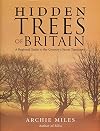
About half photos and half text. Coffee-table sort of book. Treats each of 90 wooded areas (some individual trees) with a decorative spread of good but not great photography and a sometimes nannyish prose description. Features an outline map of Great Britain indicating rough location of each subject woods. Also a gazetteer at the back with driving directions to each.
The selection of woods and trees seems odd to me, an untravelled Californian. Most seem spindly and scrubby. They have usually show more been cut back over and over again ("coppiced" and "pollarded") for centuries until they are left shrubby, with many slender, gnarly trunks. Many have a krumholz effect, which can be attractive, but less so when it is caused by arboricultural interference as these are. Most others are dwarfed by suboptimal growth conditions (cliffsides) where the sheep couln't get at them. One gets the impression that the southern half of England has very few trees over 20 feet in height, and almost none over 30 feet. It explains why they are hidden.
Scotland and Wales do a little better with some healthy looking woods and a lot of interesting stressed trees, sort of a subalpine effect.
There are only a handful of tree species represented, but the impression I get is that these are the only species in Great Britain. It seems that the only non-introduced conifers in Britain are the Yew and the Scotch Pine.
The photographs are very attractive but not very botanically informative. Although the author writes in many places about lime trees, and photographs many of them, I would not be able to identify one on the basis of this book. From the photographs they appear as just generic trees. This is a frustration throughout the book. I do think I might be able to identify a rowan in leaf on the basis of this book. So that's one to the good. But I might get it confused with a whitebeam.
The author's writing talents do not measure up to his photography. The text is a chatty travelogue just slightly above the level of a flight magazine. show less
The selection of woods and trees seems odd to me, an untravelled Californian. Most seem spindly and scrubby. They have usually show more been cut back over and over again ("coppiced" and "pollarded") for centuries until they are left shrubby, with many slender, gnarly trunks. Many have a krumholz effect, which can be attractive, but less so when it is caused by arboricultural interference as these are. Most others are dwarfed by suboptimal growth conditions (cliffsides) where the sheep couln't get at them. One gets the impression that the southern half of England has very few trees over 20 feet in height, and almost none over 30 feet. It explains why they are hidden.
Scotland and Wales do a little better with some healthy looking woods and a lot of interesting stressed trees, sort of a subalpine effect.
There are only a handful of tree species represented, but the impression I get is that these are the only species in Great Britain. It seems that the only non-introduced conifers in Britain are the Yew and the Scotch Pine.
The photographs are very attractive but not very botanically informative. Although the author writes in many places about lime trees, and photographs many of them, I would not be able to identify one on the basis of this book. From the photographs they appear as just generic trees. This is a frustration throughout the book. I do think I might be able to identify a rowan in leaf on the basis of this book. So that's one to the good. But I might get it confused with a whitebeam.
The author's writing talents do not measure up to his photography. The text is a chatty travelogue just slightly above the level of a flight magazine. show less

Very likely the book is easier to follow if you've seen the BBC series to which it is companion. Unfortunately the series is not (as of this writing) available in the United States. Would have been helpful if more of the photographs had been chosen to illustrate key concepts being described in the text. Also, a glossary would have been very useful. I realize anyone can now Google "pollarded" or "coppiced", but for me part of the reading a book is precisely the pleasure of not being on my show more computer or phone or iPad. show less
Statistics
- Works
- 9
- Members
- 146
- Popularity
- #141,735
- Rating
- 4.0
- Reviews
- 3
- ISBNs
- 14