
Martha Barnette
Author of Ladyfingers & nun's tummies
About the Author
Works by Martha Barnette
Tagged
Common Knowledge
- Gender
- female
- Education
- University of Kentucky (classical languages)
- Occupations
- editor
reporter - Agent
- Gail E. Ross
- Short biography
- Martha Barnette did graduate work in classical languages at the University of Kentucky. A former reporter for The Washington Post, and editorial writer for the Louisville Courier-Journal, she is now a contributing editor at Allure. She lives in Louisville, Kentucky. [adapted from Ladyfingers & Nun's Tummies (1997)]
- Nationality
- USA
- Places of residence
- Louisville, Kentucky, USA
- Associated Place (for map)
- Kentucky, USA
Members
Reviews
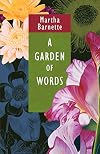
According to Martha Barnette, in her book A Garden of Words, the “…elegant Orchid is named not for its alluring blossom but for its twin bulbs that bear a rather unnerving resemblance to testicles.” Similarly, “To the ancient Romans, the Gladius was a sword and a little sword was a Gladiolus.” And when a soldier sheathed his Gladius, he did so into a vagina. (The leaves of the Gladiolus are very sword-like, by the way, hence its name.)
Less spectacularly, the Hydrangea takes its show more name from two Greek words meaning “water vessel” since that’s what its flowers look like. The Hyacinth is named after the young man, in Greek mythology, of whom both Greek Gods Apollo and Zephyrus were enamored. And finally, the Clematis is derived from a Greek word meaning twig or branch.
If you are into the derivation of names, especially floral names, A Garden of Words is a treasure chest of information. Barnette starts with the flower and the derivation of its name, many times trying to relate it to its Indo-European root, sometimes successfully, to my mind and sometimes not. But if a flower’s name is a combination of words she takes both parts and expands them into many languages, including English. She comes up with many colorful words that have faded from our vocabulary. She discusses the derivation of everyday words, always relating it back to the flower of its origin.
Barnette includes poems, mythology, culture and more in this slim volume. There is a drawing of each flower discussed. I was fascinated by this book and stupidly did not make notes that I could go back to later. Oh well, maybe I’ll just have to read it again. If there are any wordsmiths out there, A Garden of Words is a pleasant diversion.
In her book, Barnette mentions another book, Who Named the Daisy? Who Named the Rose? by Mary Durant. So, just like one word leads to another leads to another, so one book must lead to the next. I’ve just ordered a copy of Who Named the Daisy?. I can’t wait to see what it’s all about. Happy reading and happy gardening! show less
Less spectacularly, the Hydrangea takes its show more name from two Greek words meaning “water vessel” since that’s what its flowers look like. The Hyacinth is named after the young man, in Greek mythology, of whom both Greek Gods Apollo and Zephyrus were enamored. And finally, the Clematis is derived from a Greek word meaning twig or branch.
If you are into the derivation of names, especially floral names, A Garden of Words is a treasure chest of information. Barnette starts with the flower and the derivation of its name, many times trying to relate it to its Indo-European root, sometimes successfully, to my mind and sometimes not. But if a flower’s name is a combination of words she takes both parts and expands them into many languages, including English. She comes up with many colorful words that have faded from our vocabulary. She discusses the derivation of everyday words, always relating it back to the flower of its origin.
Barnette includes poems, mythology, culture and more in this slim volume. There is a drawing of each flower discussed. I was fascinated by this book and stupidly did not make notes that I could go back to later. Oh well, maybe I’ll just have to read it again. If there are any wordsmiths out there, A Garden of Words is a pleasant diversion.
In her book, Barnette mentions another book, Who Named the Daisy? Who Named the Rose? by Mary Durant. So, just like one word leads to another leads to another, so one book must lead to the next. I’ve just ordered a copy of Who Named the Daisy?. I can’t wait to see what it’s all about. Happy reading and happy gardening! show less

I ´sort of’ enjoyed the book but feel it may have been better as a series of essays in a periodical versus a book. I would have looked forward to reading a bite sized portion of this monthly but it rapidly became a book to ‘get through’ rather than enjoy.
Ladyfingers and Nun's Tummies: From Spare Ribs to Humble Pie: A Lighthearted Look at How Foods Got Their Names by Martha Barnette
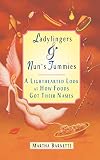
This book was an entertaining read, but some of its claims were not quite accurate which kind of spoiled it for me.
Book mark of Ladyfingers laid in.
You May Also Like
Associated Authors
Statistics
- Works
- 5
- Members
- 214
- Popularity
- #104,032
- Rating
- 3.7
- Reviews
- 4
- ISBNs
- 12