
Anonimo
Author of Arden of Faversham
Anonimo is Anonymous (75). For other authors named Anonymous, see the disambiguation page.
Works by Anonimo
Tagged
Common Knowledge
There is no Common Knowledge data for this author yet. You can help.
Members
Reviews
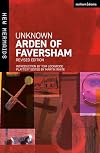
An Elizabethan period play that has managed to stay in the repertoire of performed plays right up to recent times, which does not surprise me because of the quality of the writing and the modern feel of the play. It is a play plucked almost in its entirety from Holinshed's chronicles of England Scotland and Ireland published in 1587 which describes in some detail the murder of Arden a gentleman of Faversham by his wife, her lover Mosby and their accomplices. Holinshed apologises for show more including the event in his history because of it being a private matter or as we might interpret: a domestic affair, but its 'horribleness' and detail would have attracted playwrights as a likely subject for a stage play. The fact that Shakespeare used the Chronicles as a source for several of his plays and that he has been linked with Arden of Faversham ever since Edward Jacob's 1770 edition of the play has not hindered its continuing relative popularity.
Assuming it was written for the stage around 1590; although there are no firm dates for it's performance, points to a further development in the history of the theatre; several reasons place it in advance of other plays performed at the time: the absence of any person of heroic qualities, the very few references to classical antiquity, the very close emulation of a reported historical event and the absence, by and large of magical or mystical events. It has the feeling of a modern day crime story. The play does have its problems, much of it stemming from the uneven quality of its writing with the general consensus being that it was one of the many patchwork productions of the time, with various playwrights in collaboration or later adding to the text. This is apparent from the characterisation of Alice Arden who seems to lurch from one moment portraying herself as a faithful wife to the extreme of a murderous women intent on having her lover at any cost. However it cannot be denied there is enough here in the text for a modern actress to make something of this part, although it might have been a stretch for a boy child actor who would have played the part in Elizabethan times. There is also a noticeable unevenness in the seriousness of the portrayal of a tragic affair, for example here is Alice asking the painter (Clarke) if he has prepared a poison to use against her husband Arden and her speech turns into a play on words between life and love:
Alice. Then this, I hope, if all the rest do fail,
Will catch Master Arden,
And make him wise in death that lived a fool.
Why should he thrust his sickle in our corn,
Or what hath he to do with thee, my love,
Or govern me that am to rule myself?
Forsooth, for credit sake, I must leave thee!
Nay, he must leave to live that we may love,
May live, may love; for what is life but love?
And Love shall last as long as life remains,
And life shall end before my love depart.
The history in Holinshed's chronicle tells of how many attempts there were on Ardens life by the cutthroat pair: Black Will and Shakebag and these are all faithfully written into the play, the problem is that Black Will and Shakebag could appear as a pair of bumbling fools rather than evil mercenaries. So much of the play is taken up with their exploits that more reflective thoughts on the situation by the characters are squeezed into a smaller place. They are there, however; I am thinking of Mosby and Alices thoughts on their relationship and Arden on his marriage to Alice: longer speeches that are attractive to those scholars who see the hand of Shakespeare himself. The very names of Black Will and Shakebag lead one to think of Shakespeare however these were the names taken directly from Holinshed's Chronicle, as was the character Greene. Greene, Shakebag, Black Will are names with which one could invent a sort of conspiracy that this play was worked up by playwrights in some unholy collaboration.
In the 21st century the play has been performed a number of times by various theatre groups, notably the Royal Shakespeare company in 2014. They chose to do it in modern dress, which on the face of it would seem to be a strange decision, because some of the charm of the play is the feeling of a portrayal of life in a prosperous community, not far from London in the Elizabethan era.
A mainly plot driven play that certainly tells a good story with some interesting characters that moves fast enough to be entertaining and which does have its black moments. I enjoyed reading it, but might be more circumspect about seeing a performance of the play 4 stars. show less
Assuming it was written for the stage around 1590; although there are no firm dates for it's performance, points to a further development in the history of the theatre; several reasons place it in advance of other plays performed at the time: the absence of any person of heroic qualities, the very few references to classical antiquity, the very close emulation of a reported historical event and the absence, by and large of magical or mystical events. It has the feeling of a modern day crime story. The play does have its problems, much of it stemming from the uneven quality of its writing with the general consensus being that it was one of the many patchwork productions of the time, with various playwrights in collaboration or later adding to the text. This is apparent from the characterisation of Alice Arden who seems to lurch from one moment portraying herself as a faithful wife to the extreme of a murderous women intent on having her lover at any cost. However it cannot be denied there is enough here in the text for a modern actress to make something of this part, although it might have been a stretch for a boy child actor who would have played the part in Elizabethan times. There is also a noticeable unevenness in the seriousness of the portrayal of a tragic affair, for example here is Alice asking the painter (Clarke) if he has prepared a poison to use against her husband Arden and her speech turns into a play on words between life and love:
Alice. Then this, I hope, if all the rest do fail,
Will catch Master Arden,
And make him wise in death that lived a fool.
Why should he thrust his sickle in our corn,
Or what hath he to do with thee, my love,
Or govern me that am to rule myself?
Forsooth, for credit sake, I must leave thee!
Nay, he must leave to live that we may love,
May live, may love; for what is life but love?
And Love shall last as long as life remains,
And life shall end before my love depart.
The history in Holinshed's chronicle tells of how many attempts there were on Ardens life by the cutthroat pair: Black Will and Shakebag and these are all faithfully written into the play, the problem is that Black Will and Shakebag could appear as a pair of bumbling fools rather than evil mercenaries. So much of the play is taken up with their exploits that more reflective thoughts on the situation by the characters are squeezed into a smaller place. They are there, however; I am thinking of Mosby and Alices thoughts on their relationship and Arden on his marriage to Alice: longer speeches that are attractive to those scholars who see the hand of Shakespeare himself. The very names of Black Will and Shakebag lead one to think of Shakespeare however these were the names taken directly from Holinshed's Chronicle, as was the character Greene. Greene, Shakebag, Black Will are names with which one could invent a sort of conspiracy that this play was worked up by playwrights in some unholy collaboration.
In the 21st century the play has been performed a number of times by various theatre groups, notably the Royal Shakespeare company in 2014. They chose to do it in modern dress, which on the face of it would seem to be a strange decision, because some of the charm of the play is the feeling of a portrayal of life in a prosperous community, not far from London in the Elizabethan era.
A mainly plot driven play that certainly tells a good story with some interesting characters that moves fast enough to be entertaining and which does have its black moments. I enjoyed reading it, but might be more circumspect about seeing a performance of the play 4 stars. show less
Would have loved to see a boy play Alice during the Elizabethan times.
This revised edition of Arden of Faversham contains a completely re-written Introduction that brings the text up to date with the latest performance history, criticism and research and fresh insight into the context in which the play was written.
Lists
You May Also Like
Associated Authors
Statistics
- Works
- 1
- Members
- 163
- Popularity
- #129,734
- Rating
- 3.8
- Reviews
- 3
- ISBNs
- 9,872
- Languages
- 64