
Adam de Hegedus (1906–1958)
Author of The Heart in Exile
About the Author
Disambiguation Notice:
Works as Rodney Garland:
The Heart in Exile, novel, 1953
The Troubled Midnight, novel, 1954.
Three later novels attributed to ‘Rodney Garland’, published after Adam de Hegedus’s death in 1955, were the work of fellow Hungarian novelist Peter de Polnay: World Without Dreams (1961); Hell and High Water (1962); and The Sorcerer’s Broth (1966).
Works by Adam de Hegedus
Don't Keep the Vanman Waiting 3 copies
Rehearsal under the moon 1 copy
The State of the World 1 copy
World Without Dreams 1 copy
Tagged
Common Knowledge
- Birthdate
- 1906-12-14
- Date of death
- 1958
- Gender
- male
- Occupations
- journalist
- Nationality
- Hungary
- Places of residence
- London, England
- Disambiguation notice
- Works as Rodney Garland:
The Heart in Exile, novel, 1953
The Troubled Midnight, novel, 1954.
Three later novels attributed to ‘Rodney Garland’, published after Adam de Hegedus’s death in 1955, were the work of fellow Hungarian novelist Peter de Polnay: World Without Dreams (1961); Hell and High Water (1962); and The Sorcerer’s Broth (1966).
Members
Reviews
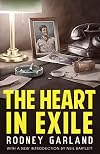
Although this book is a mystery set in the gay community of post-World War II London, it is much more than that. It explores the nature of love and the very personal truths experienced by homosexuals, as well as the gay life, which was necessarily an underworld in London at the time. It is this second aspect of the book that allows it to rise above the average sentimental story. This book is intensely about the lives of a psychiatrist and his former lover, who was found dead from what show more appeared to be an overdose of sleeping pills. The doctor's investigation into what happened led to revelations about himself that profoundly affected his life.
This book, which examined the variety of homosexual life in London and offered a touching account of how one might transform his life in unexpected ways when faced with the ups and downs of daily existence, captivated me. It was both fascinating and profoundly touching. show less
This book, which examined the variety of homosexual life in London and offered a touching account of how one might transform his life in unexpected ways when faced with the ups and downs of daily existence, captivated me. It was both fascinating and profoundly touching. show less

This 1953 gay pulp novel should by rights be awful: to be honest, it is, but it's so bad that it's actually rather fun to read.
It's clearly written to appeal in the first place to heterosexual readers, and is therefore an odd mixture of sensationalism and quasi-medical preachiness. It doesn't actually use the expression "strange twilight world of the homosexual", but it clearly wants to. It's full of words like "normal" and "invert"; it is run though with every kind of misogyny, show more self-hatred, class-prejudice and plain snobbery; the plot is feeble; the narrator is implausibly unprofessional as a psychiatrist. But behind all that there's a surprisingly lively and (I suspect) honest description of gay life in London in the forties and fifties. There's even something that looks suspiciously like a non-tragic outcome, despite the fact that the ostensible plot centres around the suicide of a gay man.
Not an enduring work of literature, but a fascinating and oddly endearing document of its time. show less
It's clearly written to appeal in the first place to heterosexual readers, and is therefore an odd mixture of sensationalism and quasi-medical preachiness. It doesn't actually use the expression "strange twilight world of the homosexual", but it clearly wants to. It's full of words like "normal" and "invert"; it is run though with every kind of misogyny, show more self-hatred, class-prejudice and plain snobbery; the plot is feeble; the narrator is implausibly unprofessional as a psychiatrist. But behind all that there's a surprisingly lively and (I suspect) honest description of gay life in London in the forties and fifties. There's even something that looks suspiciously like a non-tragic outcome, despite the fact that the ostensible plot centres around the suicide of a gay man.
Not an enduring work of literature, but a fascinating and oddly endearing document of its time. show less
Tony Page, a psychiatrist, is visited by a young woman whose fiancé unexpectedly committed suicide. What she doesn't know is Julian and Tony had been lovers years ago, and although she suspects Julian hid something from her, she doesn't guess what Tony knows. Slowly he finds Julian's last two boyfriends and figures out what happened. On the whole, this is an intriguing peek into queer men's lives in the early 1950s in London, but I was surprised by the degree of self-hatred.

"So effective is the author's treatment . . . that he manages to bring home in a remarkable manner the suffering of the homosexual. . . . It took real courage to write this story, plus a profound insight into human feelings and sensitivities." - Frank G. Slaughter, New York Times "A sad, serious first novel called The Heart in Exile cannot fairly be ignored. . . . Its detached picture of barren tragic love and desire in a furtive fantastic 'underground' sector of London can arouse no disgust show more but only a deep pity coupled with a new understanding." - Marghanita Laski, The Observer "An extremely important book." - Truth "A completely honest story of homosexual life in London. . . . It makes no attempt to defend or condemn. A well-written work." - John Betjeman, Daily Telegraph "Written with great competence." - Walter Allen, New Statesman Julian Leclerc, a handsome and talented young barrister, has been found dead of an apparent overdose of sleeping pills. The verdict is accidental death, but his fiancée, Ann Hewitt, suspects there's something more to the story. As the grieving woman recounts the details of Julian's tragic end to psychiatrist Dr. Tony Page, he listens with acute interest - but not for the reason she thinks. Years earlier, he and Julian had been lovers, and now, disturbed by the circumstances of his friend's demise, Tony sets out to uncover the truth. His quest will take him from the parties and pubs of the gay underworld of 1950s London to Scotland Yard and the House of Commons as he uses his shrewd and penetrating insight to find who or what was responsible for Julian's death. But he may discover more than he bargained for - about Julian, and himself. . . . First published in 1953, Rodney Garland's noir thriller The Heart in Exile is both a groundbreaking classic of gay fiction and the first gay detective story. Long unavailable, Garland's famous novel returns to print at last in this edition, which features a new introduction by Neil Bartlett. show less
Lists
You May Also Like
Associated Authors
Statistics
- Works
- 9
- Members
- 120
- Popularity
- #165,355
- Rating
- 4.0
- Reviews
- 5
- ISBNs
- 2