
Robert F. Berkhofer III
Author of Day of Reckoning: Power and Accountability in Medieval France (The Middle Ages Series)
About the Author
Robert E. Berkhofer III teaches history at Western Michigan University.
Works by Robert F. Berkhofer III
Day of Reckoning: Power and Accountability in Medieval France (The Middle Ages Series) (2004) 10 copies, 1 review
Forgeries and Historical Writing in England, France, and Flanders, 900-1200 (2022) 3 copies, 1 review
Associated Works
Anglo-Norman Studies XXXVI: Proceedings of the Battle Conference 2013 (2014) — Contributor — 7 copies
The Haskins Society journal : studies in medieval history. Volume 18, 2006 (2007) — Contributor — 4 copies
Tagged
Common Knowledge
There is no Common Knowledge data for this author yet. You can help.
Members
Reviews
Forgeries and Historical Writing in England, France, and Flanders, 900-1200 (Medieval Documentary Cultures, 1) by Robert F. Berkhofer III
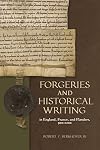
Robert Berkhofer looks here at three case studies of forgery and its role in the identity-making of three medieval monasteries: St Peter's, Ghent's Saint-Denis, just north of Paris; and Christ Church, Canterbury. He's particularly interested in how and why documentary forgeries intersect with historical writing. Berkhofer isn't necessarily saying anything new here—the broad strokes of many of his arguments have been said in other times and places by people (including himself) working on show more various aspects of cartulary studies and the history of diplomatic—but by bringing these case studies together and looking at forgeries in their own right rather than as a question to be resolved to get to the "real" history, he refocuses attention on a key aspect of how texts were used in the high medieval world. I think this will be referred to a lot by other scholars in the coming years. show less
Day of Reckoning: Power and Accountability in Medieval France (Middle Ages) by Robert F. Berkhofer III
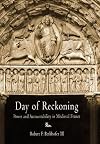
A worthy, but rather dry, examination of how changes in documentary forms produced by northern French monasteries between the late tenth and twelfth centuries may or may not demonstrate changing conceptions of power and accountability. I'm not sure how much I bought the absoluteness of the distinction which Berkhofer makes between, say, Carolingian and post-Carolingian conceptions of property and patrimony, and at times I felt uneasily as if Berkhofer were giving the thumbs up to increasing show more abbatial/patriarchal power as a positive achievement, but there are some interesting ideas here about how and why literacy is used in the medieval period. show less
You May Also Like
Associated Authors
Statistics
- Works
- 3
- Also by
- 2
- Members
- 18
- Popularity
- #630,788
- Rating
- 3.5
- Reviews
- 2
- ISBNs
- 8