
Works by Annette Cottrell
Urban Farm Handbook: City Slicker Resources for Growing, Raising, Sourcing, Trading, and Preparing What You Eat (2011) 39 copies, 2 reviews
Tagged
Common Knowledge
- Gender
- female
Members
Reviews
The Urban Farm Handbook: City-slicker Resources for Growing, Raising, Sourcing, Trading, and Preparing What You Eat by Annette Cottrell
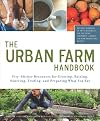
Everything in this book is accessible: it all sounds alluring and simple and it's all described with great enthusiasm. It's arranged seasonally and each chapter has recipes; some for whole meals, some for artisan breads and cheeses. They are all easy and doable and drool-worthy. Each chapter within the seasons has “opportunities for change”: a run down of the varying shades of self-sufficiency and/or sustainability that are available to you for said chapter. Dairy for instance. For a show more start you could buy organic milk. If you want to do more you can look for organic and/or unhomogenized and/or unpasteurized milk from a local farmer. If that's not good enough for you you could raise your own dairy goats. As the authors say, “You might think of these as 'different levels of crazy.' Choose the level that suits your personality.”
Infectious enthusiasm is one key element in a how-to book. The other element I look for in books about the lifestyle I already lead is “Aha” moments. Sentences or ideas that make me grab my pencil and take furious notes or say – out loud – “Damn, why didn't I think of that years ago?!” In this book one of the “Aha” moments was the “produce eating plan”, a marvelously analytical chart in which you determine your family's food needs for an entire year – and what seasons you eat it in.
A uniquely Pacific Northwestern topic covered in this book is sun. We've all got shade problems on this side of the Cascades, haven't we? Many books advocate (and for good reason) using short-season crops in the PNW to deal with our cool and wet weather, but I hadn't yet run across a book that detailed the sun requirements for edibles – in fact, I didn't even know that there were different sun requirements! I assumed that they all needed full sun.
Living food is covered in this book, too. And I must say that this book had the most accurate description I've read so far of slaughter: unflinching without being dramatic. So many books skirt around what really happens, saying that birds “may flap some” after beheading, or that shot pigs “kick”. But Cottrell and McNichols do keep their coverage of the death issue respectful. Also, they have lots of great information on the various available methods of getting good meat or getting animals transformed into meat – something I don't think a whole lot of folks are intuitively aware of. show less
Infectious enthusiasm is one key element in a how-to book. The other element I look for in books about the lifestyle I already lead is “Aha” moments. Sentences or ideas that make me grab my pencil and take furious notes or say – out loud – “Damn, why didn't I think of that years ago?!” In this book one of the “Aha” moments was the “produce eating plan”, a marvelously analytical chart in which you determine your family's food needs for an entire year – and what seasons you eat it in.
A uniquely Pacific Northwestern topic covered in this book is sun. We've all got shade problems on this side of the Cascades, haven't we? Many books advocate (and for good reason) using short-season crops in the PNW to deal with our cool and wet weather, but I hadn't yet run across a book that detailed the sun requirements for edibles – in fact, I didn't even know that there were different sun requirements! I assumed that they all needed full sun.
Living food is covered in this book, too. And I must say that this book had the most accurate description I've read so far of slaughter: unflinching without being dramatic. So many books skirt around what really happens, saying that birds “may flap some” after beheading, or that shot pigs “kick”. But Cottrell and McNichols do keep their coverage of the death issue respectful. Also, they have lots of great information on the various available methods of getting good meat or getting animals transformed into meat – something I don't think a whole lot of folks are intuitively aware of. show less
The Urban Farm Handbook: City-Slicker Resources for Growing, Raising, Sourcing, Trading, and Preparing What You Eat by Annette Cottrell
The Urban Farm Handbook: City-Slicker Resources for Growing, Raising, Sourcing, Trading, and Preparing What You Eat is a 2011 book by Annette Cottrell and Joshua McNichols for Skipstone. The word “handbook” is frequently applied to a variety of books, some useful and some less useful. “Handbook,” in the case of Urban Farm Handbook, is appropriately used, as Cottrell and McNicols provide readers with hundreds of tips and resources for every aspiring and current urban show more homesteader.
Handbook is divided into four seasons. Each season includes suggested seasonal chores related to food, both plant and animal. Do you want to keep chickens for eggs? Plant a vegetable garden? Learn home food preservation? Raise and slaughter rabbits for meat? All this and more is discussed in the Handbook. Readers can jump into a chapter to learn about a single topic, or read the book from cover to cover and get the tools for undergoing a radical lifestyle change.
Not everyone will have freezer space to buy and store half a cow from a local farmer, but many are able to take on smaller tasks, such as pickling vegetables at home or making their own yogurt. The Urban Farm Handbook is a useful resource for those who have already started some sustainable food practices but want to learn and do more. show less
Handbook is divided into four seasons. Each season includes suggested seasonal chores related to food, both plant and animal. Do you want to keep chickens for eggs? Plant a vegetable garden? Learn home food preservation? Raise and slaughter rabbits for meat? All this and more is discussed in the Handbook. Readers can jump into a chapter to learn about a single topic, or read the book from cover to cover and get the tools for undergoing a radical lifestyle change.
Not everyone will have freezer space to buy and store half a cow from a local farmer, but many are able to take on smaller tasks, such as pickling vegetables at home or making their own yogurt. The Urban Farm Handbook is a useful resource for those who have already started some sustainable food practices but want to learn and do more. show less
Statistics
- Works
- 1
- Members
- 39
- Popularity
- #376,656
- Rating
- 4.0
- Reviews
- 2
- ISBNs
- 2