
Mrs. Manley (1663–1724)
Author of The New Atalantis
About the Author
Works by Mrs. Manley
Associated Works
Tagged
Common Knowledge
- Other names
- Manley, Delarivier
Manley, Delarivière
Manley, Rivière
Manley, Mary de la Rivière
Manley, Delia - Birthdate
- 1663-04-07
- Date of death
- 1724-07-11
- Gender
- female
- Occupations
- author
playwright
political pamphleteer
novelist - Organizations
- The Fair Triumvirate of Wit
- Relationships
- Swift, Jonathan (colleague)
Piers, Sarah
Trotter, Catharine
Pix, Mary
Egerton, Sarah - Short biography
- Delarivier Manley (her first name is spelled various ways), also called Delia, and best known as Mrs. Manley, is sometimes referred to (with Aphra Behn and Eliza Haywood) as one of "the fair triumvirate of wit." She was probably born on the island of Jersey, a daughter of Sir Roger Manley, a former Cavalier army officer, and a woman from the Spanish Netherlands who died when Delarivier was young. She and her sister appear to have moved with their father to his various postings.
After his death in 1687, the two young women became wards of their cousin, John Manley, a Member of Parliament. Delarivier later bigamously married John Manley, who already had a wife in the West Country. The couple had a son of whom little is known. In 1694, Delarivier left her husband and went to live with Barbara Villiers, Duchess of Cleveland, the former mistress of King Charles II. She was dismissed by the duchess after six months, and may have then reconciled with her husband for a time.
From 1694 to 1696, she traveled extensively in England and began her literary career. Her first play, a comedy, The Lost Lover, or, The Jealous Husband, appeared in 1696, along with the tragedy The Royal Mischief. Her other dramatic works include Almyna, or, The Arabian Vow (1707), The New Atalantis (1709), and Lucius, The First Christian King of Britain (1717). She also wrote political pamphlets, romantic novels, and The Adventures of Rivella (1714), which she claimed was semi-autobiographical. She also joined Jonathan Swift briefly as co-author of The Examiner newspaper. Her last major work was The Power of Love in Seven Novels (1720). - Nationality
- UK
- Birthplace
- Jersey, Bailiwick of Jersey
- Places of residence
- London, England
- Place of death
- London, England
- Burial location
- Church of St Benet Paul's Wharf, London, England, UK
Members
Reviews
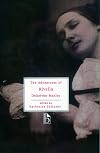
In 1714 Delarivier Manley was threatened with the publication of a biography so malign and damning that rather than being victimised she decided to go one better and produce her own biography. What she created was The Adventures of Rivella, a novel disguised as a biography based closely on her life told by a fictional admirer, Sir Charles Lovemore, to his friend the Chevalier d’Aumont pretending to be ‘Done into English from the French.’ The story is told one fine evening in Somerset show more House garden overlooking the Thames but it is so delicious and enflaming to d’Aumont that Sir Charles sends away his servants and has the gates locked before he begins. Manley carries off this fictional performance with aplomb: ‘Her virtues are her own, her vices occasioned by her misfortunes; and yet as I have often heard her say, if she had been a man, she had been without fault.’ This is her story ... well perhaps. show less
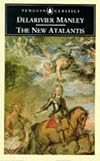
The scenario expressed in this book is that three individuals (with a few additional friends) travel around England and point out everybody's bad behavior for the supposed purpose of gaining an understanding of how to instruct a prince to behave appropriately. The travelers include Astrea (goddess of justice), her mother Virtue, and Lady Intelligence (not a measure of intellectual capacity, rather the person who knows all the gossip-worthy sins of everyone.)
As the notes explain, this was a show more book used to criticize the English court and members of parliament. It focused on hypocrisy and sexual misbehavior although other vices were mentioned as well. The extensive footnotes were not enough for me to understand the links between Manley's characters and their real counterparts- it would have taken a robust study of English history (the Stuarts) to gain a real understanding.
I didn't enjoy this. There seemed to be a distorted focus on what, from the purpose of instructing a leader, seemed to me to be unimportant sins and not enough of a focus on the social contract between a leader and the people. This may have been out of an attempt to provide adequate examples of hypocrisy. Manley of course has the right to focus on what seemed important to her, and she particularly focused on the seeming impossibility for a woman to maintain her virtue because of continual attack. She especially had negative comments about Lesbianism. These kinds of comments seemed out of place in this construct and seemed to me to waste the opportunity to genuinely satirize the sins of those who governed. Perhaps from a woman's perspective in this time and place the men and Lesbians apparently attacking virtuous women were the best examples of sinners.
Perhaps I have missed something important here. I would look forward to reading somebody else's review of this book! show less
As the notes explain, this was a show more book used to criticize the English court and members of parliament. It focused on hypocrisy and sexual misbehavior although other vices were mentioned as well. The extensive footnotes were not enough for me to understand the links between Manley's characters and their real counterparts- it would have taken a robust study of English history (the Stuarts) to gain a real understanding.
I didn't enjoy this. There seemed to be a distorted focus on what, from the purpose of instructing a leader, seemed to me to be unimportant sins and not enough of a focus on the social contract between a leader and the people. This may have been out of an attempt to provide adequate examples of hypocrisy. Manley of course has the right to focus on what seemed important to her, and she particularly focused on the seeming impossibility for a woman to maintain her virtue because of continual attack. She especially had negative comments about Lesbianism. These kinds of comments seemed out of place in this construct and seemed to me to waste the opportunity to genuinely satirize the sins of those who governed. Perhaps from a woman's perspective in this time and place the men and Lesbians apparently attacking virtuous women were the best examples of sinners.
Perhaps I have missed something important here. I would look forward to reading somebody else's review of this book! show less
You May Also Like
Associated Authors
Statistics
- Works
- 21
- Also by
- 7
- Members
- 166
- Popularity
- #127,844
- Rating
- 3.5
- Reviews
- 2
- ISBNs
- 21
- Languages
- 1