

Tom Rose
Author of Big Miracle
Works by Tom Rose
The Coming Victory: Proposals on How To Overcome the Troubles That Plague Us (Coronation Series, 5) (1980) 10 copies
How to succeed in business: A resource unit on understanding business and getting ahead in the business world (1975) 8 copies
Associated Works
Tagged
Common Knowledge
- Gender
- male
Members
Discussions
BIG MIRACLE by Tom Rose in Reviews of Early Reviewers Books (February 2012)
Reviews
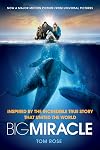
Big Miracle is the book that inspired the movie of the same name. I haven't seen the movie yet and couldn't find a release date for the DVD. However, from what I could gather from reading about the movie online, it differs markedly from the book. It would have to - there is no way that Drew Barrymore would star in a movie that was as cynical about environmentalism and animal welfare as author Tom Rose's book is.
This book is a non-fiction account of the 1988 rescue attempt of three California show more Gray whales who were trapped in the ice near Barrow, Alaska. The author was one of several reporters in Barrow covering the rescue process. What could have been a very nice story about people of all different backgrounds coming together to save the whales was ruined by the author's cynicism and the opinions he inserted as facts that didn't have much to do with the actual story.
When this book was originally published in 1989, the title was Freeing the Whales: How the Media Created the World's Greatest Non-Event. Had I known that when this book was pitched to me, I would not have reviewed it. The cover of the new, movie tie-in edition reads, "Inspired by the Incredible True Story That United the World." The author did not feel that this story was incredible - at least not in a good way. He repeats often that the whales didn't need to be saved and that the amount of media coverage they received was ridiculous.
He also uses every opportunity to assert that we should be drilling for oil in Alaska and that the environmentalists have it all wrong. He offers up his opinions as facts with no footnotes or citations to back them up. In a non-fiction book, I expect to see research if opinions are inserted. For example, "Increased wealth leads to increased spending. That applies as much to environmental protection as to anything else...The same process that drives economic growth and wealth creation results in less pollution, not more." First of all, where is the research that backs that up and secondly, what does that have to do with rescuing the whales?
He also takes repeated jabs at Cindy Lowry from Greenpeace - "[Carroll's] reaction to the word 'Soviet' was as instinctively visceral as Cindy's reaction to the word 'military.' The only difference was that Carroll's animus was justified while Cindy's was not." Says who? Why does that second sentence need to be there?
Those are just a couple of many, many examples. I found it ironic that the working title of this edition (which was printed on the cover of my ARC) was Everybody Loves Whales because Tom Rose doesn't seem to love them all that much.
I did appreciate learning more about life in rural Alaska but I don't know if slogging through the rest of the book made it worth it.
(All quotes are taken from the Advance Uncorrected Proof - the final copy may differ.) show less
This book is a non-fiction account of the 1988 rescue attempt of three California show more Gray whales who were trapped in the ice near Barrow, Alaska. The author was one of several reporters in Barrow covering the rescue process. What could have been a very nice story about people of all different backgrounds coming together to save the whales was ruined by the author's cynicism and the opinions he inserted as facts that didn't have much to do with the actual story.
When this book was originally published in 1989, the title was Freeing the Whales: How the Media Created the World's Greatest Non-Event. Had I known that when this book was pitched to me, I would not have reviewed it. The cover of the new, movie tie-in edition reads, "Inspired by the Incredible True Story That United the World." The author did not feel that this story was incredible - at least not in a good way. He repeats often that the whales didn't need to be saved and that the amount of media coverage they received was ridiculous.
He also uses every opportunity to assert that we should be drilling for oil in Alaska and that the environmentalists have it all wrong. He offers up his opinions as facts with no footnotes or citations to back them up. In a non-fiction book, I expect to see research if opinions are inserted. For example, "Increased wealth leads to increased spending. That applies as much to environmental protection as to anything else...The same process that drives economic growth and wealth creation results in less pollution, not more." First of all, where is the research that backs that up and secondly, what does that have to do with rescuing the whales?
He also takes repeated jabs at Cindy Lowry from Greenpeace - "[Carroll's] reaction to the word 'Soviet' was as instinctively visceral as Cindy's reaction to the word 'military.' The only difference was that Carroll's animus was justified while Cindy's was not." Says who? Why does that second sentence need to be there?
Those are just a couple of many, many examples. I found it ironic that the working title of this edition (which was printed on the cover of my ARC) was Everybody Loves Whales because Tom Rose doesn't seem to love them all that much.
I did appreciate learning more about life in rural Alaska but I don't know if slogging through the rest of the book made it worth it.
(All quotes are taken from the Advance Uncorrected Proof - the final copy may differ.) show less
 This review was written for LibraryThing Early Reviewers.
Great read that not only covers the whale event but also wanders into history lessons on Alaska, Barrow, the local history of people residing there, whaling, etc. I was pleasantly surprised with this book and devoured it in a couple of sittings. My only issue is that every so often the author would slip in personal digs which would pull me out of the story. Other than that, absolutely a great read.
This review was written for LibraryThing Early Reviewers.I was supposed to get "Big Miracle" to review but instead received a book by Tom Rose titled "Everybody Loves Whales". I'll copy the review I placed under the correct title to receive credit for my Early Reviewer status.
Originally released in 1989 under the name "Freeing the Whales: How the Media Created the World's Greatest Non-Event" it is the true-life story of the 1988 world-wide effort to free 3 trapped whales in Barrow, Alaska. The story is interesting on many levels (I was 23 in 1988 show more and do not remember the media coverage) primarily around the people and culture of Barrow, and the inner workings of the MSM circa the late 1980s.
Unfortunately, the author cannot keep his personal political beliefs from the story line and his distain for environmentalists becomes increasingly evident as does his apparent love for big business and industry, primarily Big Oil. Nevertheless, the two extremes do make for interesting bedfellows. The illustration of the circus-like quality of a major media event is also quite illuminating. It certainly IS curious how the country can be swayed to give more care and consideration to three trapped whales (a not uncommon occurence) while seemingly ignoring the loss of human life on an exceedingly larger scale in other parts of the world simultaneously. I came away from the story wondering if I should rejoice or despair at the disparate sense of compassion in my fellow-human beings show less
Originally released in 1989 under the name "Freeing the Whales: How the Media Created the World's Greatest Non-Event" it is the true-life story of the 1988 world-wide effort to free 3 trapped whales in Barrow, Alaska. The story is interesting on many levels (I was 23 in 1988 show more and do not remember the media coverage) primarily around the people and culture of Barrow, and the inner workings of the MSM circa the late 1980s.
Unfortunately, the author cannot keep his personal political beliefs from the story line and his distain for environmentalists becomes increasingly evident as does his apparent love for big business and industry, primarily Big Oil. Nevertheless, the two extremes do make for interesting bedfellows. The illustration of the circus-like quality of a major media event is also quite illuminating. It certainly IS curious how the country can be swayed to give more care and consideration to three trapped whales (a not uncommon occurence) while seemingly ignoring the loss of human life on an exceedingly larger scale in other parts of the world simultaneously. I came away from the story wondering if I should rejoice or despair at the disparate sense of compassion in my fellow-human beings show less
This review was written for LibraryThing Early Reviewers.
Originally released in 1989 under the name "Freeing the Whales: How the Media Created the World's Greatest Non-Event" and then again under the name "Big Miracle" in 2011 as both paperback and movie version, it is the true-life story of the 1988 world-wide effort to free 3 trapped whales in Barrow, Alaska. The story is interesting on many levels (I was 23 in 1988 and do not remember the media coverage) primarily around the people and culture of Barrow, and the inner workings of the MSM circa show more the late 1980s. Unfortunately, the author cannot keep his personal political beliefs from the story line and his distain for environmentalists becomes increasingly evident as does his apparent love for big business and industry, primarily Big Oil. Nevertheless, the two extremes do make for interesting bedfellows. The illustration of the circus-like quality of a major media event is also quite illuminating. It certainly IS curious how the country can be swayed to give more care and consideration to three trapped whales (a not uncommon occurence) while seemingly ignoring the loss of human life on an exceedingly larger scale in other parts of the world simultaneously. I came away from the story wondering if I should rejoice or despair at the disparate sense of compassion in my fellow-human beings. show less
You May Also Like


Associated Authors
Statistics
- Works
- 17
- Also by
- 2
- Members
- 238
- Popularity
- #95,269
- Rating
- 2.9
- Reviews
- 25
- ISBNs
- 27
