
Gustavo Bondoni
Author of Beyond the Veil
Series
Works by Gustavo Bondoni
Eyes in the Vastness of Forever 2 copies
In Sickness and in Health [short story] — Author — 1 copy
Shadow Of The Gorilla 1 copy
Borrowed Time 1 copy
Jungle Lab Terror 1 copy
Test Site Horror 1 copy
Samba do Espaço 1 copy
Associated Works
Strange Bedfellows: An Anthology of Political Science Fiction (2014) — Contributor, some editions — 26 copies, 3 reviews
Undead & Unbound: Unexpected Tales From Beyond the Grave (Chaosium Fiction) (2013) — Contributor — 16 copies
Worlds of Light & Darkness (The Best of DreamForge and Space & Time Book 1) (2021) — Contributor — 14 copies, 2 reviews
Apotheosis: Stories of Human Survival After The Rise of The Elder Gods (2015) — Contributor — 14 copies
The American Adventures of Solar Pons — Contributor — 6 copies
Snitched, Snatched (English/Spanish Short Stories) (Spanish Edition) (2011) — Translator, some editions — 2 copies
Tagged
Common Knowledge
- Occupations
- author
Members
Reviews
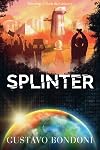
In this sequel to Outside, the expedition to Earth returns to the Tau Ceti colony. Concealed on board the starship is a copy of the AI that thinks of itself as Emily Plair. The events that unfold on the expedition's return throw up all manner of issues relating to the way we might react to truly autonomous AIs. We see the Tau Ceti colony reacting with horror, as their entire society has been built on banning AIs because of the example of what happened on Earth generations before (a fact show more concealed from the majority of people on Tau Ceti, even those in high positions). But not everyone agrees with this...
One thing Bondoni gets right is an appreciation of some of the realities of running and managing big computer programs of whatever sort. Although he doesn't indulge in detailed descriptions of computer code - thank goodness! - he has a keen sense of some of the practical issues involved, such as the amount of physical storage a single AI might require, and the restrictions that might place on actually storing, moving or copying such software.
There is also something of a surprise in the description of the Tau Ceti colony. Bondoni does not put this into so many words, but at one point Rome Permek, the character who saved the Emily Plair AI, seeks exile in a distant orbital colony which runs itself based on contracts and concepts of material exchange. Only when we are shown this contrast with the Tau Ceti colony did I realise that the parent society is actually a fully Communist society. This may come as a shock to some readers; Tau Ceti is shown as neither particularly repressive nor restrictive in access to resources. There is some element of achieving a post-scarcity society through advanced technology - perhaps not Iain M. Banks' "fully automated space communism", but certainly on the road to that state. Thus may upset some readers; but isn't science fiction about exploring other societies and lives different to our own and challenging our own assumptions? show less
One thing Bondoni gets right is an appreciation of some of the realities of running and managing big computer programs of whatever sort. Although he doesn't indulge in detailed descriptions of computer code - thank goodness! - he has a keen sense of some of the practical issues involved, such as the amount of physical storage a single AI might require, and the restrictions that might place on actually storing, moving or copying such software.
There is also something of a surprise in the description of the Tau Ceti colony. Bondoni does not put this into so many words, but at one point Rome Permek, the character who saved the Emily Plair AI, seeks exile in a distant orbital colony which runs itself based on contracts and concepts of material exchange. Only when we are shown this contrast with the Tau Ceti colony did I realise that the parent society is actually a fully Communist society. This may come as a shock to some readers; Tau Ceti is shown as neither particularly repressive nor restrictive in access to resources. There is some element of achieving a post-scarcity society through advanced technology - perhaps not Iain M. Banks' "fully automated space communism", but certainly on the road to that state. Thus may upset some readers; but isn't science fiction about exploring other societies and lives different to our own and challenging our own assumptions? show less
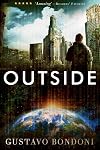
Gustavo Bondoni is a name previously unknown to me. But when a small-press publisher I was talking to at a convention said that he had a hard-sf trilogy written by an Argentinian author, my curiosity was piqued.
Although billed as an Argentinian writer, Bondoni lived a peripatetic life as a child as his father held a number of jobs with a major multi-national company. Hence Bondoni writes in English with an admirable facility. This does mean that Outside has a fairly mid-Atlantic voice. Not show more that there's anything wrong with that; after all, one of my favourite writers of days gone past (Bob Shaw) also wrote in a fairly mid-Atlantic voice that belied his Northern Irish origins. But if I'd been specifically looking for an Argentinian voice in this book, I would have been disappointed.
But I needn't have worried. What we have here is a well-written, if unflamboyant, novel about a group of colonists returning to Earth from Tau Ceti after five hundred years of isolation. They're surprised to find Earth deserted, with its cities in ruins. But sensors show that there is a lot of computing power being used by massive underground mainframe computers. These are running a simulation, and in that simulation can be found 1.8 billion of Earth's inhabitants who are living lives of ease and security. They have to work for a living, to be sure; but all their needs are taken care of. Disease and poverty are unknown to them. And they know they are living within a simulation; indeed, they see it as the towering achievement of their civilisation, precisely because of the safety and security the cyberworld grants them. Having a team of Tau Cetans arrive and start probing them in the course of trying to find out where everyone is wasn't in the playbook. And things start unravelling, especially when different protagonists start trying to put the bonnet up on the cyberworld and start poking around in the code...
We are really in Matrix territory here, though Bondoni shows a greater appreciation of the implications of that scenario. Trying to unravel those implications leads us to a very dark place, both in terms of the politics of the cyberworld and the nuts-and-bolts realities of how the cyberworld works. I found myself marvelling at some of the questions raised. A few weeks ago, I was out one evening with a friend, and we were driving back through very atmospheric weather. Looking at the effects of mist and ambient lighting in the early evening, I commented that if we were living in a simulation, then it must have one really powerful and sophisticated rendering engine; and the cyberworld in Outside inspires a very similar thought. Very few of us understand what makes our IT systems work; we just say to ourselves "the computer says no" or "they can do anything with CGI these days" without any thought or understanding of the complexities involved. Gustavo Bondoni achieves this within the context of an eventful and very readable novel.
Lest you think that means he has the traditional sf writer's blind spot with respect to characters, dismiss that thought. Bondoni's characters are interesting and well-drawn. The Tau Cetans have some interesting quirks that I suspect we shall see explored in future novels (yes, this is volume one of a trilogy); the inhabitants of the cyberworld are convincing. The one exception is an IT developer who talks in clichés and raises some red flags - but we soon realise that this isn't poor writing, it's a character trait. Haven't we all met people who behave a bit like a character in a novel of their own life?
I'm interested in Bondoni's own influences as an sf writer. My research suggests that he is well versed in the traditions of the genre; certainly, in Outside, Bondoni brings none of the reinvention of the science fictional wheel to the party that so many newcomers to the genre manage, be they experienced writers in other fields or beginners. There is even a minor character called Joe Fan (I assume he is supposed to be American/East Asian) who, if he isn't a tip of the hat to Jophan in Jim White and Bob Shaw's fan classic The Enchanted Duplicator, is a remarkable coincidence. But it wouldn't surprise me if this was intended - which makes me all the more interested in reading more of Gustavo Bondoni's work. show less
Although billed as an Argentinian writer, Bondoni lived a peripatetic life as a child as his father held a number of jobs with a major multi-national company. Hence Bondoni writes in English with an admirable facility. This does mean that Outside has a fairly mid-Atlantic voice. Not show more that there's anything wrong with that; after all, one of my favourite writers of days gone past (Bob Shaw) also wrote in a fairly mid-Atlantic voice that belied his Northern Irish origins. But if I'd been specifically looking for an Argentinian voice in this book, I would have been disappointed.
But I needn't have worried. What we have here is a well-written, if unflamboyant, novel about a group of colonists returning to Earth from Tau Ceti after five hundred years of isolation. They're surprised to find Earth deserted, with its cities in ruins. But sensors show that there is a lot of computing power being used by massive underground mainframe computers. These are running a simulation, and in that simulation can be found 1.8 billion of Earth's inhabitants who are living lives of ease and security. They have to work for a living, to be sure; but all their needs are taken care of. Disease and poverty are unknown to them. And they know they are living within a simulation; indeed, they see it as the towering achievement of their civilisation, precisely because of the safety and security the cyberworld grants them. Having a team of Tau Cetans arrive and start probing them in the course of trying to find out where everyone is wasn't in the playbook. And things start unravelling, especially when different protagonists start trying to put the bonnet up on the cyberworld and start poking around in the code...
We are really in Matrix territory here, though Bondoni shows a greater appreciation of the implications of that scenario. Trying to unravel those implications leads us to a very dark place, both in terms of the politics of the cyberworld and the nuts-and-bolts realities of how the cyberworld works. I found myself marvelling at some of the questions raised. A few weeks ago, I was out one evening with a friend, and we were driving back through very atmospheric weather. Looking at the effects of mist and ambient lighting in the early evening, I commented that if we were living in a simulation, then it must have one really powerful and sophisticated rendering engine; and the cyberworld in Outside inspires a very similar thought. Very few of us understand what makes our IT systems work; we just say to ourselves "the computer says no" or "they can do anything with CGI these days" without any thought or understanding of the complexities involved. Gustavo Bondoni achieves this within the context of an eventful and very readable novel.
Lest you think that means he has the traditional sf writer's blind spot with respect to characters, dismiss that thought. Bondoni's characters are interesting and well-drawn. The Tau Cetans have some interesting quirks that I suspect we shall see explored in future novels (yes, this is volume one of a trilogy); the inhabitants of the cyberworld are convincing. The one exception is an IT developer who talks in clichés and raises some red flags - but we soon realise that this isn't poor writing, it's a character trait. Haven't we all met people who behave a bit like a character in a novel of their own life?
I'm interested in Bondoni's own influences as an sf writer. My research suggests that he is well versed in the traditions of the genre; certainly, in Outside, Bondoni brings none of the reinvention of the science fictional wheel to the party that so many newcomers to the genre manage, be they experienced writers in other fields or beginners. There is even a minor character called Joe Fan (I assume he is supposed to be American/East Asian) who, if he isn't a tip of the hat to Jophan in Jim White and Bob Shaw's fan classic The Enchanted Duplicator, is a remarkable coincidence. But it wouldn't surprise me if this was intended - which makes me all the more interested in reading more of Gustavo Bondoni's work. show less
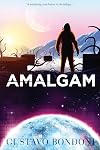
The story of Emily Plair concludes with this third novel in the series. The three independent copies of the AI Emily each play their part in helping save the colony on Tau Ceti from itself and from powerful evolved AIs that have escaped from Earth.
This is good old wide-screen Baroque space opera, as Brian Aldiss would have called it, with orbital battles and invasive AI tech. The dialogue flows very easily and has verisimilitude. Minor demerits for poor sub-editing and proof reading, a show more slightly clunky title which made me think of dental fillings, and an equally slightly rushed ending, which nonetheless turned out well at the finish.
Overall, I have enjoyed discovering the work of Gustavo Bondoni and I shall look out for his work in future. show less
This is good old wide-screen Baroque space opera, as Brian Aldiss would have called it, with orbital battles and invasive AI tech. The dialogue flows very easily and has verisimilitude. Minor demerits for poor sub-editing and proof reading, a show more slightly clunky title which made me think of dental fillings, and an equally slightly rushed ending, which nonetheless turned out well at the finish.
Overall, I have enjoyed discovering the work of Gustavo Bondoni and I shall look out for his work in future. show less
A ship from the human civilization on Tau Ceti II heads for Earth, intending to re-establish contact after a treaty-mandated gap of 500 years. Earth is deserted. There are no signs of an apocalypse, or mass graves. Where is everybody?
For the past 500 years, everyone on Earth has been permanently living in a virtual reality world. Free from disease and pain, their bodies are supposedly being taken care of in vast underground chambers. In VR-land, big problems are happening. A huge wall show more suddenly cuts Denver in half. Monsters are ravaging cities all over the world.
An interface is created, so that the visitors can communicate with the people of Earth, who are less than thrilled to see them. Rome, from the visitors, falls in love with Emily, from VR-land. She is involved in attempts to get the bottom of the computer problems, whatever they are. Are some mainframes about to crash, possibly snuffing out millions of "people"?
Rome asks Emily to return to Tau Ceti with the ship, which has been ordered to leave by an Earth that wants to stay in VR-land. First, they have to find her body. Are those millions of chambers still in nice, neat rows, maintained by an army of robots?
This is a first-rate piece of writing. The author, whose first language is not English, does an excellent job with the characters and storytelling. It is very much worth the reader's time. show less
For the past 500 years, everyone on Earth has been permanently living in a virtual reality world. Free from disease and pain, their bodies are supposedly being taken care of in vast underground chambers. In VR-land, big problems are happening. A huge wall show more suddenly cuts Denver in half. Monsters are ravaging cities all over the world.
An interface is created, so that the visitors can communicate with the people of Earth, who are less than thrilled to see them. Rome, from the visitors, falls in love with Emily, from VR-land. She is involved in attempts to get the bottom of the computer problems, whatever they are. Are some mainframes about to crash, possibly snuffing out millions of "people"?
Rome asks Emily to return to Tau Ceti with the ship, which has been ordered to leave by an Earth that wants to stay in VR-land. First, they have to find her body. Are those millions of chambers still in nice, neat rows, maintained by an army of robots?
This is a first-rate piece of writing. The author, whose first language is not English, does an excellent job with the characters and storytelling. It is very much worth the reader's time. show less
You May Also Like
Associated Authors
Statistics
- Works
- 19
- Also by
- 25
- Members
- 48
- Popularity
- #325,719
- Rating
- 3.7
- Reviews
- 6
- ISBNs
- 10