
Steven Wright (1)
Author of Harold
For other authors named Steven Wright, see the disambiguation page.
About the Author
Image credit: Steven Wright
Works by Steven Wright
Associated Works
I Killed: True Stories of the Road from America's Top Comics (2006) — Contributor — 147 copies, 3 reviews
Tagged
Common Knowledge
Members
Reviews
The inner Harold unveiled!
Of course anything Steven Wright puts pen to will be a stream of consciousness seemingly endless.
Harold is akin to Wright’s’ inner seven year old boy with an adult understanding, despite his innocence.
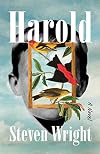
Dry, remorseless even, in his diatribe, Harold’s imagination is one where adults go to hide. Speaking of hidden, much of Harold’s sideways moves come through a series of rectangular windows opening up in his head. They’re a brilliant segue! Those birds who show more deliver his thoughts and questions are part of the wonder. And such birds!
Harold’s questions are a thing of beauty. Of course they happen on the inside. Ms. Yuka just isn’t worth asking questions of on the outside! Ms.Yuka fortunately is not inside Harold’s head, except in dreams.
I hear Wright’s in concert voice, in my head. This is pure Steven Wright blending with the known, yet giving new voices. Ha! Genius! Nobel stuff to me! (a reference!)
Harold is like no other thirdrd grade child, he’s Wright’s voice piece—seemingly innocent, maybe stubborn, satirical, ironic, and piercing. A book for those who appreciate Wright and are prepared to put up with his non PC references and entertaining voyeurism. Either brilliant or a complete faux, I’m coming down on the brilliant side.
A Simon & Schuster ARC via NetGalley.
Many thanks to the author and publisher. show less
Of course anything Steven Wright puts pen to will be a stream of consciousness seemingly endless.
Harold is akin to Wright’s’ inner seven year old boy with an adult understanding, despite his innocence.
Dry, remorseless even, in his diatribe, Harold’s imagination is one where adults go to hide. Speaking of hidden, much of Harold’s sideways moves come through a series of rectangular windows opening up in his head. They’re a brilliant segue! Those birds who show more deliver his thoughts and questions are part of the wonder. And such birds!
Harold’s questions are a thing of beauty. Of course they happen on the inside. Ms. Yuka just isn’t worth asking questions of on the outside! Ms.Yuka fortunately is not inside Harold’s head, except in dreams.
I hear Wright’s in concert voice, in my head. This is pure Steven Wright blending with the known, yet giving new voices. Ha! Genius! Nobel stuff to me! (a reference!)
Harold is like no other thirdrd grade child, he’s Wright’s voice piece—seemingly innocent, maybe stubborn, satirical, ironic, and piercing. A book for those who appreciate Wright and are prepared to put up with his non PC references and entertaining voyeurism. Either brilliant or a complete faux, I’m coming down on the brilliant side.
A Simon & Schuster ARC via NetGalley.
Many thanks to the author and publisher. show less
The joy of Steven Wright is that life is a non sequitur. No two thoughts are ever connected. You never know what he will say next, other than it will have nothing to do with what he has already said. So when Steven Wright writes a novel, it would just have to be out there. And so it is, in Harold, Steven Wright’s first novel.
Harold is a seven year old third grader with a tremendously independent, unfettered and fertile imagination. (As an infant, his first words were “Your witness.”) show more In his daily boredom at school, he daydreams. He is the vehicle for a Grand Canyon full of one liners and out there concepts that are the stock in trade of Steven Wright.
There is a neat gimmick to deliver all these disparate concepts. Harold has a rectangular frame in his brain, and birds of all stripe from the common to the extinct to the made up, fly through it. That is the cue for a new thought to get himself out of whatever corner he has painted himself into. It works very well, helping to keep the pace dancing. He identifies each bird, but one time “A bird flew through the rectangle so quickly it cannot be described. Like everybody’s life.”
The scene is 1961 Massachusetts. Wright tries to bring to life the pop culture of the era, but he seems to bristle at the limitations Harold presents him. So every so often, there are references to Harold thinking about people and events that haven’t happened yet, like the introduction of the Boeing 747 or the pillaging of Vietnam.
To be clear, there is no plot, and there are really only four characters of any importance: Harold, his grandfather, a classmate/crush called Elizabeth, and of course his teacher, an Asian woman named Ms Yuka.
His memories of them are stereotypical. His grandfather is his favorite. He lives on a lake in Maine, and imparts the wisdom of the ages to Harold (Never do anything a woman tells you). Elizabeth is a seven year old blonde bombshell two rows up, which causes Harold all kinds of confusion, because he somehow knows with certainty he will be hurt and damaged not only by her, but by many women he will be drawn to: “He was aware, even at his age, that if she knew how much he really liked her she would be in charge and his life would be ruined.” His teacher, who he claimed to like, is fed up with Harold’s neverending non sequitur questions, and he fantasizes cursing her and punishing her in interesting ways. When she says “May I have your attention,” under his breath he would say: “Get your own attention.” Or getting permission to go the bathroom, he just sits there: “I don’t have to go, I just wanted to know if I could go.”
The stage is set for Harold to escape into a blistering adventure of ideas, thoughts, concepts and observations. They take him to moon, where he meets Carl Sagan (who was totally unknown in 1961) in a plywood spaceship by a lake on the dark side. Sagan is on his way to deliver 500 merry-go-round horses to God’s office in the Milky Way. He gives Harold and Elizabeth wallet sized copies of the famous Blue Dot photo (Earth, seen from space), which would not be shot until several years later. But both Harold and Elizabeth know all about it.
Then, to top it off, Wright enters the narrative near the end. He, the narrator, suddenly says “I” in: “This little boy didn’t know what would happen in his life, but I did.” Or if it’s not Wright, who is this sudden new character? Is it God, who has seen fit to torture this child using his own brain? Because throughout the book, Harold continually references God, with the qualifier “if there is a God.” It is the most common meme in the book. Is God simply amused by Harold?
The narrator makes one more appearance a little later, saying “I don’t know if you noticed or not but in this story he hardly mentions his own mother.” Well, the narrator declared Harold’s mother mentally ill very early on, and she is not any kind of inspiration or support for Harold, the child or the book.
Harold can be rather precocious for a seven year old. His analysis of grade school is “Is this a school or a lobotomy factory?” Wright says Harold is sometimes “like a bird trapped inside a building, desperately trying to find a way back to the sky.” He also maintains he never gets lonely because “the human brain is a portable universe.”
There are of course, innumerable quick laughs among all the non sequiturs.
-“So when exactly did you lose track of time?”
-On trying coffee the first time: “It tastes like cocoa with poison in it.”
-On politicians on TV: “ ‘Do you agree that you are not answering the question?’ Then no matter what he says he should be beaten until he’s unconscious on live television with no criminal consequences.”
-“He wondered if there could be three dimensional shadows.”
-“He thought the white square (of a priest’s collar) looked like a little movie screen and wouldn’t it be great to project a movie right on there.”
It’s not the great American novel, but there are so many concepts in it, it could be the basis for a series of books, all totally unrelated. That’s how fertile Wright’s mind is. He can afford to toss off and waste great one-liners just in passing. And there is no doubt whatsoever that these shots are Wright-isms. He’s a unique franchise.
Good fun.
David Wineberg show less
Harold is a seven year old third grader with a tremendously independent, unfettered and fertile imagination. (As an infant, his first words were “Your witness.”) show more In his daily boredom at school, he daydreams. He is the vehicle for a Grand Canyon full of one liners and out there concepts that are the stock in trade of Steven Wright.
There is a neat gimmick to deliver all these disparate concepts. Harold has a rectangular frame in his brain, and birds of all stripe from the common to the extinct to the made up, fly through it. That is the cue for a new thought to get himself out of whatever corner he has painted himself into. It works very well, helping to keep the pace dancing. He identifies each bird, but one time “A bird flew through the rectangle so quickly it cannot be described. Like everybody’s life.”
The scene is 1961 Massachusetts. Wright tries to bring to life the pop culture of the era, but he seems to bristle at the limitations Harold presents him. So every so often, there are references to Harold thinking about people and events that haven’t happened yet, like the introduction of the Boeing 747 or the pillaging of Vietnam.
To be clear, there is no plot, and there are really only four characters of any importance: Harold, his grandfather, a classmate/crush called Elizabeth, and of course his teacher, an Asian woman named Ms Yuka.
His memories of them are stereotypical. His grandfather is his favorite. He lives on a lake in Maine, and imparts the wisdom of the ages to Harold (Never do anything a woman tells you). Elizabeth is a seven year old blonde bombshell two rows up, which causes Harold all kinds of confusion, because he somehow knows with certainty he will be hurt and damaged not only by her, but by many women he will be drawn to: “He was aware, even at his age, that if she knew how much he really liked her she would be in charge and his life would be ruined.” His teacher, who he claimed to like, is fed up with Harold’s neverending non sequitur questions, and he fantasizes cursing her and punishing her in interesting ways. When she says “May I have your attention,” under his breath he would say: “Get your own attention.” Or getting permission to go the bathroom, he just sits there: “I don’t have to go, I just wanted to know if I could go.”
The stage is set for Harold to escape into a blistering adventure of ideas, thoughts, concepts and observations. They take him to moon, where he meets Carl Sagan (who was totally unknown in 1961) in a plywood spaceship by a lake on the dark side. Sagan is on his way to deliver 500 merry-go-round horses to God’s office in the Milky Way. He gives Harold and Elizabeth wallet sized copies of the famous Blue Dot photo (Earth, seen from space), which would not be shot until several years later. But both Harold and Elizabeth know all about it.
Then, to top it off, Wright enters the narrative near the end. He, the narrator, suddenly says “I” in: “This little boy didn’t know what would happen in his life, but I did.” Or if it’s not Wright, who is this sudden new character? Is it God, who has seen fit to torture this child using his own brain? Because throughout the book, Harold continually references God, with the qualifier “if there is a God.” It is the most common meme in the book. Is God simply amused by Harold?
The narrator makes one more appearance a little later, saying “I don’t know if you noticed or not but in this story he hardly mentions his own mother.” Well, the narrator declared Harold’s mother mentally ill very early on, and she is not any kind of inspiration or support for Harold, the child or the book.
Harold can be rather precocious for a seven year old. His analysis of grade school is “Is this a school or a lobotomy factory?” Wright says Harold is sometimes “like a bird trapped inside a building, desperately trying to find a way back to the sky.” He also maintains he never gets lonely because “the human brain is a portable universe.”
There are of course, innumerable quick laughs among all the non sequiturs.
-“So when exactly did you lose track of time?”
-On trying coffee the first time: “It tastes like cocoa with poison in it.”
-On politicians on TV: “ ‘Do you agree that you are not answering the question?’ Then no matter what he says he should be beaten until he’s unconscious on live television with no criminal consequences.”
-“He wondered if there could be three dimensional shadows.”
-“He thought the white square (of a priest’s collar) looked like a little movie screen and wouldn’t it be great to project a movie right on there.”
It’s not the great American novel, but there are so many concepts in it, it could be the basis for a series of books, all totally unrelated. That’s how fertile Wright’s mind is. He can afford to toss off and waste great one-liners just in passing. And there is no doubt whatsoever that these shots are Wright-isms. He’s a unique franchise.
Good fun.
David Wineberg show less
You know when you decide to read a novel by Steven Wright that it’s going to be different. It’s a novel pretty much without a plot. If there is a plot it’s inside the head of its main character, Harold.
Harold is a seven year old boy, pretty clearly an avatar of Wright himself, maybe both in his own childhood and adulthood.
Harold lives inside his own thoughts. It’s a mixture of directed fantasy and happenstance. The fantasies are imagined interactions with his teacher, Ms. Yuka, his show more classmate-crush Elizabeth, and a Moon-based waitress he conjures, named Tinga.
The interactions with Elizabeth are the most touching. Here is Harold, a kid living inside the curtains of his own mind, obviously unable to pull them completely back so he can find a place in the world outside. He imagines an Elizabeth who is kind and accepting of Harold’s peculiarities and with whom he can freely escape for adventures of his making. Occasionally he imagines a slight pullback of the curtain, an overture to the real Elizabeth, but the curtains always close again.
Tinga similarly draws from Harold’s wish for company inside his head. She listens compassionately, although unlike the imagined Elizabeth, she’s an adult with business of her own on the Moon.
The interactions with Ms. Yuka have a quality all their own. Harold likes Ms. Yuka at the same time that he regards her class as an unfair dictatorship — after all, Harold’s mind never gave permission to Ms. Yuka to contain his thoughts, much less his body. But he genuinely likes her, not the least because she indulges Harold’s off-the-wall questions and observations, which often mimic Steven Wright as he stands in front of an audience.
The enduring image of the story is that of the birds flying through Harold’s head. They bring thoughts to his attention, flying through a kind of window-frame of consciousness. The birds have their own inscrutable autonomy. Harold doesn’t control them, but they bring those sparks of wonder and quizzicality that we know from Steven Wright in real life.
There are others as well, maybe most prominently Harold’s grandfather. Harold’s grandfather is a recurring figure, kind of a guiding spirit for Harold. His grandfather gives sense and worth to randomness.
And there’s Carl Sagan, in a cameo. Harold and Elizabeth meet Sagan on the Moon, with Sagan’s spaceship — he’s delivering merry-go-round horses to God’s office in the Milky Way. It makes sense in the story, trust me. Well, kind of.
The book has a sweetly sad tone that occasionally flits its way into funny paradox, like a Steven Wright joke, and then returns. As a reader, you find yourself at least a little bit in company with Harold behind his mind’s curtains.
Before you read the book, I think it will help to have some Steven Wright experiences, or renewals of old Steven Wright experiences, to find the mood. It’s unique, and you really do need to have a feel for it to appreciate his writing. There are plenty of videos of his stand-up routines, and also some interviews. I watched some of both and felt my experience of the book was much better rooted for it. show less
Harold is a seven year old boy, pretty clearly an avatar of Wright himself, maybe both in his own childhood and adulthood.
Harold lives inside his own thoughts. It’s a mixture of directed fantasy and happenstance. The fantasies are imagined interactions with his teacher, Ms. Yuka, his show more classmate-crush Elizabeth, and a Moon-based waitress he conjures, named Tinga.
The interactions with Elizabeth are the most touching. Here is Harold, a kid living inside the curtains of his own mind, obviously unable to pull them completely back so he can find a place in the world outside. He imagines an Elizabeth who is kind and accepting of Harold’s peculiarities and with whom he can freely escape for adventures of his making. Occasionally he imagines a slight pullback of the curtain, an overture to the real Elizabeth, but the curtains always close again.
Tinga similarly draws from Harold’s wish for company inside his head. She listens compassionately, although unlike the imagined Elizabeth, she’s an adult with business of her own on the Moon.
The interactions with Ms. Yuka have a quality all their own. Harold likes Ms. Yuka at the same time that he regards her class as an unfair dictatorship — after all, Harold’s mind never gave permission to Ms. Yuka to contain his thoughts, much less his body. But he genuinely likes her, not the least because she indulges Harold’s off-the-wall questions and observations, which often mimic Steven Wright as he stands in front of an audience.
The enduring image of the story is that of the birds flying through Harold’s head. They bring thoughts to his attention, flying through a kind of window-frame of consciousness. The birds have their own inscrutable autonomy. Harold doesn’t control them, but they bring those sparks of wonder and quizzicality that we know from Steven Wright in real life.
There are others as well, maybe most prominently Harold’s grandfather. Harold’s grandfather is a recurring figure, kind of a guiding spirit for Harold. His grandfather gives sense and worth to randomness.
And there’s Carl Sagan, in a cameo. Harold and Elizabeth meet Sagan on the Moon, with Sagan’s spaceship — he’s delivering merry-go-round horses to God’s office in the Milky Way. It makes sense in the story, trust me. Well, kind of.
The book has a sweetly sad tone that occasionally flits its way into funny paradox, like a Steven Wright joke, and then returns. As a reader, you find yourself at least a little bit in company with Harold behind his mind’s curtains.
Before you read the book, I think it will help to have some Steven Wright experiences, or renewals of old Steven Wright experiences, to find the mood. It’s unique, and you really do need to have a feel for it to appreciate his writing. There are plenty of videos of his stand-up routines, and also some interviews. I watched some of both and felt my experience of the book was much better rooted for it. show less
Given how much I liked the comedy of Steven Wright, I came to this book with consciously held in preconceptions to avoid disappointment.
If Steven Wright was a racing car driver I would have held no such qualms because there is a distinct gulf between driving a car and writing a book (Jeremy Clarkson notwithstanding)
So here we go and immediately we are in the world of Harold, the precocious kid whose inner world is so much richer than the classroom in which he is daily forced to deal in show more mundanity.
There are no laugh out loud moments but there are lots of those sublime sideways thinking moments that are the signature of the author.
if you were to classify this book I'm not sure where you would start. But the journey this book takes up on is both surreal and rewarding. It is obviously pointless and therein lies the zen of this book. If you come looking for a plot or storyline you will be disappointed. It doesn't have a beginning, middle, and end, it just is.
I can imagine nothing but mixed reviews, 1 or 5 stars. 1 star because you know who Steven Wright is, and 5 stars if you don't.
I loved it and would recommend it to my friends without hesitation, if I had any friends. show less
If Steven Wright was a racing car driver I would have held no such qualms because there is a distinct gulf between driving a car and writing a book (Jeremy Clarkson notwithstanding)
So here we go and immediately we are in the world of Harold, the precocious kid whose inner world is so much richer than the classroom in which he is daily forced to deal in show more mundanity.
There are no laugh out loud moments but there are lots of those sublime sideways thinking moments that are the signature of the author.
if you were to classify this book I'm not sure where you would start. But the journey this book takes up on is both surreal and rewarding. It is obviously pointless and therein lies the zen of this book. If you come looking for a plot or storyline you will be disappointed. It doesn't have a beginning, middle, and end, it just is.
I can imagine nothing but mixed reviews, 1 or 5 stars. 1 star because you know who Steven Wright is, and 5 stars if you don't.
I loved it and would recommend it to my friends without hesitation, if I had any friends. show less
Awards

You May Also Like
Associated Authors
Statistics
- Works
- 4
- Also by
- 1
- Members
- 166
- Popularity
- #127,844
- Rating
- 3.3
- Reviews
- 8
- ISBNs
- 21