
Tao Le
Author of First Aid for the USMLE Step 1
About the Author
Tao Le, MD, MHS, is Editor-in-Chief of the USMLE First Aid series. He earned his medical degree from the University of California, San Francisco in 1996 and completed his residency training in internal medicine at Yale University and his allergy and immunology fellowship training at Johns Hopkins show more University. At Yale, he was a regular guest lecturer on USMLE review and an advisor to the Yale School of Medicine curriculum committee. show less
Series
Works by Tao Le
First Aid for the Basic Sciences, General Principles, Second Edition (First Aid Series) (2008) 28 copies
Tagged
Common Knowledge
There is no Common Knowledge data for this author yet. You can help.
Members
Reviews
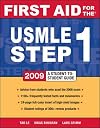
The book is okay, let's just keep it at that. It is obvious I am not the right person for this book. Touted to be the gospel for the USMLE exams, I do not deny this is the book's strength. There was an untouched market, and the authors have exploited it very well. The sections are well organized by topic and get the job done.
I have a different problem with this book: it suffers from a dratted excess of acroynyms. This isn't an issue for people that went to college in an English speaking show more country, but it is a pain to read for people that went to school in a foreign language.
Yes, people will claim that if you want to pass the USMLE, you have to know a gazillion English acronyms. I believe that this is true... to a certain degree. I feel acronyms are the thing you will learn naturally on the job in a few weeks. Just log into EPIC and go on your merry way. For the purposes of this exam, you need to understand the concepts, not a letter salad. Even more so since Step 1 is now Pass/Fail.
In a nutshell, the book is not inclusive for readers that are more visual or detest acronyms like myself. Give me clinical vignettes so that I can make concept associations in a more practical way. In this respect, the clinical case USMLE book I started reading is much more up my alley. I think acronym adverse readers are a huge untapped market. I love the concept behind this book series, just wished they would release an edition that avoids English only acroynyms like the plague.
2 1/2 stars show less
I have a different problem with this book: it suffers from a dratted excess of acroynyms. This isn't an issue for people that went to college in an English speaking show more country, but it is a pain to read for people that went to school in a foreign language.
Yes, people will claim that if you want to pass the USMLE, you have to know a gazillion English acronyms. I believe that this is true... to a certain degree. I feel acronyms are the thing you will learn naturally on the job in a few weeks. Just log into EPIC and go on your merry way. For the purposes of this exam, you need to understand the concepts, not a letter salad. Even more so since Step 1 is now Pass/Fail.
In a nutshell, the book is not inclusive for readers that are more visual or detest acronyms like myself. Give me clinical vignettes so that I can make concept associations in a more practical way. In this respect, the clinical case USMLE book I started reading is much more up my alley. I think acronym adverse readers are a huge untapped market. I love the concept behind this book series, just wished they would release an edition that avoids English only acroynyms like the plague.
2 1/2 stars show less
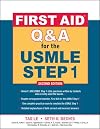
Book is okay, I liked it more than the regular textbooks. Given the book is almost 20 years old, some of the questions are outdated, so the reader should be aware of this and avoid using it as a sole study source. I spotted several errors here & there, can't remember which they were because I read this book 2 years ago. It seems back then the editorial liked churning new editions like a factory to get into the money making wagon and the house of cards came crashing once Step 1 became show more Pass/Fail.
The books are still a useful quick reference resource for US students, but people these days prefer focusing on question banks to score the bare minimum points to pass the exam and focus their energies on doing well on the Step 2 exam.
As for IMGs, this question book at least is readable. The inane obsession with the First Aid series to use unusual acronyms for every situation makes the books nearly unreadable for people who didn't go to school in English language countries.
So, I don't quite know these days who is the prime market for these books. US students all use question banks that are constantly being updated and FMGs spend more time struggling to decipher the alphabet soup of acronyms used in these books instead of focusing on the actual material. show less
The books are still a useful quick reference resource for US students, but people these days prefer focusing on question banks to score the bare minimum points to pass the exam and focus their energies on doing well on the Step 2 exam.
As for IMGs, this question book at least is readable. The inane obsession with the First Aid series to use unusual acronyms for every situation makes the books nearly unreadable for people who didn't go to school in English language countries.
So, I don't quite know these days who is the prime market for these books. US students all use question banks that are constantly being updated and FMGs spend more time struggling to decipher the alphabet soup of acronyms used in these books instead of focusing on the actual material. show less
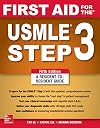
First Aid for the USMLE® Step 3, Fifth Edition provides busy residents with thousands of high-yield facts, mnemonics, and full-color visual aids to help them pass the last of the required USMLE® examinations. Also included are the reader-acclaimed “mini-cases” designed to help residents pass the case portion of the examination. First Aid for the USMLE® Step 3, Fifth Edition is carefully written to focus on high-yield, top-priority information, most likely to be included on the exam.
First Aid for the USMLE® Step 3, Fifth Edition provides busy residents with thousands of high-yield facts, mnemonics, and full-color visual aids to help them pass the last of the required USMLE® examinations. Also included are the reader-acclaimed “mini-cases” designed to help residents pass the case portion of the examination. First Aid for the USMLE® Step 3, Fifth Edition is carefully written to focus on high-yield, top-priority information, most likely to be included on the exam.
You May Also Like


Statistics
- Works
- 31
- Members
- 939
- Popularity
- #27,356
- Rating
- 3.7
- Reviews
- 17
- ISBNs
- 149