
E. B. Lewis
Author of All Different Now: Juneteenth, the First Day of Freedom
About the Author
Works by E. B. Lewis
All Different Now: Juneteenth, the First Day of Freedom (2014) — Illustrator — 292 copies, 15 reviews
Associated Works
Talkin' about Bessie: The Story of Aviator Elizabeth Coleman (2002) — Illustrator — 940 copies, 38 reviews
Our Children Can Soar: A Celebration of Rosa, Barack, and the Pioneers of Change (2009) — Illustrator — 254 copies, 17 reviews
Preaching to the Chickens: The Story of Young John Lewis (2016) — Illustrator — 249 copies, 5 reviews
The Secret World of Walter Anderson (Candlewick Biographies) (2009) — Illustrator, some editions — 212 copies, 72 reviews
Dirt on Their Skirts: The Story of the Young Women who Won the World Championship (2000) — Illustrator — 136 copies, 20 reviews
To Walk the Sky: How Iroquois Steelworkers Helped Build Towering Cities (2025) — Illustrator — 45 copies, 3 reviews
Everywhere Beauty Is Harlem: The Vision of Photographer Roy DeCarava (2024) — Illustrator — 30 copies, 1 review
Tagged
Common Knowledge
- Legal name
- Lewis, Earl Bradley
- Other names
- Lewis, Earl
- Birthdate
- 1956-12-16
- Gender
- male
- Education
- Art League
Temple University’s Tyler School of Art (1979) - Occupations
- illustrator
artist
teacher
graphic designer
painter
professor - Organizations
- University of the Arts in Philadelphia
- Awards and honors
- Outstanding Pennsylvania Illustrator of the Year (2005, Pennsylvania School Librarians Association)
- Relationships
- Lewis, Charles (father)
Lewis, Earline (mother)
Smith, Lyles (uncle)
Smith, Bradley (uncle)
Lewis, Aaron (son)
Lewis, Joshua (son) - Short biography
- E.B. Lewis is the illustrator of a numerous books for children including Talkin' About Bessie (a 2003 Coretta Scott King Award winner), The Bat Boy and His Violin (a Coretta Scott King Honor book), Down the Road (a Notable Book for Children by the American Library Association), and The Other Side (a Notable Book for Language Arts). The Coretta Scott King Award is the premier award honoring African-American authors and illustrators of outstanding books for children and young adults. A full biography is available at http://pabook.libraries.psu.edu/palit...
- Nationality
- USA
- Birthplace
- Philadelphia, Pennsylvania, USA
- Places of residence
- Frankfort, Pennsylvania, USA
- Associated Place (for map)
- Pennsylvania, USA
Members
Reviews
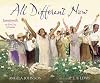
Beautifully delicate watercolor illustrations leave a lasting impression of the story of Juneteenth, when enslaved people in Texas learned they were free. The illustrator shows a range of reactions, trying to imagine what it was like. Back matter includes a timeline of important dates (1863-1865), a few paragraphs on "Juneteenth, Then and Now," a list of online sources, and a glossary of key terms. Now that Juneteenth is a federal holiday the back matter is not perfectly up-to-date, but show more don't throw the baby out with the bathwater - this is still an incredibly worthwhile book. show less
A young girl and her siblings wake to the smell of honeysuckle and set to work in the cotton fields as slaves. Paneled illustrations show news of their freedom spreading from "the port, to town, through the countryside, and into the fields." Once they receive word of their freedom, the girl's family eat, laugh, and tell stories into the night. The next day, she wakes to the same smell of honeysuckle, but everything is "all different now." The final page shows the former slaves leaving the show more fields with their belongings.
Simple, elegant, yet effective text used in this story: "that a Union general had read from a balcony that we were all now and forever free and things would be all different now." Angela Johnson very intentionally omits names and places; her purpose is feeling. She wants her audience to feel what people felt that day, Juneteenth. The details come after the story in a timeline of important dates from 1863-1865, the history of Juneteenth, online sources for further learning, and key terms defined in kid-friendly language. Excellent book. show less
Simple, elegant, yet effective text used in this story: "that a Union general had read from a balcony that we were all now and forever free and things would be all different now." Angela Johnson very intentionally omits names and places; her purpose is feeling. She wants her audience to feel what people felt that day, Juneteenth. The details come after the story in a timeline of important dates from 1863-1865, the history of Juneteenth, online sources for further learning, and key terms defined in kid-friendly language. Excellent book. show less
If you don’t already know the story of Juneteenth Day, this book won't enlighten you until you get to the author’s notes at the back of the book. By starting at the end, you will learn that at the conclusion of the Civil War, many slaves did not yet know they were now free. [The author errs in her note (although not in her timeline) by stating that slaves were free as of the Emancipation Proclamation of January 1, 1863. This was a wartime measure and in any event did not free all the show more slaves; some 800,000 slaves in the border states alone were unaffected by the measure. It was not until the return of the Confederate states to the Union (for which a renunciation of slavery was mandatory) and their acceptance of the Thirteenth Amendment to the Constitution, ratified in December of 1865, that slavery was officially abolished. In the meantime, however, Southern States remained under military government. Thus, the notification of June 19th was in the form of a military order.]
Even after slavery became illegal, slave owners in Texas did not volunteer the news to their slaves. It was only when Union Major General Gordon Granger came to Galveston, Texas on June 19, 1865 and made the announcement, that slaves understood they were officially free from bondage. [And often, as historian Henry Louis Gates, Jr. reports, slaves took advantage of their promised freedom at some peril.]
The author observes that awareness of the significance of this date increased during the Civil Rights Movement of the 1960’s, and the date is now celebrated throughout the nation.
The book takes us through a summer day for slaves on a Texas plantation, slaves who do not realize that “soon, it would all be different.” As the news spreads, more and more people gather and:
"…we ate as a free people,
laughed as a free people,
and told stories as free people
on
into
the night.”
The little girl who is telling the story muses that in the morning, when they wake again, it will be a time that is “all different now.”
Illustrator E.B. Lewis does a remarkable job with muted watercolors in capturing the range of emotions that slaves must have felt upon learning they were free, from shock to disbelief to hope to ineffable joy. He also makes great use of shadow and changes in light to show the rhythms of the day.
Evaluation: While the illustrations are lovely, I would have liked to have seen some background information made available before the end notes, which in any event are geared toward adults. show less
Even after slavery became illegal, slave owners in Texas did not volunteer the news to their slaves. It was only when Union Major General Gordon Granger came to Galveston, Texas on June 19, 1865 and made the announcement, that slaves understood they were officially free from bondage. [And often, as historian Henry Louis Gates, Jr. reports, slaves took advantage of their promised freedom at some peril.]
The author observes that awareness of the significance of this date increased during the Civil Rights Movement of the 1960’s, and the date is now celebrated throughout the nation.
The book takes us through a summer day for slaves on a Texas plantation, slaves who do not realize that “soon, it would all be different.” As the news spreads, more and more people gather and:
"…we ate as a free people,
laughed as a free people,
and told stories as free people
on
into
the night.”
The little girl who is telling the story muses that in the morning, when they wake again, it will be a time that is “all different now.”
Illustrator E.B. Lewis does a remarkable job with muted watercolors in capturing the range of emotions that slaves must have felt upon learning they were free, from shock to disbelief to hope to ineffable joy. He also makes great use of shadow and changes in light to show the rhythms of the day.
Evaluation: While the illustrations are lovely, I would have liked to have seen some background information made available before the end notes, which in any event are geared toward adults. show less
The book tells the story about what happened on the day when the enslaved people of the south found out in that the Civil War was over and that they were free.
There are many black people I know that celebrate Juneteenth instead of 4th of July because for our ancestors this was their independence day. I think the book does a good job of explaining the holiday and its origins to a young audience. The author's note was the most powerful part of the book for me.
There are many black people I know that celebrate Juneteenth instead of 4th of July because for our ancestors this was their independence day. I think the book does a good job of explaining the holiday and its origins to a young audience. The author's note was the most powerful part of the book for me.
Lists
Awards


You May Also Like
Associated Authors
Statistics
- Works
- 2
- Also by
- 32
- Members
- 437
- Popularity
- #55,994
- Rating
- 4.4
- Reviews
- 27
- ISBNs
- 4