
anonymous-96
Author of The Woman of Colour: A Tale
anonymous-96 is Anonymous (96). For other authors named Anonymous, see the disambiguation page.
Works by anonymous-96
Tagged
Common Knowledge
There is no Common Knowledge data for this author yet. You can help.
Members
Reviews
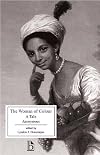
The modern edition, edited by Lyndon J. Dominique, includes many further readings and firsthand sources—actual wills of Jamaican planters, letters and travelogues, and excerpts from other stories featuring heiresses of color. Read the introduction after the story to avoid spoilers, but do read it for more perspective on the period and how The Woman of Colour intersects with the abolition movement, the early feminist movement, and current events at the time of its publication.
The story show more itself is a perfect example of why people became distraught over 18th century literature. My reading notes include the line “feel I’m being hit by a feels truck” only a few pages in—when the protagonist, Olivia Fairchild, becomes friends with kind, intelligent, and fatally ill Mrs Honeywood, who is also traveling to England with her (eligible, ahem) son. Olivia herself is sweet without being a pushover, morally pure without being implausible. And even if she verges on what some might call “Mary Sue” territory, it’s refreshing to see a woman of colour in that territory (it’s also a deliberate choice by the author, whose goal is in part to convince white Europeans to “look with a compassionate eye towards” African slaves and their descendants). Olivia’s strength of will and morals both descend from her enslaved mother, who she remembers in the opening pages, and have been cultivated by her English governess, to whom she writes the letters that make up this epistolary novel. So for what it’s worth, this passes the Bechdel test.
There isn’t a lot I can say without spoilers (which are under the readmore). The Woman of Colour is a deconstruction of several romantic tropes as well as an “activist novel” using the drama of the story to make points about abolition, race relations, and women’s rights. The setup: Olivia must marry her cousin (don’t be weirded out, it was the 1800s) in order to gain control of the sixty thousand pounds her father has left her, or alternatively her money and she herself becomes under the control greedier relatives. The story takes a Gothic twist halfway through—one some readers may find ridiculous, and some reviewers disagree over whether or not it’s adequately explained. The style is refreshing, relatively concise, with very readable dialogue. It could easily be made a movie, and honestly, I hope it one day is.
I should note that a woman “of colour” was at this time period a woman of mixed-race heritage, and when it comes to fully black characters, the book has a vein of colonialist paternalism. Olivia’s (freed, it’s implied) servant Dido speaks with a thick accent, and while Olivia clearly cares for her, the thing praised most about Dido is her “faithfulness.” Yet Olivia shows off her own “olive” complexion to a young boy to defend Dido, and repeatedly claims that she is not ashamed to be compared to her darker “brothers and sisters.” This makes the text more complex, and from a critical point of view more interesting.
Olivia’s cousin, Augustus Merton, becomes Augustus Fairchild when he marries her—taking on her name as well as her fortune, which I’m given to understand wasn’t unheard of in powerful and wealthy English families, and is also part of her father’s will. If you think Olivia’s father’s will requiring her to marry or pass her inheritance on to her odious, distant family is stupid, by the way, you’re right—characters within the text agree with you, and Dominique’s introduction suggests that, firstly, the unreasonableness of the will may actually be the point, showing how Olivia as a woman of color remains ‘enslaved’ to her white father, but also her dad may be doing the best he can, considering the limits Jamaican law placed on inheritance by people of color. Augustus himself is grieving the loss of someone he loves, as revealed by one of his own letters, but he marries Olivia out of admiration and compassion, not wanting to forsake her to his relatives who are lazy, money-grubbing, and rub their racist assumptions about Olivia in her face (she responds with cool grace and delectable sarcasm). While Augustus himself does let slip a grating line about Olivia’s color as if it’s a mark against her, his actions speak louder than his words, and I was touched in a scene later on when he kisses a tear from the grieving Olivia’s cheek when she hears of the death of Mrs Honeywood.
No, that wasn’t a spoiler—bless her, but the lady wasn’t long for the world and that was clear from her first appearance. Actual spoilers appear in my full review at my blog. Also, they appear on the back cover of the book and in the Amazon.com product description. Tread carefully.
I don’t think this is the only right way to write a woman of color in the Regency period, especially considering it was written over two hundred years ago. Modern readers may prefer a more active heroine (Olivia is strong, but her strength is often demonstrated through enduring rather than pursuing). In the meantime, though, narratives like The Woman of Colour are awfully thin on the ground, and this story seems far too unjustly neglected given what a fascinating account it is, and the unique light it sheds on the intersections of race, class, and gender at this period of history. show less
The story show more itself is a perfect example of why people became distraught over 18th century literature. My reading notes include the line “feel I’m being hit by a feels truck” only a few pages in—when the protagonist, Olivia Fairchild, becomes friends with kind, intelligent, and fatally ill Mrs Honeywood, who is also traveling to England with her (eligible, ahem) son. Olivia herself is sweet without being a pushover, morally pure without being implausible. And even if she verges on what some might call “Mary Sue” territory, it’s refreshing to see a woman of colour in that territory (it’s also a deliberate choice by the author, whose goal is in part to convince white Europeans to “look with a compassionate eye towards” African slaves and their descendants). Olivia’s strength of will and morals both descend from her enslaved mother, who she remembers in the opening pages, and have been cultivated by her English governess, to whom she writes the letters that make up this epistolary novel. So for what it’s worth, this passes the Bechdel test.
There isn’t a lot I can say without spoilers (which are under the readmore). The Woman of Colour is a deconstruction of several romantic tropes as well as an “activist novel” using the drama of the story to make points about abolition, race relations, and women’s rights. The setup: Olivia must marry her cousin (don’t be weirded out, it was the 1800s) in order to gain control of the sixty thousand pounds her father has left her, or alternatively her money and she herself becomes under the control greedier relatives. The story takes a Gothic twist halfway through—one some readers may find ridiculous, and some reviewers disagree over whether or not it’s adequately explained. The style is refreshing, relatively concise, with very readable dialogue. It could easily be made a movie, and honestly, I hope it one day is.
I should note that a woman “of colour” was at this time period a woman of mixed-race heritage, and when it comes to fully black characters, the book has a vein of colonialist paternalism. Olivia’s (freed, it’s implied) servant Dido speaks with a thick accent, and while Olivia clearly cares for her, the thing praised most about Dido is her “faithfulness.” Yet Olivia shows off her own “olive” complexion to a young boy to defend Dido, and repeatedly claims that she is not ashamed to be compared to her darker “brothers and sisters.” This makes the text more complex, and from a critical point of view more interesting.
Olivia’s cousin, Augustus Merton, becomes Augustus Fairchild when he marries her—taking on her name as well as her fortune, which I’m given to understand wasn’t unheard of in powerful and wealthy English families, and is also part of her father’s will. If you think Olivia’s father’s will requiring her to marry or pass her inheritance on to her odious, distant family is stupid, by the way, you’re right—characters within the text agree with you, and Dominique’s introduction suggests that, firstly, the unreasonableness of the will may actually be the point, showing how Olivia as a woman of color remains ‘enslaved’ to her white father, but also her dad may be doing the best he can, considering the limits Jamaican law placed on inheritance by people of color. Augustus himself is grieving the loss of someone he loves, as revealed by one of his own letters, but he marries Olivia out of admiration and compassion, not wanting to forsake her to his relatives who are lazy, money-grubbing, and rub their racist assumptions about Olivia in her face (she responds with cool grace and delectable sarcasm). While Augustus himself does let slip a grating line about Olivia’s color as if it’s a mark against her, his actions speak louder than his words, and I was touched in a scene later on when he kisses a tear from the grieving Olivia’s cheek when she hears of the death of Mrs Honeywood.
No, that wasn’t a spoiler—bless her, but the lady wasn’t long for the world and that was clear from her first appearance. Actual spoilers appear in my full review at my blog. Also, they appear on the back cover of the book and in the Amazon.com product description. Tread carefully.
I don’t think this is the only right way to write a woman of color in the Regency period, especially considering it was written over two hundred years ago. Modern readers may prefer a more active heroine (Olivia is strong, but her strength is often demonstrated through enduring rather than pursuing). In the meantime, though, narratives like The Woman of Colour are awfully thin on the ground, and this story seems far too unjustly neglected given what a fascinating account it is, and the unique light it sheds on the intersections of race, class, and gender at this period of history. show less
Well now, I don't know. I enjoyed this, I really did. Olivia is an immensely appealing heroine, with the cool, composed way she defuses the usual stupid prejudices and her ability to be as tender or steely as circumstances and the culpability of the person she's dealing with (Fauntleroyesque nephew? bigot sister-in-law?) require. And perhaps because we are amidst the haute merchant class, at a time when they're moving beyond bounderism and nabobbery into a sense of themselves as the drivers show more of the British project, with all the new true confidence that implies; or perhaps just because the anonymous author has a notable ear for dialogue, postsaging the heavy lightness of a Pope, for sure, but more interestingly presaging the torn-clothes-tender-cuts "W"-on-cheek of Wilde, the feathers-at-dawn of Waugh; perhaps perhaps perhaps, I just wanna say I like the way they talk .
So that's all great, and certainly the marital ins 'n' outs are as dizzying and unexpected as anything in 2 Fast 2 Furious. It's a plot-driven story about alliance of houses, and while Olivia's colouredness provides great character interactions, and has intrinsic value as an unusual example of the "not our type" pseudo-English person lionizing the happy isle as the place whence all virtues spring (which is made more poignant by her liminality--your twentieth-century babu with the voice of an Oxford don, say, is either a ridiculous or a tragic feature, depending on how deep you wanna pry; but Olivia you just want to hug and say "love what you are"), I'm pretty sure her colour and even her Jamaican origin could be utterly removed from the story without materially changing anything about it.
And of course it's easily enough to make critical hay out of that--liminality, exclusion, effacement, etc. And it lends a cast, a patina. No worries. And there is a lot of the usual sentimental silliness of the eighteenth century combined with the unlikely plotting conveniences that survived into the nineteenth (the old man who they helped turns out to be his uncle! And he's leaving them a lot of money! It's musical fortunes! Nobody loves anybody else except for their dollars, and nobody cares when things fall apart except for the pain they themselves will feel). But the thing that really sticks in my craw, and makes the book less successful I believe, is that the plotting absurdities aren't limited to crazy confluences of fact and family. The central fraud on which the plot rests here makes no sense on SO many levels--was Angelina dead to the world, or just her husband? And if the former why didn't someone tell him, and if the latter why didn't someone goggle at seeing her on her country walk in Monmouthshire (since we know that all kinds of other relevant personages had property out there)? Who was buried in her tomb? Why didn't she speak to her father-in-law or one other person about Augustus's alleged abandonment? When it all came out, why to God was the effect to annul Augustus and Olivia's marriage and leave her in the hands of the brother, as opposed to, say, annulling the agreement made under her father's will because the brother had resorted to lies and fraud to get the fortune? Why didn't he go to jail? Why, why, why. There were others. I don't know exactly what the extent and shape of these laws would have been in the early 19th century, but we are asked to believe in a situation where keeping a woman and her child confined under false pretenses and defrauding your brother and a Jamaican orphan into a bigamous marriage so that you can get your hands on their money is no matter for the law, but a will! A MAN'S WILL IS LAW. And I get that the English are a nation of shopkeepers and it was always about the fucking freedom of property, but this just reads like sloppy plotting to me, and it does detract from a very good story. show less
So that's all great, and certainly the marital ins 'n' outs are as dizzying and unexpected as anything in 2 Fast 2 Furious. It's a plot-driven story about alliance of houses, and while Olivia's colouredness provides great character interactions, and has intrinsic value as an unusual example of the "not our type" pseudo-English person lionizing the happy isle as the place whence all virtues spring (which is made more poignant by her liminality--your twentieth-century babu with the voice of an Oxford don, say, is either a ridiculous or a tragic feature, depending on how deep you wanna pry; but Olivia you just want to hug and say "love what you are"), I'm pretty sure her colour and even her Jamaican origin could be utterly removed from the story without materially changing anything about it.
And of course it's easily enough to make critical hay out of that--liminality, exclusion, effacement, etc. And it lends a cast, a patina. No worries. And there is a lot of the usual sentimental silliness of the eighteenth century combined with the unlikely plotting conveniences that survived into the nineteenth (the old man who they helped turns out to be his uncle! And he's leaving them a lot of money! It's musical fortunes! Nobody loves anybody else except for their dollars, and nobody cares when things fall apart except for the pain they themselves will feel). But the thing that really sticks in my craw, and makes the book less successful I believe, is that the plotting absurdities aren't limited to crazy confluences of fact and family. The central fraud on which the plot rests here makes no sense on SO many levels--was Angelina dead to the world, or just her husband? And if the former why didn't someone tell him, and if the latter why didn't someone goggle at seeing her on her country walk in Monmouthshire (since we know that all kinds of other relevant personages had property out there)? Who was buried in her tomb? Why didn't she speak to her father-in-law or one other person about Augustus's alleged abandonment? When it all came out, why to God was the effect to annul Augustus and Olivia's marriage and leave her in the hands of the brother, as opposed to, say, annulling the agreement made under her father's will because the brother had resorted to lies and fraud to get the fortune? Why didn't he go to jail? Why, why, why. There were others. I don't know exactly what the extent and shape of these laws would have been in the early 19th century, but we are asked to believe in a situation where keeping a woman and her child confined under false pretenses and defrauding your brother and a Jamaican orphan into a bigamous marriage so that you can get your hands on their money is no matter for the law, but a will! A MAN'S WILL IS LAW. And I get that the English are a nation of shopkeepers and it was always about the fucking freedom of property, but this just reads like sloppy plotting to me, and it does detract from a very good story. show less
Statistics
- Works
- 1
- Members
- 90
- Popularity
- #205,794
- Rating
- 4.1
- Reviews
- 2
- ISBNs
- 9,892
- Languages
- 64