
Bryant Simon
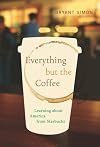
Author of Everything but the Coffee: Learning about America from Starbucks
Works by Bryant Simon
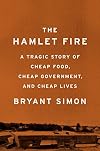
The Hamlet Fire: A Tragic Story of Cheap Food, Cheap Government, and Cheap Lives (2017) 36 copies, 3 reviews
The Hamlet Fire: A Tragic Story of Cheap Food, Cheap Government, and Cheap Lives (2020) 12 copies, 1 review
Associated Works
Tagged
Common Knowledge
- Birthdate
- 1961-11-15
- Gender
- male
Members
Reviews
I remember the tragedy at the heart of The Hamlet Fire. It was all over the news for a short while, shocking the nation with the callous employer who ordered factory doors locked, killing twenty-five people out of greed. It was reminiscent of the Triangle Fire that shifted American attitudes toward labor and employers’ obligations to their workers. There was no such shift after The Hamlet Fire and much of that is explained by the book’s subtitle: A Tragic Story of Cheap Food, Cheap show more Government, and Cheap Lives.
Author Bryan Simon organized the book into seven chapters that look at the trajectory toward tragedy through different lenses: Hamlet, the history of the town through boom, bust, and desperation for development; Silence, the history of Imperial Foods and Emmet Roe’s search for cheap labor and unregulated mastery of his empire; Chicken, following the industry from family farms to factory serfdom; Labor, the rise and fall of American labor and the South’s particular hostility to workers’ rights; Bodies, the changing American diet from natural to processed foods, from wholesome to cheap and fattening; Deregulation, the dismantling of oversight and the turning away from the idea of Commonweal; and Endings, the aftermath, the trauma that continues to this day. Through this, Simon shows that this is not a singular tragedy, but an inevitable result of trends that continue to this day.
The New Deal fostered higher wages, economic growth of American workers, with the understanding that by building from the bottom up, Americans could afford to buy the things we manufactured and grow the economy. With Reaganomics taking us back to Hoover’s Trickle Down, that covenant between government and its citizens was broken in favor of the promise of cheaper prices. Break the air traffic controllers union and get cheaper air fare, dismantle American industry and import from low-wage countries for cheaper cars, clothes, and electronics. Raising the minimum wage might make your burger cost more. No matter that WalMart workers rely on Medicaid, SNAP, and other taxpayer-funded benefits, the average family saves $3,000 a year by shopping at WalMart. In essence, we have traded well-paying jobs for cheap chicken nuggets.
Bryant Simon makes a convincing case that the ideology of cheap is degrading our society, increasing inequality, and making us work longer and harder for less. Many of his arguments I already believed but he pulls them together into a new focus, a focus on how much we value cheap and how that devalues us.
When people speak nostalgically about “the good old days” I usually wonder what was so good about Jim Crow and pre-Civil Rights Act America for women and people of color. However, this book makes me think that perhaps some of that nostalgia is for the old understanding of the commonweal, an understanding that excluded minoritized people, but that rested on the idea that government served the people, not the hedge fund managers. Perhaps that is what we really hunger for, not for Father Knows Best, but for the time when we thought of each other as citizens instead of consumers.
This is a heartbreaking book. It is also an important book that deserves a wider audience than it will get. I think it is being marketed to academics, not the general public if the dull cover is anything to go by. That’s unfortunate. Simon did not write this book in academic language. It’s journalistic, with a passionate call for justice. It also ties together many developments that lead inexorably toward an increasingly dismal future, not just here, but around the world. After all, when we outsourced manufacturing, we outsourced the tragedies as well, so now we have chicken factory fires in China that we won’t see widely covered on the nightly news. We will have our cheap.
The Hamlet Fire will be released September 5th. I received an e-galley from the publisher through Edelweiss.
The Hamlet Fire at The New Press
Bryant Simon faculty page
https://tonstantweaderreviews.wordpress.com/2017/08/24/9781620972380/ show less
Author Bryan Simon organized the book into seven chapters that look at the trajectory toward tragedy through different lenses: Hamlet, the history of the town through boom, bust, and desperation for development; Silence, the history of Imperial Foods and Emmet Roe’s search for cheap labor and unregulated mastery of his empire; Chicken, following the industry from family farms to factory serfdom; Labor, the rise and fall of American labor and the South’s particular hostility to workers’ rights; Bodies, the changing American diet from natural to processed foods, from wholesome to cheap and fattening; Deregulation, the dismantling of oversight and the turning away from the idea of Commonweal; and Endings, the aftermath, the trauma that continues to this day. Through this, Simon shows that this is not a singular tragedy, but an inevitable result of trends that continue to this day.
The New Deal fostered higher wages, economic growth of American workers, with the understanding that by building from the bottom up, Americans could afford to buy the things we manufactured and grow the economy. With Reaganomics taking us back to Hoover’s Trickle Down, that covenant between government and its citizens was broken in favor of the promise of cheaper prices. Break the air traffic controllers union and get cheaper air fare, dismantle American industry and import from low-wage countries for cheaper cars, clothes, and electronics. Raising the minimum wage might make your burger cost more. No matter that WalMart workers rely on Medicaid, SNAP, and other taxpayer-funded benefits, the average family saves $3,000 a year by shopping at WalMart. In essence, we have traded well-paying jobs for cheap chicken nuggets.
Bryant Simon makes a convincing case that the ideology of cheap is degrading our society, increasing inequality, and making us work longer and harder for less. Many of his arguments I already believed but he pulls them together into a new focus, a focus on how much we value cheap and how that devalues us.
When people speak nostalgically about “the good old days” I usually wonder what was so good about Jim Crow and pre-Civil Rights Act America for women and people of color. However, this book makes me think that perhaps some of that nostalgia is for the old understanding of the commonweal, an understanding that excluded minoritized people, but that rested on the idea that government served the people, not the hedge fund managers. Perhaps that is what we really hunger for, not for Father Knows Best, but for the time when we thought of each other as citizens instead of consumers.
This is a heartbreaking book. It is also an important book that deserves a wider audience than it will get. I think it is being marketed to academics, not the general public if the dull cover is anything to go by. That’s unfortunate. Simon did not write this book in academic language. It’s journalistic, with a passionate call for justice. It also ties together many developments that lead inexorably toward an increasingly dismal future, not just here, but around the world. After all, when we outsourced manufacturing, we outsourced the tragedies as well, so now we have chicken factory fires in China that we won’t see widely covered on the nightly news. We will have our cheap.
The Hamlet Fire will be released September 5th. I received an e-galley from the publisher through Edelweiss.
The Hamlet Fire at The New Press
Bryant Simon faculty page
https://tonstantweaderreviews.wordpress.com/2017/08/24/9781620972380/ show less
The Hamlet Fire: A Tragic Story of Cheap Food, Cheap Government, and Cheap Lives by Bryant Simon uses a fire which occurred in a chicken processing plant in Hamlet, North Carolina, as a case study of the effects of government labor policy in society today. A fire swept through the Imperial Food Products plant on September 3, 1991, the day after Labor Day, killing 25 people: 24 employees and a delivery man. These people included 18 women, 12 of whom were black. The plant was a safety hazard show more which was never inspected: the plant owner made extensive renovations without hiring any architect or securing any work permit; the employees worked in a plant with locked doors, slippery floors, no fire drills, doing repetitive work resulting in injuries under a white supervisor (the owner's son) who yelled at them and timed bathroom breaks. However, the employees were earning a dollar more than minimum wage, and had little access to better jobs. This is primarily a book about economics and society. Mr. Simon is most effective when he is telling the stories about the individual employees as in the last chapter, "Endings" and the Epilogue. Some of the middle chapters, especially the one on deregulation, dealing with economics tends to get bogged down. However, the whole book vividly displays the cost of cheapness in our society today. This cheapness includes the cheap food -- sugary, salty, and fatty food -- the only food the poor can afford to buy and its impact on obesity. It is also a study of race relations in the area around Hamlet. Many black employees felt racial discrimination. For example, although a fire department staffed by blacks was the one of the nearest fire departments, it was ordered to be a back-up, and stay away even though it offered several times to help; the blacks used this in their argument about discrimination. The cheap lives are those of the employees in plants such as this one.
Especially since the author emphasizes the human cost, I'm disappointed he did not include a list of the names and a bit of biographical information about each victim. show less
Especially since the author emphasizes the human cost, I'm disappointed he did not include a list of the names and a bit of biographical information about each victim. show less
The author of Everything But the Coffee loved coffee shops and was fascinated by what he thought he saw in people using them as the new type of public space. What he found out was that Starbucks is first and foremost a money making machine and does not do anything to jeopardize that main mission. He came to the conclusion that Starbucks is a place where people go to be alone in public and are willing to pay extra for the coffee because it makes them appear cool and hip. How he came to that show more conclusion is very interesting reading.
There is a chapter on the bathrooms in the Starbucks book. Also about the fact that women business sales people often use it as a portable office because it has clean bathrooms and is safe. They come in - use the restroom, order coffee, sit for around using their phones and computers for about an hour, then leave. They do this at Starbucks in urban, suburban, and transportation hubs like airports. The book was a very interesting look at modern culture, and while it is about how we use space and brands in the U. S.
Everything But the Coffee, is a book about the rise of Starbucks and why Americans, and people all over the world, flock to a Starbucks store. I found it very enlightening. The author starts out to try to figure out why American's will pay 4 to 5 dollars for an overly sweet milky latte. About half-way through the book he is still convinced that the reason is because American's want to see without being seen and people are relatively anonymous when they are inside a Starbucks, but as his research progress he changes his mind and says that it is all about status. Buying an expensive cup of coffee from Starbucks says that the buyer is cool and hip. For this we are willing to pay a premium. It is a very enlightening look at American enterprise and the consumer. show less
There is a chapter on the bathrooms in the Starbucks book. Also about the fact that women business sales people often use it as a portable office because it has clean bathrooms and is safe. They come in - use the restroom, order coffee, sit for around using their phones and computers for about an hour, then leave. They do this at Starbucks in urban, suburban, and transportation hubs like airports. The book was a very interesting look at modern culture, and while it is about how we use space and brands in the U. S.
Everything But the Coffee, is a book about the rise of Starbucks and why Americans, and people all over the world, flock to a Starbucks store. I found it very enlightening. The author starts out to try to figure out why American's will pay 4 to 5 dollars for an overly sweet milky latte. About half-way through the book he is still convinced that the reason is because American's want to see without being seen and people are relatively anonymous when they are inside a Starbucks, but as his research progress he changes his mind and says that it is all about status. Buying an expensive cup of coffee from Starbucks says that the buyer is cool and hip. For this we are willing to pay a premium. It is a very enlightening look at American enterprise and the consumer. show less
For history non-fiction this book is well written and reads more like a novel than a dry dull academic work. If you want to understand the American South of today reading this book is of considerable help. It is full of insight and compassion and goes to show that even the hard core anti-labor union South had to become unionized to make progress. This is a historical detail of which they probably would not like to be reminded.
Lists
Starbucks Books (1)
You May Also Like
Associated Authors
Statistics
- Works
- 5
- Also by
- 2
- Members
- 172
- Popularity
- #124,307
- Rating
- 3.9
- Reviews
- 7
- ISBNs
- 16